Your entryway is the first impression guests have of your home, and lighting is the silent workhorse that sets that tone. Poor entryway lighting leaves visitors fumbling for their keys while creating a dreary atmosphere, whereas thoughtful fixtures instantly make a space feel intentional and polished. Whether you’re working with a narrow hallway, a soaring two-story foyer, or something in between, the right entryway lighting ideas can transform how your home greets people. This guide covers practical options, from modern pendant lights to smart dimmer systems, so you can choose fixtures that fit your space, budget, and style without overthinking the project.
Table of Contents
ToggleKey Takeaways
- Entryway lighting ideas work best when combining task lighting, ambient mood lighting, and accent features to create a welcoming, functional space.
- Pendant lights are ideal for modern elegance in wider foyers, while flush-mount fixtures solve tight ceiling height and narrow hallway challenges without overwhelming the space.
- Scale your chandelier to one inch of fixture diameter per foot of ceiling height, and pair it with a dimmer for flexible ambiance control.
- Wall sconces mounted 60–66 inches above the floor on either side of a mirror or door provide flattering, layered lighting that adds sophistication to your entry.
- Smart bulbs and motion sensors deliver convenience and energy efficiency, allowing phone or voice control while automatically lighting your entry before you unlock the door.
- Warm white color temperatures (2700K–3000K) create an inviting atmosphere, while accent lighting with textured wall washes and picture lights adds curatorial polish without bulk.
Pendant Lights for Modern Elegance
Pendant lights hang from the ceiling and create a focal point while providing direct task lighting, ideal if your entryway functions as a working space (mail sorting, key drop). Modern entryway lighting ideas often start here because pendants offer clean lines and visual interest without feeling heavy.
Choose a fixture sized to your ceiling height and entryway width. A single pendant works in narrow hallways: clusters of two or three suit wider foyers. Aim for the fixture to hang 6–8 feet above the floor so guests don’t bump their heads, and position it near the main entry point where light actually falls on faces and surfaces.
Materials matter. Brushed brass, matte black, and natural wood finishes align with 2026 design trends and resist showing dust and fingerprints better than polished chrome. Glass or fabric shades diffuse light softly, while open-frame designs cast architectural shadows that add depth. Pair modern lighting fixtures with energy-efficient bulbs to reduce running costs, crucial if the light stays on during daylight hours. Installation is straightforward: you’ll need a ceiling box, wire strippers, and a wire connector (about 30 minutes if the box already exists). Hire an electrician if the current fixture didn’t have a box or if you need new wiring run from the breaker.
Flush-Mount Fixtures for Small Spaces
Flush-mount fixtures sit directly against the ceiling and are the go-to solution when ceiling height is tight, under 8 feet, or when a pendant would visually overwhelm a narrow hallway. They’re also a budget-friendly option if you want style without complicated installation.
These fixtures handle most of the heavy lifting in compact entryways. Look for designs with frosted or opal glass that diffuse light evenly, rather than stark frosted panels that leave dark corners. A 12–15 inch diameter works for most residential halls: anything larger starts to feel cramped. Color temperature matters here: 3000K (warm white) keeps the entry inviting, while 4000K (cool white) works if you want a sleeker, contemporary feel.
Replacing a fixture is a 15-minute job if you’re swapping out an existing one: kill the power at the breaker, remove the old canopy and wires, disconnect the ground and hot/neutral connections, and attach your new fixture in reverse order. Wear wire strippers if you need to refresh connections. No new framing or boxes required, the existing ceiling box remains in place. LED flush-mount options trim installation time further since many come with integrated LED modules that require no bulb swapping.
Chandelier Statements That Set the Tone
A chandelier transforms an entryway from functional to memorable. It’s a bold move, but one that pays off if your foyer has the height and square footage to support it. Look for fixtures 24–36 inches in diameter and plan for roughly 2.5–3 feet of drop clearance beneath your fixture.
Scale is critical. A 18-inch chandelier in a two-story foyer looks like a decorative afterthought: a 36-inch fixture in a 9-foot hallway feels oppressive. Aim for roughly one inch of fixture diameter per foot of ceiling height. A foyer with 12-foot ceilings calls for a 12–14 inch fixture: a 10-foot space suggests something in the 8–12 inch range.
Modern entryway lighting ideas now favor minimal, sculptural chandeliers over fussy, traditional designs. Look for fixtures with linear arrangements, geometric frames, or mixed finishes (brushed brass with black details, for example) rather than full-coverage crystal or excessive ornamentation. Pair it with a dimmer to soften the mood in the evening, many modern fixtures work with standard LED dimmers, though verify before purchase. Installation requires a ceiling-rated box and solid mounting: if your existing box feels loose, have an electrician reinforce it or install a new one before hanging a heavy fixture. Weight capacity matters: most residential ceiling boxes support 50 pounds: chandeliers over that threshold need bracing between ceiling joists.
Wall Sconces for Layered Lighting
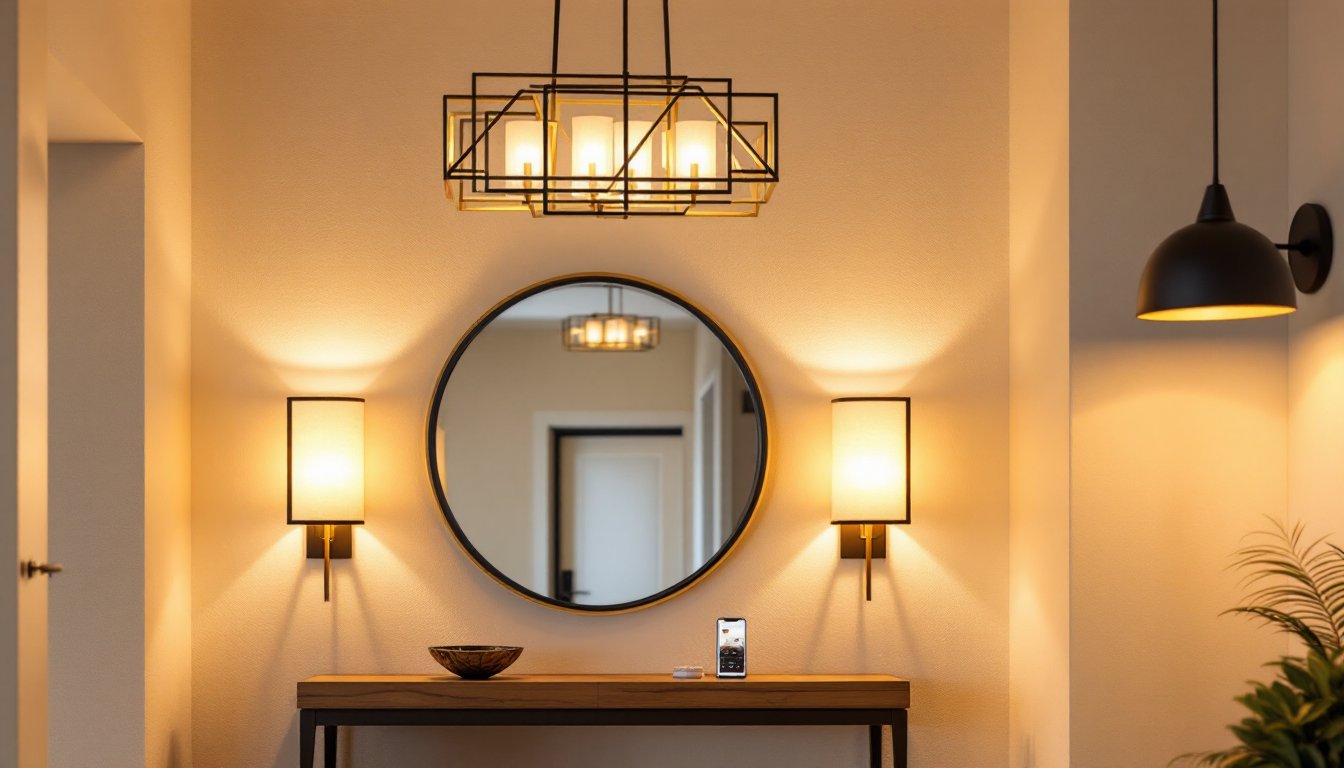
Wall sconces flanking your entryway mirror or mounted on either side of the door create balanced, flattering light and let you layer illumination without relying on a single overhead fixture. This approach adds sophistication and is one of the easiest ways to upgrade an existing setup.
Sconces work best mounted 60–66 inches above the floor (at or slightly above eye level), which positions light to avoid harsh shadows on faces. Install them 24–36 inches apart if flanking a mirror or 18–24 inches from the door frame on each side. Uplight models throw light toward the ceiling (expanding the sense of space), while downlights are better for focused task lighting near a mirror or console.
Material choices align with modern trends: matte black with brass accents, brushed nickel, or natural wood-based fixtures suit most contemporary entries. Linen shades diffuse light gently: bare bulb and open-frame designs feel more industrial or minimalist. Wiring requires running electrical cable in the wall (you’ll cut drywall patches and patch/paint afterward) or running surface-mounted cord covers if you want to avoid wall surgery. Each sconce typically uses one or two bulbs: stick with 40–60W equivalent LED bulbs to keep overall brightness comfortable without glare. Hire a licensed electrician to run new circuits if you don’t have existing sconce wiring, especially if codes in your area require GFCI protection in entry areas, requirements vary by region.
Smart Lighting and Dimmer Solutions
Smart bulbs and dimmers let you control your entryway light via phone, voice command, or motion sensor, practical if you arrive home with groceries in both hands or want the entry lit before you unlock the door. Options range from affordable color-changing bulbs to integrated smart fixtures with built-in controls.
Motion sensors are the standout feature for entries. Install one near the door or transition point, set a 1–3 minute timer, and the light activates when someone approaches. Sensitivity and daylight hold-off features prevent false triggers from passing shadows or daytime operation. Dimmable smart systems let you preset warm white for evening entry and brighter white for task work, all switchable from your phone. Home lighting control systems have become more affordable, with starter kits at $30–80.
Compatibility is key: choose bulbs and controllers that work with your existing smart home system (Apple Home, Google Home, Alexa, or a standalone app). Not all dimmers work with LED bulbs, verify the dimmer is LED-compatible before installing. Installation varies: smart bulbs screw into existing fixtures (no wiring), while smart switches and dimmers replace your standard switch (same process as a regular dimmer swap: kill power, disconnect the old switch, connect the hot and neutral wires to the new dimmer, and cap the ground). Voice control adds convenience but requires a nearby hub or speaker, nothing fancy, just placement within Wi-Fi range.
Accent Lighting With Color and Warmth
Accent lighting emphasizes architectural features, artwork, or textures and makes an entryway feel curated rather than generic. RGB smart bulbs let you shift from warm white (3000K) for gatherings to cool tones for focused visibility, or even subtle color for visual interest.
Wall wash lights mounted high on one side of a feature wall cast light horizontally, revealing texture in shiplap, stone, or plaster. Directional picture lights above artwork or mirrors add drama without requiring rewiring. These fixtures are often mounted 12–18 inches above the focal point, tilted to avoid glare in your guests’ eyes. Track lighting offers flexibility: position lights to highlight specific areas as your décor evolves.
Color temperature choices shape mood. Warm white (2700K) feels welcoming: cool white (4000K) feels crisp and modern: daylight (5000K) is too clinical for entries. Most accent fixtures use low-wattage halogen or LED reflector bulbs, 25–50W equivalent suffices. Accent lighting with warm color elevates a space dramatically without adding bulk or complexity. Installation depends on fixture type: picture lights screw directly to walls or picture frames, while track systems mount with screws into studs (verify wall composition and use toggles if hitting drywall between studs).
Conclusion
The best entryway lighting combines task light (so guests can see stairs, doors, and faces), ambient light (to set mood), and accent light (to showcase your home’s character). Start by assessing your space: measure ceiling height and width, identify existing electrical boxes, and decide whether you’re replacing fixtures or adding new circuits. Choose styles that feel natural to your home’s overall aesthetic, modern, traditional, industrial, rather than chasing trends that’ll feel dated next year. Most installations take an afternoon and basic tools: heavy fixtures or new wiring warrant calling a professional. Your entry deserves as much thoughtfulness as your living room, make the investment, and you’ll feel the payoff every time you walk through that door.