Bathroom lighting is one of those home improvement decisions that doesn’t feel important until you’re squinting in the mirror at 6 a.m. or can’t find your toothbrush in the shadows. Unlike living room lighting, bathroom fixtures have to do heavy lifting: they need to deliver task lighting for grooming, handle moisture and humidity without failing, and still look decent on the wall. Choosing the right bathroom light fixtures means understanding how different zones work together, matching your design aesthetic, and selecting materials that’ll survive steam and moisture for years. This guide breaks down what you need to know to make smart choices for your bathroom lighting setup in 2026.
Table of Contents
ToggleKey Takeaways
- Bathroom light fixtures require three lighting layers—task, ambient, and accent—with vanity lighting as the essential workhorse for safe grooming and clear visibility.
- Select wet-rated or damp-rated bathroom light fixtures only, as standard dry-rated lights will corrode and fail quickly in high-moisture environments.
- Vanity lighting pairs (sconces on both sides of the mirror) provide the best even facial illumination and should be positioned at eye level, 60-66 inches from the floor.
- Choose LED vanity fixtures with a color temperature between 3000K-4000K for accurate makeup application and flattering skin tone, and consider dimmable options for evening use.
- Bathroom light fixtures should be made from corrosion-resistant materials like brushed nickel, polished chrome, or stainless steel, paired with durable glass or ceramic shades to prevent moisture damage.
- Match your bathroom light fixtures to your design aesthetic—traditional, modern, farmhouse, or transitional—for a cohesive, intentional look rather than mismatched styles.
Understanding Bathroom Lighting Zones and Requirements
Bathrooms need three layers of light: task, ambient, and accent. Task lighting handles the work, shaving, makeup application, teeth brushing. That’s where vanity fixtures shine. Ambient lighting fills the whole room so you’re not navigating in pools of shadow, usually handled by ceiling fixtures or recessed lights. Accent lighting (optional but nice) adds visual interest with sconces or decorative pendant lights.
Building codes and bathroom lighting standards vary by location, but the National Electrical Code (NEC) requires bathroom circuits separate from other areas and mandates GFCI (ground fault circuit interrupter) protection on all outlets within 6 feet of a sink. Most municipalities also require ventilation fans rated for moisture control, though that’s separate from lighting.
Moisture and humidity are the real challenge. Bathrooms need wet-rated or damp-rated fixtures, never standard dry-rated lights. Wet-rated fixtures handle direct spray from showers: damp-rated fixtures handle moisture and humidity but not direct spray. Check labels carefully. A fixture rated for damp use in a shower spray zone will corrode and fail quickly. Proper ventilation and exhaust fans reduce humidity and extend fixture life, so don’t skimp on that exhaust fan or run it only during showers, run it for 20-30 minutes after each shower to clear moisture.
Vanity Lighting: Task-Focused Fixtures for Grooming
Vanity lighting is the workhorse. It needs to be bright, evenly distributed across your face, and positioned to minimize shadows, the opposite of a single overhead bulb that casts your face in flattering darkness. Most building codes and lighting standards recommend 50-100 foot-candles of illumination at the vanity. That sounds technical, but it means bright enough to see what you’re doing clearly.
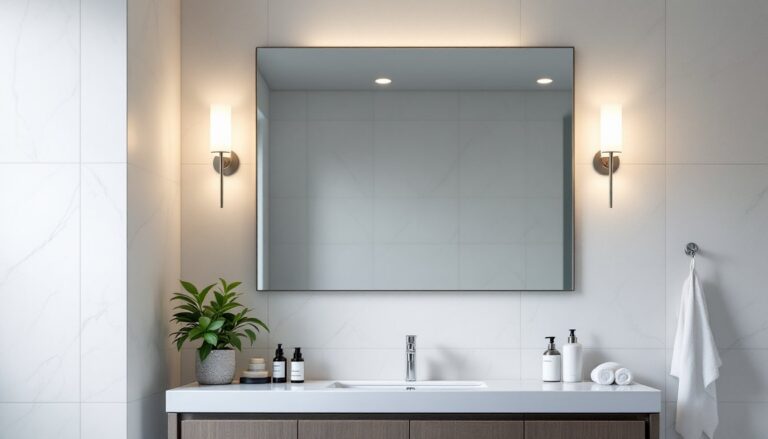
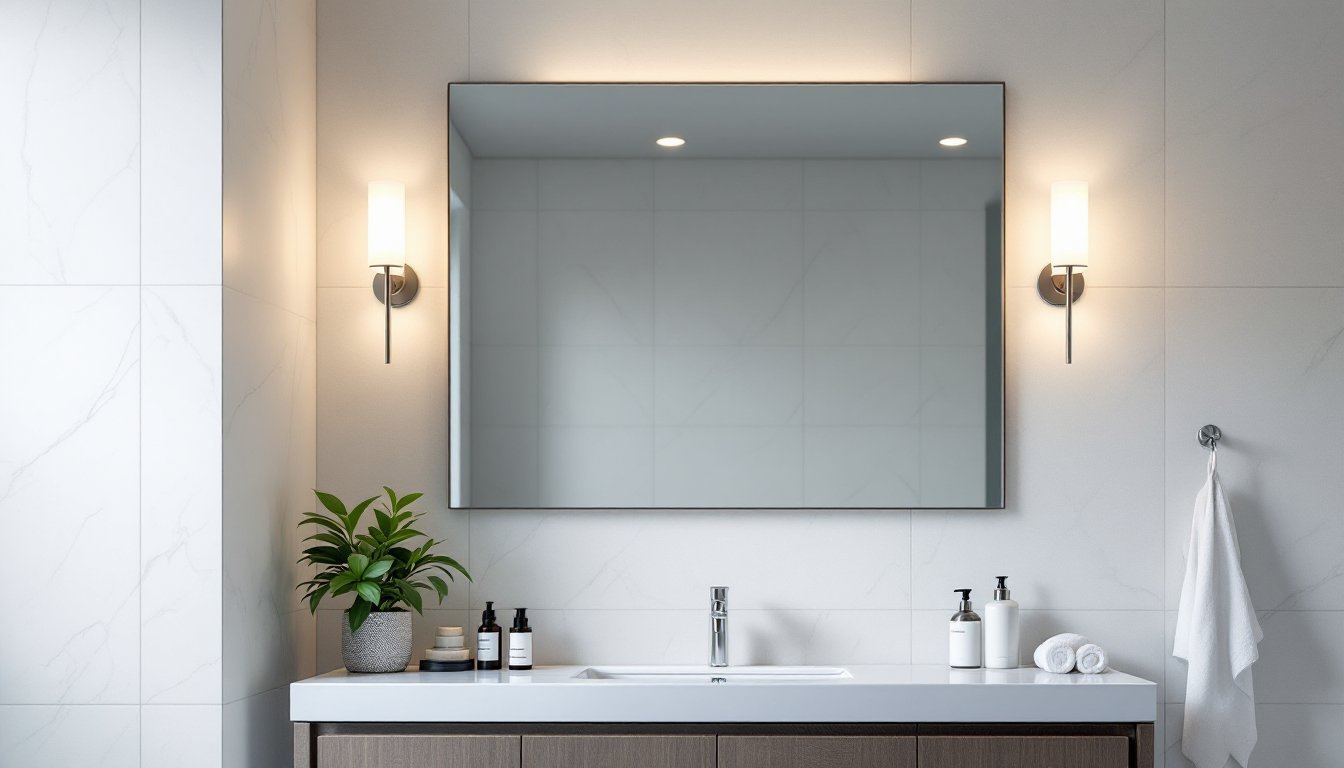
The best vanity setups use fixtures on both sides of the mirror, which cancels shadows and provides even light. A single fixture centered above the mirror works in tight spaces but isn’t ideal. Bathroom vanity lights come in several configurations: sconce pairs (one on each side), a strip light or bar fixture mounted horizontally above the mirror, or integrated LED mirrors with built-in lighting. For makeup application and detailed grooming tasks, sides-of-mirror placement beats above-mirror by a mile.
Color temperature matters. Most designers recommend 3000K (warm white) to 4000K (neutral white) for bathrooms. Anything cooler than 4000K can feel clinical, while warmer light flatters skin tone and makes the space feel more relaxed. If someone in your household applies makeup, they’ll want closer to 4000K to see true colors. LED vanity fixtures are standard now and offer long life, low heat, and efficiency, no reason to buy incandescent unless you’re matching existing fixtures.
Types of Vanity Fixtures to Consider
Sconce Pairs: Two wall-mounted fixtures flanking the mirror, typically 24-36 inches apart and mounted 60-66 inches from the floor (eye level when standing). This is the gold standard for even facial lighting. Sconces work with almost any style, modern, farmhouse, traditional, so picking a style you’ll actually like is easier than finding the perfect sconce pair.
Vanity Light Bars: A horizontal fixture mounted directly above the mirror, usually 24-48 inches wide depending on mirror size. Bars are compact and work well in smaller bathrooms where wall space is limited. Quality bars use multiple bulbs or integrated LEDs to distribute light evenly and minimize shadows.
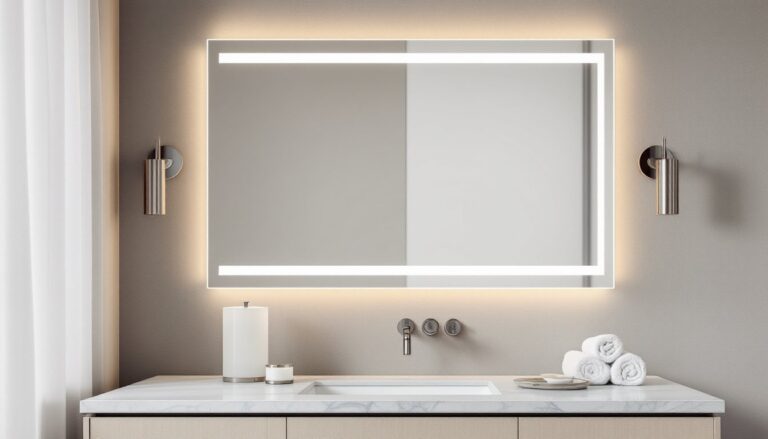
Integrated LED Mirrors: Mirrors with built-in LED strips around the perimeter or across the top. These are sleek and modern but pricier upfront. They’re a great choice if you’re willing to invest and your bathroom layout supports a new mirror installation. You’ll need an electrician to run power to the mirror.
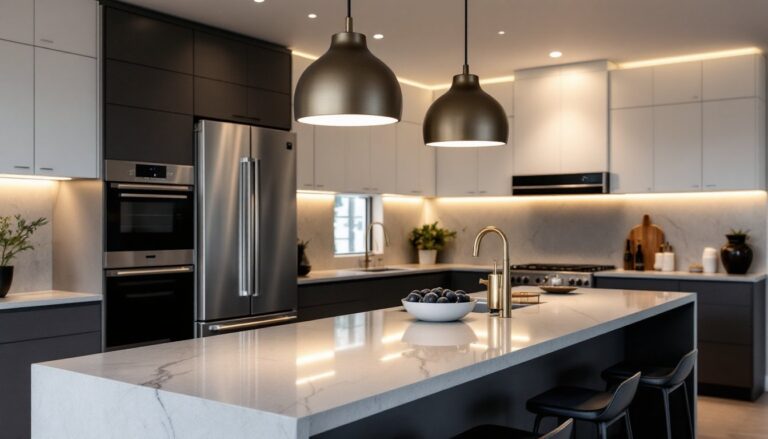
Pendant Light Fixtures for Kitchen Islands can inspire bathroom design, look for pendants with downward-facing bowls that direct light down toward the vanity, avoiding glare. This principle applies to bathroom sconces too: fixtures should direct light toward your face, not sideways or upward.
Overhead and Ambient Lighting for Overall Illumination
Overhead fixtures provide general light so you’re not working in a spotlight. They come in several forms: traditional flush mounts, semi-flush fixtures (mounted a few inches from the ceiling), and recessed lights (built into the ceiling). Recessed lights are clean and modern but require ceiling access and new wiring, hire a licensed electrician for this work if you don’t have experience.
Recessed fixtures in bathrooms must be wet-rated or IC (insulation contact)-rated if you’re installing near insulation, which is common in upper-story bathrooms. A typical bathroom uses 2-4 recessed lights depending on size. Space them evenly for balanced illumination. Flush mounts work great in smaller bathrooms where ceiling height is limited and provide adequate ambient light without requiring rough-in wiring changes.
Consider total wattage and lumens (brightness). A small half-bath might need 500-750 lumens total from ambient fixtures: a full master bath might need 1,200-1,500 lumens for comfortable overall lighting, on top of task lighting at the vanity. LED bulbs deliver the same brightness at a fraction of the wattage, so an old incandescent fixture spec might say 60W, but a 9-10W LED produces the same light.
Dimmers are a smart addition. They let you dial down ambient light for evening bathroom visits without full brightness, which is genuinely useful. Just make sure your LED bulbs are dimmable, not all are, and pair them with a compatible dimmer switch rated for LED loads.
Material and Finish Options for Durability and Style
Bathroom fixtures live in a brutal environment: moisture, humidity, temperature swings, and splashes. Finishes and materials matter for longevity. Chrome and nickel-plated brass are durable, corrosion-resistant standards that work in wet bathrooms. Brushed nickel and polished chrome are more forgiving with fingerprints and water spots than high-polish finishes. Oil-rubbed bronze and matte black add character but need occasional cleaning to prevent spotting (mineral deposits from hard water). If you go with oil-rubbed bronze, expect to wipe it down regularly.
Stainless steel resists corrosion well and works in modern or industrial designs. Painted finishes (matte, satin) can look great but are less durable in high-moisture zones, the paint can chip or peel over time. For painted fixtures, make sure they’re specified as bathroom-rated: cosmetic paint finishes on standard fixtures won’t hold up.
Glass, ceramic, and metal are the main material combos for bathroom fixture shades and bodies. Glass (frosted, clear, or colored) is easy to clean and moisture-resistant. Fabric shades absorb moisture and can mildew, so avoid them in bathrooms. Metal and ceramic fixtures are durable: just make sure metal components are corrosion-resistant (not raw iron or standard steel). Cheap fixtures sometimes use low-grade materials that corrode within a year or two, so look for brands that specify material grades and finishes.
If you’re installing over an existing vanity, check wall condition. Water damage, mold, or soft drywall means you’ll need to repair or replace that section before hanging new fixtures. Use appropriate fasteners, toggle bolts or studs, not drywall anchors alone, and seal any openings around fixture mounting to prevent water infiltration behind walls.
Selecting Fixtures That Match Your Bathroom Design
Your fixtures should feel intentional, not like you grabbed whatever was on sale. Start by identifying your design direction: modern, traditional, farmhouse, transitional, or eclectic. Once you’ve chosen a direction, stick with it for vanity and ceiling fixtures. Mismatched styles read as accidental rather than curated.
Traditional and transitional bathrooms often pair bathroom vanity lights with matching ceiling fixtures, sconces in brushed nickel with a flush mount in the same finish. Modern bathrooms can embrace asymmetry: sleek linear vanity bars paired with recessed or minimal ceiling lights. Farmhouse and rustic styles use fixture materials like wrought iron, wood accents, or vintage finishes: oil-rubbed bronze farmhouse sconces work beautifully with a weathered wood vanity.
Color coordination matters too. If your bathroom has warm wood tones, warm metal finishes (oil-rubbed bronze, warm brass) harmonize better than cool chrome. Cool tile or contemporary vanities pair well with polished chrome, brushed nickel, or matte black. Your bathroom layout, mirror frame, and hardware finishes all contribute to the overall feel.
Architects and designers reviewing modern surface-mount options frequently choose fixtures with clean lines and minimal ornamentation that age well and work across design shifts. If you’re undecided, neutral brushed nickel or chrome sconces paired with a simple flush-mount ceiling fixture are safe bets that complement most styles.
Take time browsing design inspiration on home improvement and interior design platforms to see how different fixtures work in real spaces. Real bathrooms often reveal what works better than product photos, you’ll notice which fixture styles make the space feel larger, brighter, or more cohesive. Visit lighting showrooms if possible and see fixtures in person. Photos don’t show how light actually distributes or how a finish reflects in your specific bathroom lighting.
Conclusion
Choosing bathroom light fixtures boils down to balancing function, durability, and style. Prioritize task lighting at the vanity (bright, evenly distributed), pair it with adequate ambient overhead light, and select materials that survive moisture and humidity. LED technology has made good fixtures affordable and efficient: the cost difference between quality and cheap fixtures is smaller than it used to be.
If you’re replacing fixtures, check the code requirements in your area and use a licensed electrician for any rewiring. Installing new sconces or flush mounts is straightforward if wiring already exists, but don’t hesitate to hire help if you’re uncomfortable with electrical work, it’s not the place to experiment. Take the time to pick finishes and styles that feel intentional rather than convenient, and your bathroom will feel thoughtfully designed instead of hastily assembled. Good lighting transforms a functional bathroom into a space you actually enjoy spending time in.