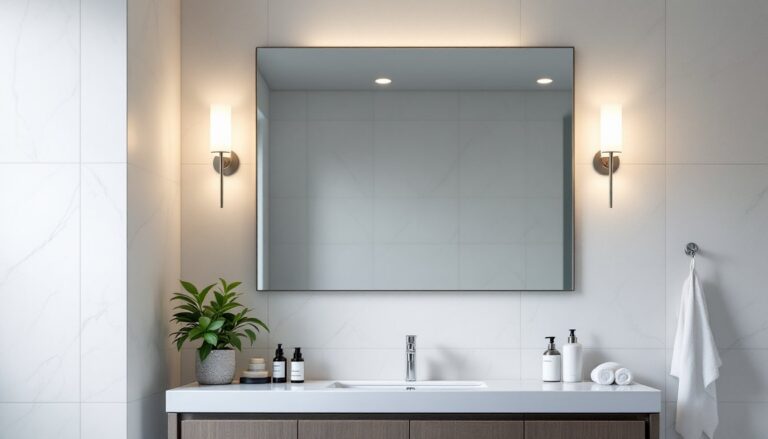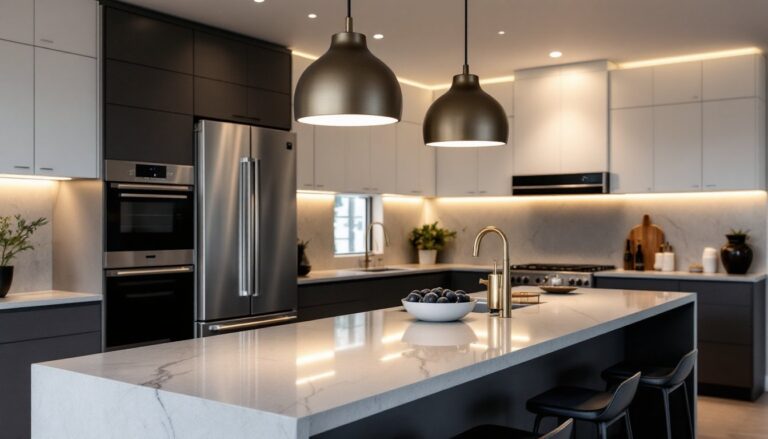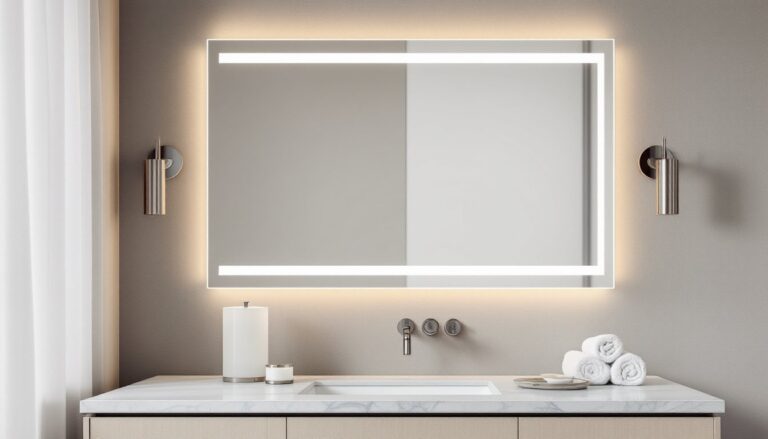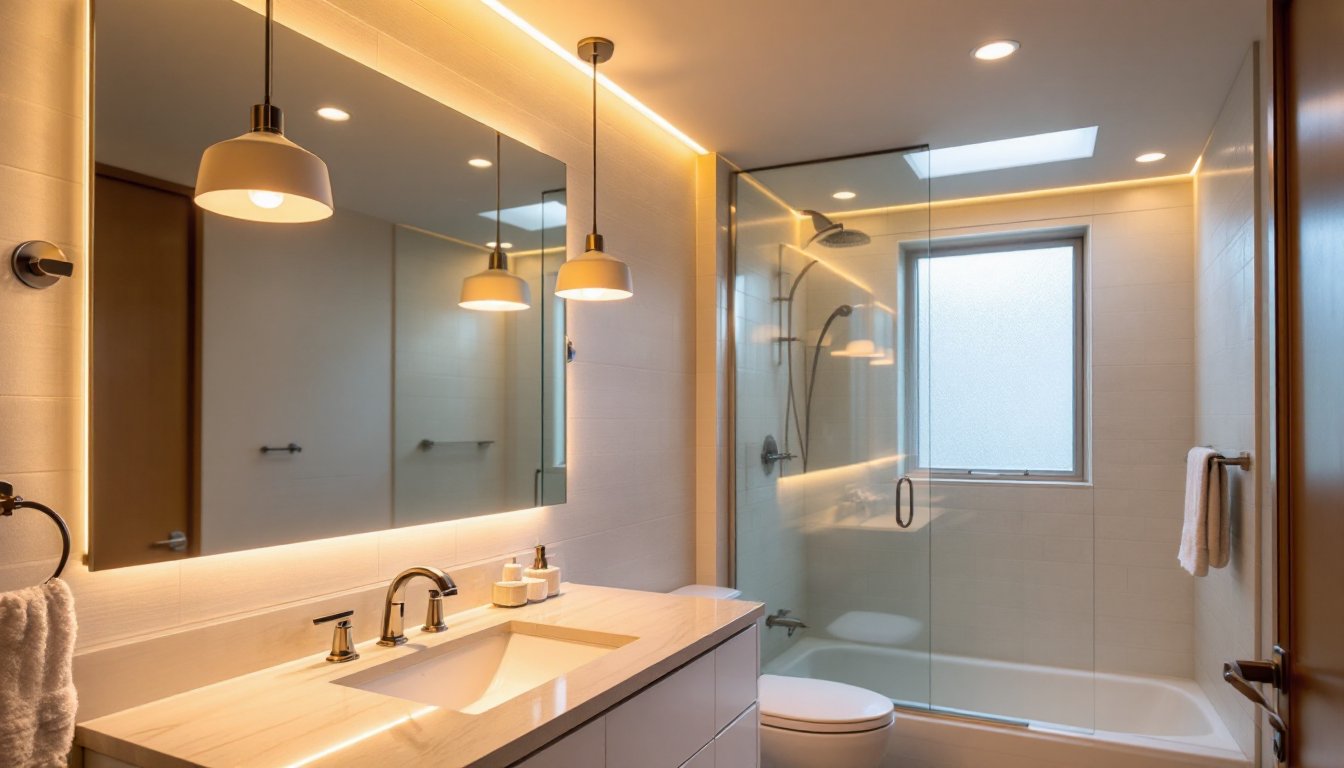
Good bathroom lighting makes the difference between squinting at the mirror and seeing yourself clearly, and that matters more than most people realize. Whether you’re renovating a half bath or doing a complete overhaul, ceiling lighting sets the tone for function and style. The right fixtures balance task lighting (getting ready), ambient glow (feeling comfortable), and accent light (showing off your design choices). This guide walks through seven practical bathroom ceiling lighting ideas that work for different ceiling heights, budgets, and design preferences, so you can find the setup that fits your space.
Table of Contents
ToggleKey Takeaways
- Bathroom ceiling lighting ideas should combine task, ambient, and accent lighting to balance functionality with design, transforming your daily routine into a pleasant experience.
- Recessed lighting provides a clean, modern look and works well for different ceiling heights, with proper spacing of 4–6 feet center-to-center and a warm 3000K color temperature to flatter skin tone.
- Flush mount fixtures suit low ceilings (8 feet or lower) and are quick to install, while statement pendants and chandeliers add personality to larger bathrooms with 9+ foot ceilings.
- LED strip lighting creates spa-like ambient glow around crown molding or mirror soffits but should be paired with task lighting at the vanity since strips alone won’t provide enough light for makeup or shaving.
- Natural light from skylights reduces daytime reliance on artificial lighting, but always pair them with reliable artificial fixtures since natural light isn’t available 24/7.
- Layering lights on separate switches or dimmers lets you scale brightness from task mode (1,200–1,500 lumens) to wind-down mode, and vanity lights must flank the mirror—never position a single overhead light directly above the head.
Recessed Lighting for a Clean, Modern Look
Recessed lights, also called can lights or downlights, sit flush with the ceiling for a sleek, uncluttered appearance. They’re the go-to choice for modern bathrooms because they don’t eat ceiling space and work well over sinks, vanities, and mirrors.
When installing recessed lights, spacing matters. Standard guidance is to place fixtures 4 to 6 feet apart, measured center-to-center. For a typical bathroom, two to four recessed lights handle both task and ambient lighting. Recessed lights come in fixed trims (aimed straight down) or adjustable trims (angled for directional accent lighting). For bathroom vanities, aim for 3000K color temperature (warm white) to flatter skin tone.
The main hassle is rough-in work, running wiring and framing the housing between joists before drywall goes up. If your ceiling’s already finished, an electrician can cut holes and install housings, but expect to pay more. For Recessed Lighting Placement: 7, proper spacing and aiming ensure balanced light without dark corners. Recessed fixtures also pair well with Recessed Lighting Housing: Elevate options that match your trim style.
Budget roughly $100–$300 per fixture installed (labor and materials combined), depending on your region and whether you’re hiring an electrician.
Flush Mount Fixtures for Low Ceilings
If your bathroom has an 8-foot or lower ceiling, a flush mount fixture, a dome or semi-flush light bolted directly to the ceiling, keeps things proportional and avoids that “light hanging too low” awkwardness. These fixtures offer clean lines and won’t hit your head.
Flush mounts are ideal for powder rooms, smaller bathrooms, or homes with popcorn ceilings you don’t want to tear out. They’re also dead simple to install: a basic fixture swap takes about 30 minutes if power’s already at that location. Choose frosted or opal glass to diffuse light evenly and minimize harsh shadows on the face. Clear glass concentrates light and creates glare, not friendly for morning routines.
Look for fixtures with 40–60 watts of LED equivalent (roughly 450–800 lumens) for a 5-by-8-foot bathroom. Dimmer compatibility is worth paying extra for: it lets you scale brightness from task mode (bright) to wind-down mode (soft). Home Depot Bathroom Lighting: offers dozens of flush mount styles at various price points.
Expect $50–$200 for a mid-range fixture installed yourself (just cap the old wiring), or $150–$300 if an electrician handles it.
Statement Pendant Lights and Chandeliers
Statement fixtures add personality. A pair of pendant lights flanking the mirror or a small crystal chandelier above the vanity elevates a bathroom from utilitarian to designed. These work best in larger master bathrooms with higher ceilings (9+ feet).
Size is critical. A pendant should hang 18–24 inches below the ceiling to avoid looking cramped. For a vanity mirror, pair pendants 12–18 inches apart on either side of the mirror, positioned to cast even light on your face. Avoid metal pendants directly over the sink, moisture causes corrosion. Opt for ceramic, glass, or stainless steel finishes instead.
Chandeliers belong in powder rooms or larger secondaries where height isn’t an issue. A small 3- or 4-light fixture (not a massive crystal thing) keeps it elegant, not formal. Pair with recessed lights for layering: the chandelier gives ambiance: the recessed fixtures provide task light at the vanity.
One caveat: vanity lighting codes (per the National Electrical Code) typically require fixtures installed at least 60 inches from the tub or shower edge to prevent shock hazard. Check your local building code: permits may be required if you’re rewiring.
Statement fixtures run $75–$400+ depending on design and materials: installation is a standard ceiling swap.
LED Strip Lighting for Ambient Glow
LED strip lighting (also called ribbon lights or linear LEDs) mounts to the ceiling perimeter or behind soffit trim for indirect, ambient glow. Unlike direct overhead lights, strips create soft, indirect light that feels spa-like and reduces glare.
The best application is around crown molding or in a soffit recess above the mirror. Strips come with adhesive backing or mounting clips and plug into standard outlets (or hardwire into existing wiring). Most are dimmable and color-tunable (3000K to 5000K), so you adjust warmth and brightness on the fly via remote or app.
Installation is straightforward: clean the mounting surface, measure twice, peel and stick, connect the power connector. No wiring or permits needed for plug-in strips. If you’re hardwiring, hire an electrician to tie into a dimmer switch, it’s a $100–$200 add.
Home Lighting Secrets: Transform shows how layered lighting, including strips, improves both function and aesthetics. Strips alone don’t provide enough light for shaving or makeup: pair them with task lighting at the vanity.
Quality LED strips cost $30–$100 per 16-foot kit: premium color-tunable brands run $80–$150.
Skylight and Natural Light Solutions
Nothing beats natural light. A skylight in the ceiling brings daylight into bathrooms that lack windows, reducing reliance on artificial light during the day and boosting mood and ventilation.
Fixed skylights (non-opening) are cheapest and simplest: roughly $200–$600 for materials and installation. Opening skylights cost more ($400–$1,200+) but improve ventilation, which is critical in bathrooms. Size matters, a 24-by-48-inch skylight is standard for a 5-by-8-foot room. Larger homes might use multiple smaller skylights.
Conventional skylights require roof access and flashing. If your roof is steep or complex, hire a roofer. Mistakes here lead to leaks. Tubular skylights (smaller, reflective tubes that pipe daylight through walls or attics) are a lower-cost alternative ($150–$400 installed) but funnel less light.
For renters or those avoiding roof work, solar tubes or high-output skylight simulation bulbs mimic daylight. These bulbs emit 5000K+ color temperature and run $20–$50 each: use them in recessed or pendant fixtures.
Natural light isn’t available 24/7, so always pair skylights with reliable artificial lighting. Skylights also can cause privacy issues if overlooked by neighbors: install blinds or shades ($50–$150) for control.
Layered Lighting for Function and Style
The best bathrooms use layered lighting: task light (vanity mirror area), ambient light (overhead), and accent light (mood or design feature). No single fixture does all three well.
Task lighting must be bright and flattering. Sconces or pendant lights flanking the mirror (best), or a bright overhead strip or bar light, aim for 1,200–1,500 lumens and 3000K color temperature. Avoid a single overhead light directly above the head, it casts unflattering shadows.
Ambient lighting fills the room. Recessed lights, flush mounts, or a small chandelier provide general illumination without shadows. Aim for 400–800 lumens depending on room size.
Accent lighting highlights design (a tile feature, artwork, or architectural element) or sets mood. This is where Modern Lighting: Transform Your comes in, LED strips, directional recessed lights, or uplighting add visual interest.
Put task and ambient lights on separate switches or a combination switch/dimmer so users can tune brightness. A typical layout: two pendant sconces at the vanity (task) + two recessed lights near the toilet/shower (ambient) + LED strip under crown molding (accent). Wattage-wise, task fixtures should be 20–30% brighter than ambient.
There are also external resources like Remodeling 101: How to Install Flattering Lighting in the Bathroom that dive deep into bathroom lighting design principles.
Conclusion
Bathroom ceiling lighting isn’t a one-size-fits-all choice. Your ceiling height, room size, budget, and design taste all shape what works. Start by identifying your bathroom’s weak spots, shadowy corners, glare at the mirror, or a dated look, then pick fixtures that fix those problems. Layering task, ambient, and accent light transforms the space from purely functional to genuinely pleasant. Install on a dimmer, choose warm-white bulbs (3000K), and ensure vanity lights flank the mirror for flattering light. Whether you’re DIYing a fixture swap or hiring a pro for new circuits, proper lighting turns a daily chore into a better experience.