Good bathroom lighting isn’t a luxury, it’s a necessity that separates a functional space from one you actually enjoy using. Whether you’re shaving, applying makeup, or simply getting ready for the day, the right lighting bathroom setup makes all the difference. Many homeowners overlook this crucial element, stuffing a single overhead fixture into a 5-by-8 space and calling it done. The truth is, bathroom lighting requires a layered approach: ambient light for overall visibility, task lighting for the mirror and vanity, and accent lighting for style. This guide breaks down everything you need to know about selecting, planning, and installing bathroom lighting that works for your space and budget.
Table of Contents
ToggleKey Takeaways
- Effective lighting bathroom design requires a layered approach combining ambient lighting for overall visibility, task lighting at the vanity for grooming, and accent lighting for style and ambiance.
- Vanity lights should provide at least 30 watts of LED-equivalent brightness per linear foot of mirror width and be mounted 18-24 inches above the sink to eliminate shadows on your face.
- Choose bathroom lighting fixtures rated for ‘damp’ or ‘wet’ locations to resist moisture and steam damage, and opt for 2700K to 4000K color temperature for flattering, non-clinical light.
- Bathroom lighting installation requires GFCI protection within 6 feet of sinks and tubs by code, and most jurisdictions require permits for new circuits or wiring—always check local building department rules before starting.
- A three-layer lighting plan—ambient (2-3 lumens per square foot), task, and accent lighting—transforms a bathroom from purely functional into an inviting space that feels larger and more organized.
- Installing dimmable fixtures with warm-white LEDs and smart bulb options lets you adjust brightness and mood, making your bathroom versatile for both daily grooming and relaxing soaks.
Why Bathroom Lighting Matters
Bathroom lighting affects both function and mood. Poor lighting creates shadows on your face (terrible for grooming), causes eye strain, and makes a small space feel cramped. Good lighting, conversely, is forgiving, flattering, and makes your bathroom feel larger and more organized.
The humidity and moisture in bathrooms also demand different fixtures than living rooms. Bathroom light fixtures must be rated for damp or wet locations according to the National Electrical Code (NEC). Look for fixtures labeled “damp location” or “wet location“, this means the housing, trim, and internal components resist corrosion from steam and water splash. A standard ceiling fixture won’t cut it near the shower or tub.
Color temperature matters too. Most bathrooms benefit from 2700K to 4000K color temperature (warm to neutral white light). This range is flattering for skin and doesn’t feel clinical, unlike harsh 5000K+ “cool white” bulbs that belong in workshops, not bathrooms. Layering different light sources lets you adjust the mood: bright task lighting over the vanity, softer ambient light overhead, and maybe a dimmer switch to set a relaxing tone for a soak.
Types of Bathroom Lighting Fixtures
Vanity Lights and Mirror Sconces
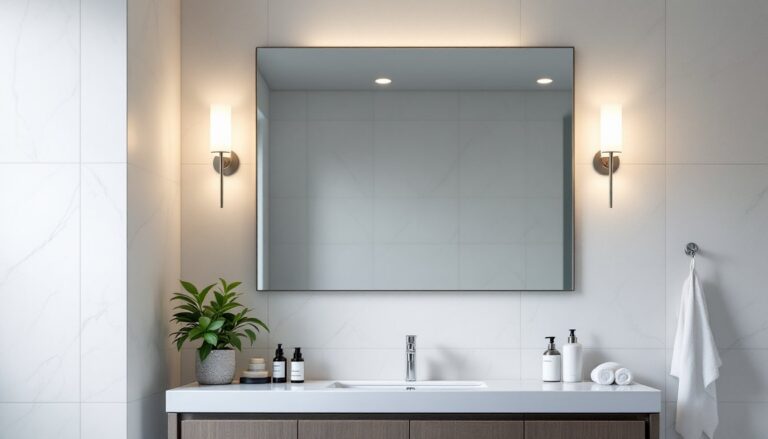
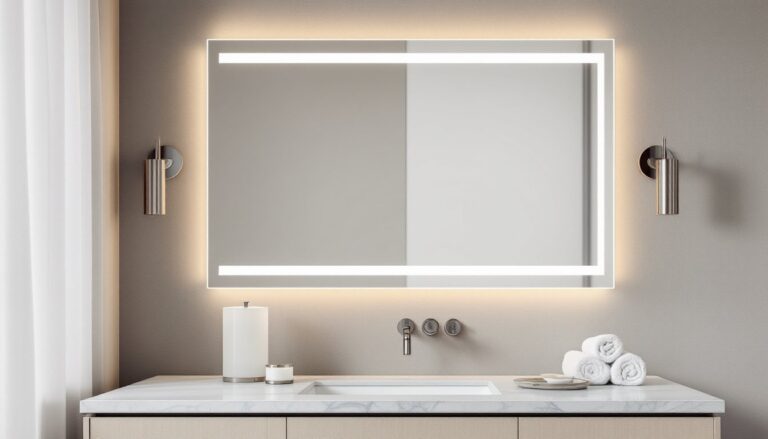
Vanity lighting is the workhorse of bathroom lighting. These fixtures mount on the wall beside or above the mirror, delivering focused light where you need it most. Wall-mounted vanity bars (typically 24 to 48 inches wide) position multiple bulbs at eye level, eliminating harsh shadows on your face. This is the gold standard for grooming tasks.
When choosing a vanity fixture, aim for at least 30 watts of LED-equivalent light per linear foot of mirror width. A 36-inch mirror should get roughly 90 watts total. Modern LED vanity bars use far less energy than older halogen or incandescent fixtures, expect 10 to 20 watts for equivalent brightness. Placement matters: Mount vanity lights 18 to 24 inches above the sink counter and at least 6 inches from the mirror edge to avoid direct glare.
Sconce fixtures mounted on either side of the mirror also work well, especially in narrow bathrooms. Two 40-60 watt-equivalent sconces flank the mirror and create balanced, shadow-free lighting. Ensure they’re moisture-rated and positioned to light your face, not the mirror surface.
Ceiling Fixtures and Recessed Lighting
A ceiling fixture provides ambient (overall) lighting and makes your bathroom feel complete. Central overhead fixtures are often the only light in older bathrooms, but they cast shadows and aren’t ideal for grooming. Still, they’re necessary for navigating the room at night and for general cleaning. Mount ceiling fixtures at least 8 feet above the floor to avoid hitting your head, and ensure they’re damp or wet-rated depending on proximity to the shower or tub.
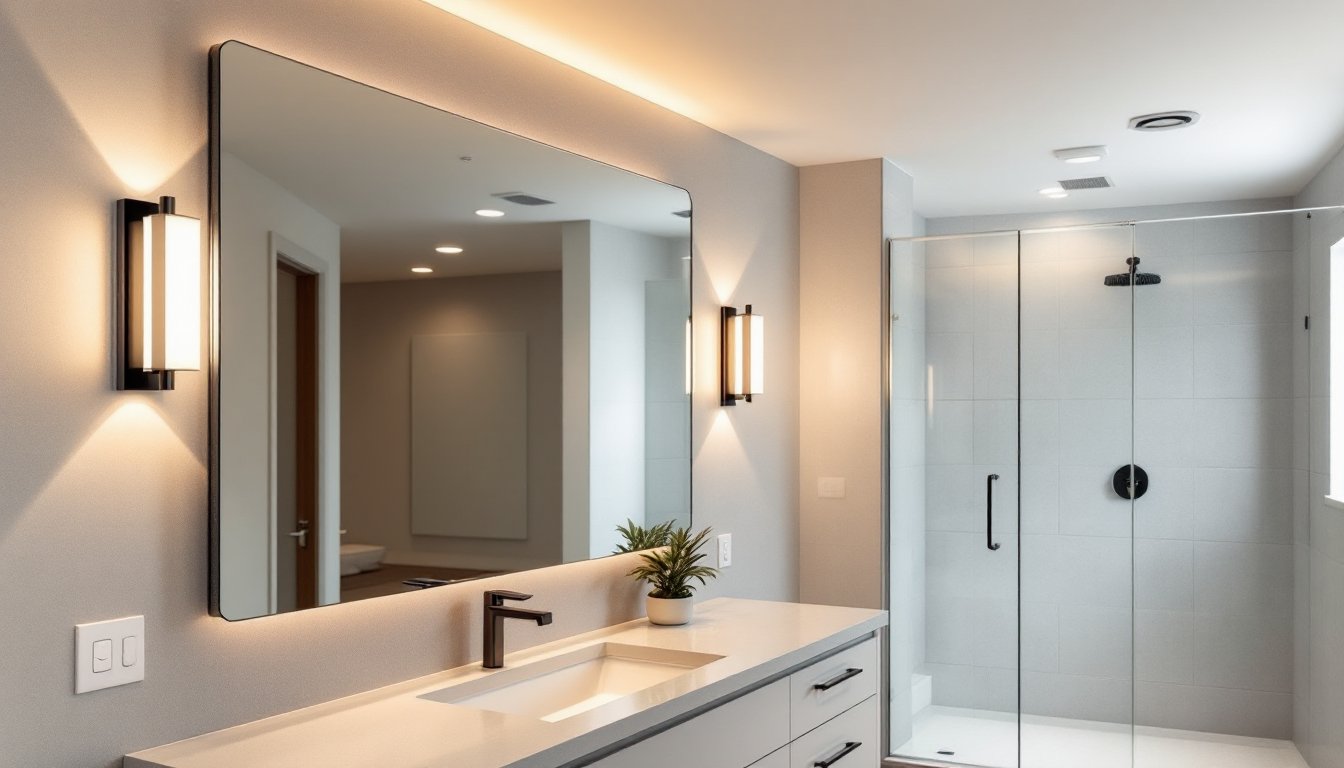
Recessed Lighting Placement: 7 fixtures (also called “can lights”) offer a clean, modern look. Recessed units sit flush in the ceiling, making the space feel larger. Plan spacing carefully: Typically, position recessed lights 4 to 6 feet apart for even coverage. In a small bathroom (under 50 square feet), two to three 65-75 watt-equivalent LED recessed lights are often enough. Larger bathrooms may need four or more.
If your bathroom has an exhaust fan, don’t place recessed lights directly above it, moisture and heat can damage housing insulation. Space them around the fan, maintaining at least 12 inches clearance. Make sure any recessed fixture you choose is rated IC (insulation contact) or non-IC, depending on whether insulation touches it from above in your attic: modern LED recessed fixtures are increasingly energy-efficient and easier to retrofit into older ceilings.
Planning Your Bathroom Lighting Layout
Before buying a single fixture, sketch your bathroom layout. Measure the room, note the location of the vanity, mirror, toilet, and shower or tub. Identify where natural light enters (windows, skylights) and how much sunlight the bathroom gets during the day.
A solid bathroom lighting plan includes three layers:
-
Ambient Lighting: A central ceiling fixture or recessed lights that illuminate the entire room. Aim for 2-3 lumens per square foot for general visibility. A standard 4-by-8-foot bathroom (32 sq ft) needs roughly 65-95 lumens from ambient fixtures.
-
Task Lighting: Vanity lights directly over or beside the mirror. This is where you spend 90% of your lighting effort. Prioritize brightness and color accuracy here, it’s worth spending money on a quality vanity bar.
-
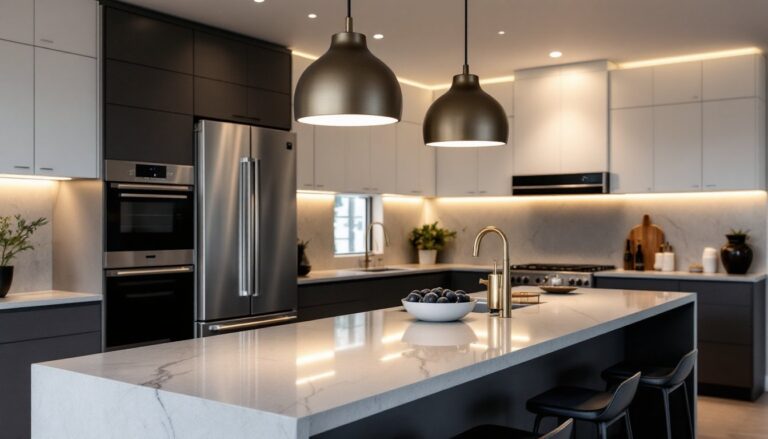
Accent Lighting: Optional but valuable. A small recessed light above the tub, a strip light under floating vanity shelves, or a corner nook light adds warmth and visual interest. Accent lights don’t need to be bright: 20-40 lumens is often enough.
Recessed Lighting Housing: Elevate your design by selecting fixtures that match your style. Modern bathrooms often favor minimalist chrome or matte black recessed trim, while transitional or traditional spaces may prefer decorative ceiling fixtures or vintage-style sconces.
Consider installing a dimmer switch on your ambient or accent lighting. Dimmers give you flexibility: bright light for cleaning, soft light for a relaxing bath. Ensure any dimmer is rated for LED bulbs: older dimmers may flicker with modern lighting. Modern Lighting: Transform your space by pairing a dimmable fixture with 2700K warm-white LEDs for maximum comfort and style.
Don’t forget about ventilation. Many building codes require exhaust fans in bathrooms without natural ventilation (see your local Building Department for specifics). If your fan has a light, that counts as ambient lighting, but it’s rarely enough on its own. Position your exhaust fan light away from task areas and use additional vanity lighting for grooming.
Installation Basics and Code Requirements
Before you start, understand the legal landscape. Bathroom lighting installation often requires a permit, especially if you’re adding new circuits or outlets. Work involving new wiring must comply with local electrical codes (typically the National Electrical Code, or NEC). If you’re only replacing existing fixtures on the same circuit, some jurisdictions allow unpermitted work, but check your local building department first. When in doubt, pull a permit. It’s cheap insurance and ensures an inspector signs off on safety.
Safety first: Turn off power at the breaker before touching any existing fixture. Use a non-contact voltage tester to confirm the power is off, don’t rely on the switch alone. Wear safety glasses and work gloves, and have a helper hold the fixture in place while you wire it.
For new vanity light installation:
- Turn off power at the breaker and test with a voltage detector.
- Remove the old fixture (if replacing) and carefully disconnect the wires, note which wire is hot (typically black), neutral (white), and ground (bare copper or green).
- If the outlet box is old or loose, secure it with a brace between studs.
- Connect the new fixture’s wires using wire connectors (twist-ons rated for the wire gauge), black to black, white to white, ground to ground.
- Secure the fixture trim and install bulbs, then test at the breaker.
For recessed lighting, installation is more involved if you’re cutting new ceiling holes. Home Depot Bathroom carries retrofit kits that fit into existing ceiling cavities, these don’t require opening new holes and are ideal for DIYers. Standard recessed housings are 4 to 6 inches in diameter and need 6-8 inches of clearance above the ceiling. In finished ceilings with insulation or HVAC ducts, recessed lighting is sometimes impossible without professional help.
Code reminder: Bathroom lighting must be GFCI-protected (Ground Fault Circuit Interrupter). Any outlet within 6 feet of a sink, tub, or shower requires GFCI protection by code. Many modern bathrooms use a GFCI breaker or a GFCI outlet to protect the entire circuit. If you’re uncertain about the wiring or existing GFCI status, hire a licensed electrician. Water and electricity don’t mix, and a single mistake can be deadly.
For added style and efficiency, consider smart bulbs or WiFi-enabled dimmers. These let you adjust brightness and color temperature from your phone, which is handy if your bathroom lacks natural light. Most smart bathroom bulbs are LED and cost $15-40 per bulb, not cheap, but they last 15-25 years and save money on energy. Home Depot Lighting Fixtures: Transform your bathroom with energy-efficient options that also offer long-term savings.
Conclusion
A well-lit bathroom is the product of thoughtful planning, the right fixtures, and careful installation. Layering ambient, task, and accent lighting creates a space that’s both functional and inviting. Start by evaluating your current setup, are shadows plaguing your vanity? Is the overall light too dim or too cold? Then sketch a plan, choose damp/wet-rated fixtures that match your style, and either tackle the installation yourself (for simple fixture swaps) or call a licensed electrician for new wiring. Your morning routine, and your reflection in the mirror, will thank you.