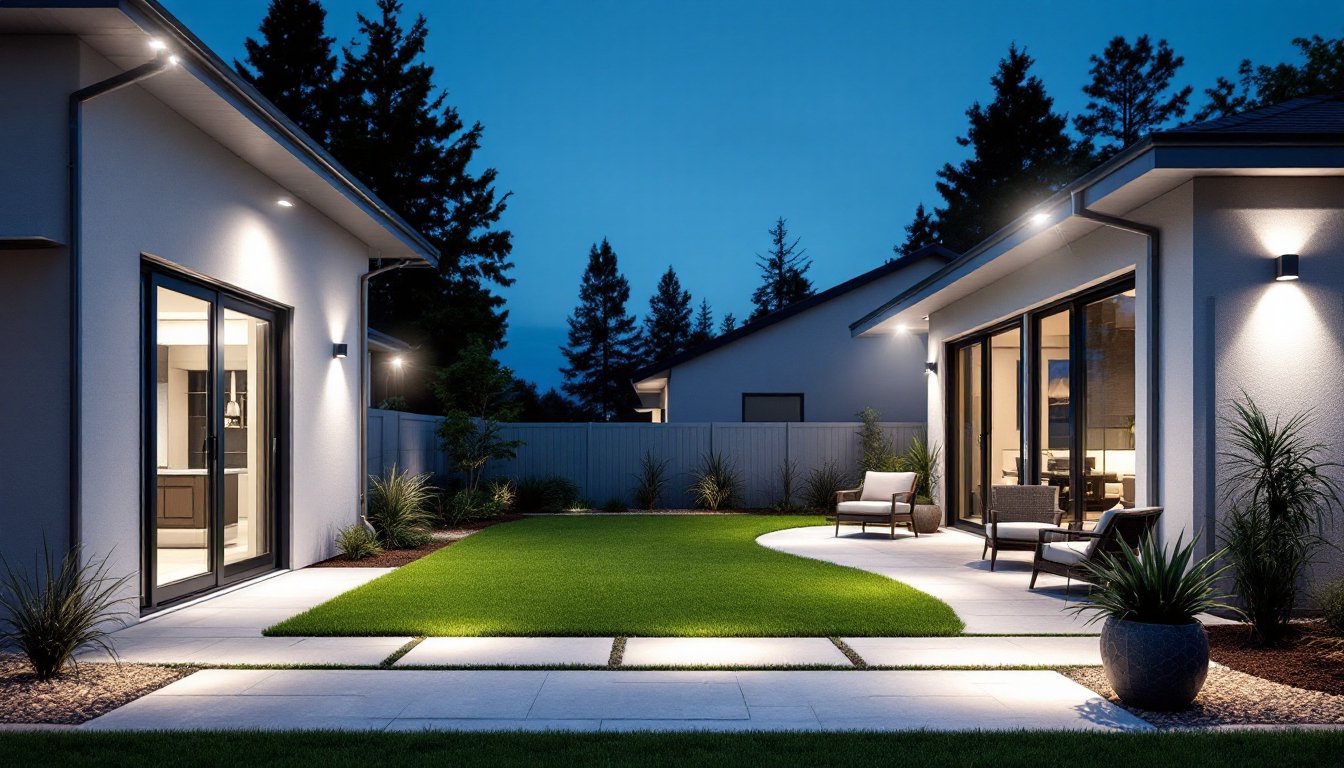
When the sun dips below the horizon, your outdoor space doesn’t have to fade into shadow. Bright outdoor lighting transforms your yard into a functional, secure, and visually appealing extension of your home, whether you’re lighting a pathway, securing the perimeter, or creating an inviting backyard gathering spot. Finding the right brightness level and light type is key. This guide walks homeowners through the brightest outdoor lighting solutions available today, from powerful LED floodlights to smart solar-powered options, helping you choose fixtures that actually deliver the illumination you need without wasting energy or money.
Table of Contents
ToggleKey Takeaways
- Brightest outdoor lighting is measured in lumens—pathways need 200–300 lumens for ambiance, while security floodlights require 1,500–10,000+ lumens depending on area size and purpose.
- LED floodlights are the gold standard, delivering 2,000–20,000+ lumens while consuming 75–80% less energy than halogen fixtures and lasting 25,000–50,000+ hours.
- Motion-sensor lights maximize efficiency by drawing power only during activity, cutting electricity use by 50–70% compared to always-on fixtures.
- Solar-powered outdoor lighting eliminates wiring costs but delivers limited brightness (typically 500 lumens for pathway lights), making it best suited for decorative accents rather than high-security applications.
- Strategic light placement 12–15 feet above ground with 30–45 degree off-axis positioning prevents glare and creates uniform coverage better than a single high-wattage fixture.
Why Brightness Matters in Outdoor Lighting
Brightness in outdoor lighting isn’t just about visibility, it’s about functionality and safety. Measured in lumens (the total amount of visible light), outdoor brightness determines whether a space feels welcoming or remains a tripping hazard. A pathway light at 200 lumens feels warm and atmospheric: a security floodlight at 5,000+ lumens illuminates an entire yard and deters intruders.
Different zones need different brightness levels. An accent light highlighting a planter might use 100–300 lumens, while a driveway or security light needs 1,500–3,000+ lumens. Under-lighting leaves dark corners: over-lighting wastes energy and creates glare. Understanding your specific needs, whether it’s navigation, security, or ambiance, ensures you buy fixtures that perform, not oversell.
ColorTemp (measured in Kelvin) also matters. Warmer lights (2700K) create cozy atmospheres: cooler lights (4000–5000K) feel more security-focused and reveal detail. Many homeowners pair both: warm accent lights for walkways and dining areas, cooler floodlights for perimeter security.
LED Floodlights: The Gold Standard for Outdoor Brightness
LED floodlights dominate the outdoor brightness market for good reason. They deliver high lumen output (2,000–20,000+ lumens), consume 75–80% less energy than halogen or incandescent fixtures, and last 25,000–50,000+ hours. You’ll recoup your upfront cost through lower electricity bills within a few seasons.
When shopping for an LED floodlight, look at wattage equivalents carefully. A 50-watt LED floodlight rivals a 300–400-watt halogen fixture in brightness. Top outdoor floodlights often include wide beam angles (100–120°) to cover larger areas without hot spots or dark zones. Aluminum housings with an IP65 or IP66 rating (dust and water-resistant) ensure durability in rain, snow, and harsh sun.
Before purchasing, check compatibility with your power setup. Some LED floodlights work with existing halogen sockets (plug-and-play replacements), while others require hardwired installation. The brightest outdoor security lights reviewed in recent tests show that lumens per watt (efficacy) separates premium models from budget options. A quality 50-watt LED floodlight might deliver 100 lumens per watt, while cheaper versions drop to 60–70 lumens per watt, meaning they’re less efficient and dimmer for the same power draw.
Solar-Powered Bright Lighting Solutions
Solar-powered outdoor lights eliminate wiring and electrical costs, making them appealing for renters, garden accents, and remote areas. But, brightness is the trade-off. Most solar pathway lights top out at 500 lumens, adequate for gentle illumination but not security-grade brightness.
High-end solar floodlights have narrowed this gap. Premium models with large solar panels and high-capacity batteries deliver 2,000–4,000 lumens once charged, approaching traditional LED performance. They require 6–8 hours of direct sunlight daily to function reliably, so placement matters: south-facing, unshaded panels deliver the most energy.
Expectations matter here. If you live in a cloudy climate or have a shaded yard, solar brightness will disappoint. Battery degradation also means solar lights get dimmer over 3–5 years. For permanent security or high-traffic areas, hardwired LED floodlights remain the brighter, more reliable choice. Save solar for decorative pathways, accent lighting, or locations where you can’t easily run power lines.
Motion-Sensor Lights for Security and Efficiency
Motion-activated lights maximize brightness exactly when you need it. They draw power only during activity, cutting electricity use by 50–70% compared to always-on fixtures. A 30-watt LED motion-sensor floodlight might run full brightness for 30 seconds to 2 minutes, then step down or off, saving hundreds annually on a large property.
Quality motion sensors distinguish between passing cars, animals, and people, reducing false triggers. Adjustable sensitivity, range (typically 30–50 feet), and timer settings let you fine-tune performance for your home. Some models offer multiple brightness levels: full brightness on detection, then a dim “always-on” mode for gentle pathway lighting. This approach balances security, efficiency, and livability.
Installation is straightforward for most homeowners. If your house has an exterior outlet, a plug-in motion light requires no wiring. Hardwired models involve running a 14-2 or 12-2 electrical cable to the fixture location and connecting to a breaker (typically a dedicated 15 or 20-amp circuit for safety). Check local electrical codes before hardwiring: some jurisdictions require a licensed electrician for outdoor circuits. Motion sensors perform best in cool climates: hot, humid areas can cause sensitivity drift over time.
Installation Tips for Maximum Light Coverage
Placement makes or breaks brightness. A single overhead fixture casts shadows: strategic positioning fills those gaps and maximizes coverage. For a typical residential lot, position lights 12–15 feet above ground to reduce glare while spreading illumination.
Start by identifying dark zones: entryways, corners where two walls meet, poolside edges, and driveway borders. Sketch your property and mark these spots, then place floodlights 30–45 degrees off-axis from high-traffic areas to avoid direct glare. Multiple lower-wattage fixtures (e.g., four 10-watt LEDs) often outperform a single 50-watt fixture in coverage uniformity.
Safety first: If hardwiring, turn off power at the breaker before any work. Outdoor circuits should use GFCI (Ground Fault Circuit Interrupter) outlets or breakers, a safety feature that kills power instantly if water touches a live conductor. Bury cables 12 inches underground when possible, or use conduit above-ground. Seal all outdoor connections with weatherproof junction boxes and silicone caulk. For pole or wall mounting, ensure brackets handle wind load: many outdoor lights experience failure from loose mounts, not bad bulbs.
Test lights before finalizing installation. Move a temporary light around your yard to find the sweet spot, then commit fixtures to permanent locations.
Choosing the Right Brightness Level for Your Space
Right-sizing brightness prevents waste and ensures functionality. A 5,000-lumen floodlight over a small back patio is overkill and ugly: a 200-lumen accent light on a sprawling driveway won’t illuminate it safely.
Use this rough guide: Pathways and accent lighting (50–300 lumens): patio/deck ambiance (300–800 lumens): driveway and general yard safety (1,500–3,000 lumens): perimeter security and large-scale coverage (3,000–10,000+ lumens). Color temperature also influences perceived brightness. A 3,000K warm light feels softer and less intense than a 5,000K cool light at the same lumen output, a psychological effect worth considering.
Once you’ve selected fixtures, use a light meter app or visit the space at night with a handheld flashlight to simulate brightness before buying. Many retailers offer 30-day returns, so purchase and test first if unsure. Pay attention to beam angle (narrow 30–45° angles for distant targets, wide 100–120° angles for general coverage) and make sure metal fixtures won’t overheat. Some LEDs are rated “open-air” only and require ventilation: enclosed fixtures risk premature failure. If you’re upgrading existing lighting, LED Lighting: Transform Your provides deeper insights into energy efficiency and cost payback across multiple room types.
Conclusion
The brightest outdoor lighting combines high lumens, efficient LED technology, smart placement, and proper installation. Whether you choose hardwired floodlights, solar options, or motion sensors, match brightness to your space’s actual needs. Start with a plan, test layouts, follow safety codes, and don’t hesitate to call a licensed electrician if hardwiring feels out of reach. Done right, bright outdoor lighting pays dividends in safety, security, and curb appeal for years to come.