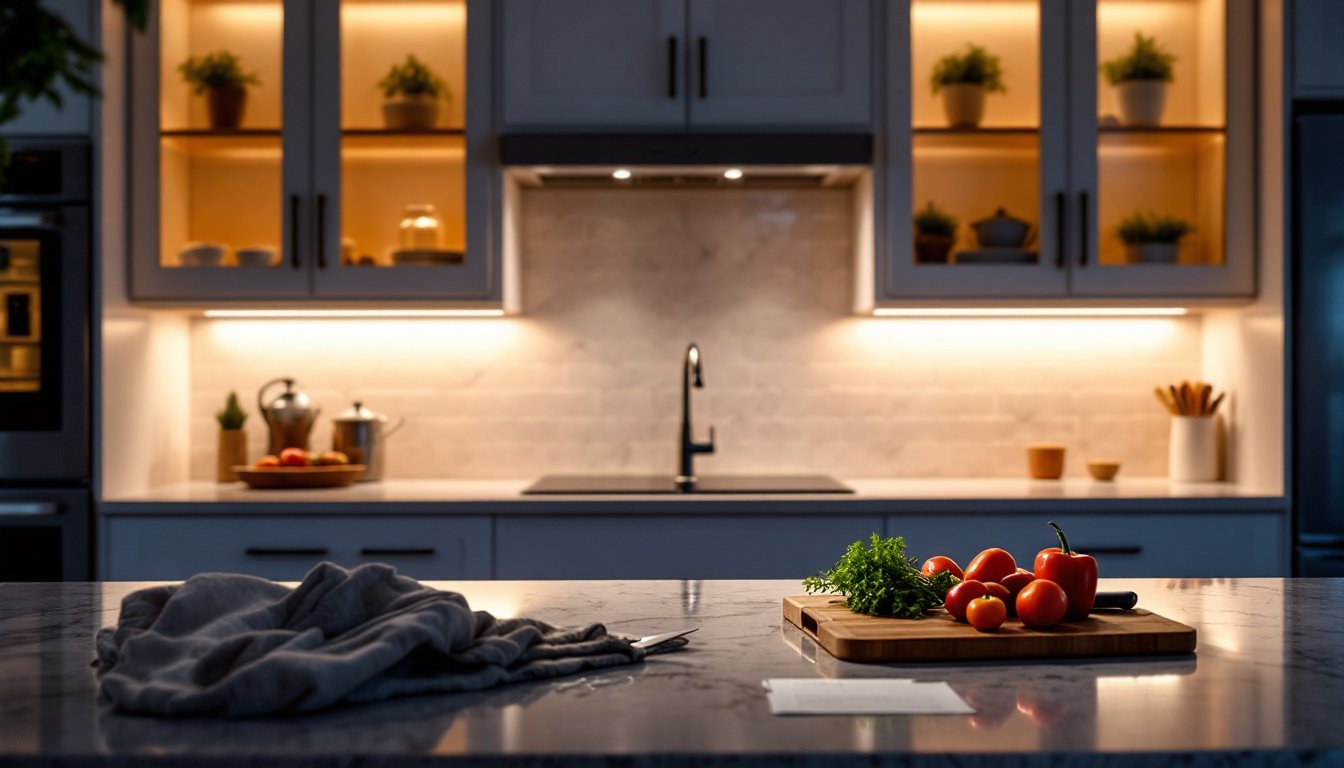
Under cabinet lighting transforms how a kitchen functions and feels. It cuts through shadows where countertops meet cabinets, making food prep safer and easier while adding warmth to the space. Unlike overhead fixtures alone, under cabinet lights illuminate work surfaces directly, reducing eye strain during cooking and detail work. The good news? Installing it yourself is entirely doable and costs a fraction of hiring an electrician. This guide walks through everything from choosing the right fixture to flipping the switch on your brighter kitchen.
Table of Contents
ToggleKey Takeaways
- DIY under cabinet lighting eliminates shadows on countertops and reduces eye strain during food prep, making it safer and more functional than overhead lights alone.
- LED strip lights and puck lights are the main options—strips offer seamless, affordable coverage ($20–$60), while puck lights provide focused spotlighting and are sturdier for high-traffic kitchens.
- Proper mounting placement 2–3 inches from the cabinet’s front edge and clean, dry surfaces are critical for adhesive-backed strips to hold securely long-term.
- Plug-in kits avoid electrical rewiring and cost less, but hardwired under cabinet installations look cleaner and may require a licensed electrician depending on local building codes and permit requirements.
- Warm white LEDs (2700K–3000K) create an inviting ambiance, while cooler white (4000K–5000K) boosts task visibility—dimmable options let you adjust brightness for cooking and evening relaxation.
- Always test all lights and confirm even coverage before finishing installation, and hire a licensed electrician for new circuits to ensure code compliance and safety.
Why Under Cabinet Lighting Matters for Your Kitchen
Task lighting under cabinets serves a real purpose beyond aesthetics. When you’re chopping vegetables, reading a recipe card, or plating food, overhead lights cast your own shadow across the counter. Under cabinet fixtures eliminate that problem by shining light where you actually need it.
Beyond functionality, under cabinet lighting changes kitchen ambiance. Warm white LEDs (2700K–3000K color temperature) create an inviting glow that makes the kitchen feel larger and more welcoming. Cooler white (4000K–5000K) boosts visibility and works better for task-heavy kitchens. This approach to home lighting secrets transforms how a space feels throughout the day.
Safety matters too. Better lighting reduces the risk of cut fingers and slips. Plus, if you’re selling your home, quality task lighting is a small upgrade that catches buyers’ eyes during showings. It signals attention to detail and functionality, the opposite of a dark, cluttered counter.
Types of Under Cabinet Lighting Options
Your main choices come down to LED strips and puck lights, each with pros and cons.
LED Strip Lights vs. Puck Lights
LED strip lights are continuous, adhesive-backed strips that hug the underside of cabinets. They’re affordable (often $20–$60 per kit), install flat against surfaces, and provide seamless coverage. Most come with a plug or hardwire connector at one end. The downside: longer strips can develop dark spots at connections, and cheap versions sometimes flicker or shift color over time.
Puck lights are small, round or rectangular fixtures spaced 12–18 inches apart. They’re bulkier but offer focused beams, making them ideal for highlighting specific countertop zones. Puck kits run $40–$150 depending on quality. They’re sturdier and easier to replace individually if one fails.
For most DIYers, LED strip lights work well for continuous, even lighting. Use puck lights if you want adjustable brightness or spotlighting. Many modern under cabinet kits use dimmable LED technology, so you can dial brightness up during cooking and down for ambient evening light.
Consider also whether you want plug-in or hardwired. Plug-in strips cost less and avoid rewiring, but they need an outlet nearby. Hardwired installations look cleaner but require running power from a breaker or switch, a job that may need a licensed electrician, depending on your local code.
Tools and Materials You’ll Need
Gathering the right tools and materials upfront prevents frustrating mid-project runs to the store.
Materials:
- Under cabinet LED light kit (strip or puck, dimmable is ideal)
- Connector cables or extension cords (if needed)
- Mounting tape, clips, or screws (check what your kit includes)
- Wire connectors or solder and solder gun (only if hardwiring)
- Electrical tape
Tools:
- Tape measure
- Level
- Pencil for marking
- Screwdriver (cordless or manual)
- Drill with bits (if mounting with screws into cabinet material)
- Utility knife (for trimming adhesive tape backings)
- Wire stripper (for hardwired installations)
- Work gloves and safety glasses
For plug-in kits, you may only need a measure, level, and screwdriver. For hardwired setups, add an electrical tester to confirm power is off before touching wires. If you’re uncomfortable running new electrical circuits, stop and call a licensed electrician, this isn’t laziness, it’s code compliance and safety. Many jurisdictions require a permit and inspection for new lighting circuits.
Step-by-Step Installation Guide
Planning Your Layout and Measurements
Start by measuring the under-cabinet space where you want lights. Most cabinets are 12–24 inches deep: you’ll install lights 2–3 inches from the cabinet’s front edge. This keeps light from shining into the user’s eyes and directs it onto the counter.
Decide on spacing: for continuous strips, you need one per cabinet run (typically 24–48 inches). For puck lights, space them 12–18 inches apart, depending on brightness. Mark mounting points with a pencil, using a level to ensure a straight line. This step prevents a crooked, obviously-DIY appearance.
If hardwiring, trace how power will run from the breaker, through cabinet frames, and to each fixture. Confirm your outlet or breaker location and plan the hidden route, usually through the cabinet frame or along the back of upper cabinets. If the path involves studs or joists, you may need to drill holes or run conduit. Again, local code varies: some regions require conduit for new circuits, others don’t. Check your municipal building department’s guidelines before proceeding.
Mounting and Securing Your Lights
Clean the cabinet undersurface with a dry cloth or light damp cloth. Dust and grease prevent adhesive tape from holding long-term. Let surfaces dry completely if wet.
For adhesive-backed strips: Peel the backing and press firmly along the pencil line you marked. Start at one end and work toward the other, applying even pressure for 10–15 seconds as you go. Don’t stretch the strip as you apply it: this causes kinks and poor adhesion.
For screw-mounted strips or pucks: Drill pilot holes first (slightly smaller than the screw diameter) to prevent splitting cabinet material. Screw fasteners in until snug, overtightening strips can warp the mounting bracket. Use washers on softer materials like plywood to distribute pressure.
Once mounted, connect power. For plug-in kits, simply run the cord to a nearby outlet or use an extension cord if needed. Route cords along cabinet edges or down the back: never leave them exposed across the counter.
For hardwired setups, turn off power at the breaker before touching any wires. Strip ¾ inch of insulation from each fixture wire and the circuit wire using a wire stripper. Twist matching wires together (black to black, white to white, bare copper to bare copper) and secure with wire connectors. Wrap each connection with electrical tape. If running new circuits, hire a licensed electrician, this work requires permits, inspections, and expertise most DIYers don’t have.
Test all lights before closing up cabinet spaces. Check that the recessed lighting placement and under cabinet fixture angles give you even coverage without glare. If using dimmable lights, test the dimmer switch at various levels. Adjust puck angles if they’re mounted on ball joints for better countertop coverage.