A double vanity is a game-changer for shared bathrooms, until the lighting lets you down. Poor illumination at the sink leaves one person squinting while the other gets washed out. Double vanity lighting isn’t just about aesthetics: it’s about function, balance, and making sure two people can get ready simultaneously without shadowing each other out. Whether you’re installing fixtures from scratch or upgrading an existing setup, getting the placement, wattage, and style right transforms your bathroom from frustrating to functional. This guide walks you through the essentials of double vanity lighting, from fixture selection to installation, so you can avoid the common pitfalls and nail the setup on your first attempt.
Table of Contents
ToggleKey Takeaways
- Double vanity lighting requires 60–100 watts of distributed task lighting total (30–50 watts per person) to eliminate shadows and provide even illumination for two people simultaneously.
- Sconces should be mounted at eye level (60–66 inches from floor) spaced 24–40 inches apart, with frosted or opal diffusers to reduce glare and distribute light evenly across both sinks.
- Choose neutral white light (3500K–4100K) and fixtures with CRI 90 or higher to ensure accurate color rendering for grooming tasks like makeup application and shaving.
- All bathroom lighting installations require GFCI protection and a dedicated 20-amp circuit; improper electrical work can be costly and dangerous, so hire a licensed electrician if uncomfortable with wiring.
- LED vanity fixtures now use 75–85% less energy than incandescent bulbs while lasting 15,000–50,000 hours and matching superior light quality.
- Match your double vanity lighting fixtures to your faucet and hardware finish to create visual harmony, and avoid centralized overhead fixtures that create shadows under the chin.
Understanding Double Vanity Lighting Basics
Double vanity lighting is fundamentally different from single-sink setups because you’re lighting two separate work zones simultaneously. The goal is to eliminate shadows on both faces and provide even, flattering illumination without creating glare on mirrors or backsplashes. Most building codes and industry standards recommend 30–50 watts of task lighting per person at the vanity, which means a double vanity ideally needs 60–100 watts of effective illumination total. This doesn’t mean one bright fixture, it means thoughtful distribution across sconces, overhead lights, or strip lighting. The color temperature matters too. Neutral white light (3500K–4100K) mimics natural daylight and gives the most accurate reflection for grooming tasks, while warm light (2700K–3000K) can feel cozy but may hide skin issues or makeup inconsistencies. The key difference between a mediocre setup and a professional one is understanding that dual vanities need distributed light, not centralized. A single overhead fixture centered between two sinks creates shadows directly under each person’s chin, basically the worst-case scenario for applying makeup or shaving.
Why Proper Lighting Matters for Dual Vanities
Flattering, shadow-free lighting at a double vanity prevents frustration and safety issues. Poor lighting leads to missed shaving spots, uneven makeup application, and people leaning over the sink in awkward positions trying to catch better light. From a design perspective, correctly lit dual vanities become a visual focal point that balances the bathroom’s overall aesthetic. Bathroom lighting is one of the most-used task lights in a home, so getting it right pays dividends daily. The mistake many homeowners make is treating the vanity area as an afterthought, slapping up one overhead fixture and calling it done. In reality, layers of light (task, ambient, and accent) work together to create a functional and visually balanced space.
Sconce Placement and Spacing Guidelines
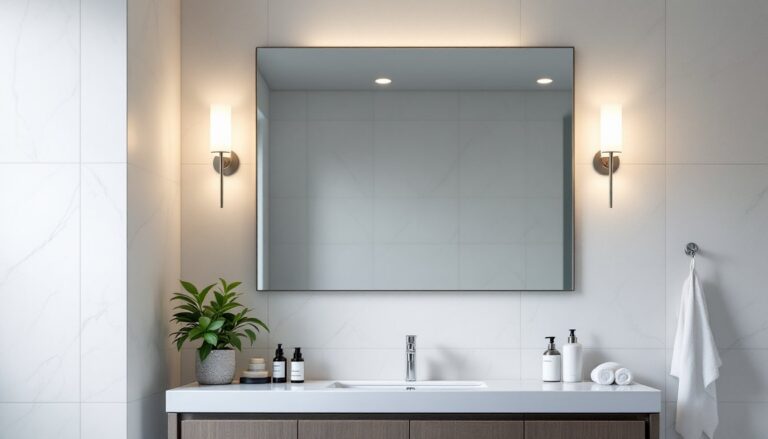
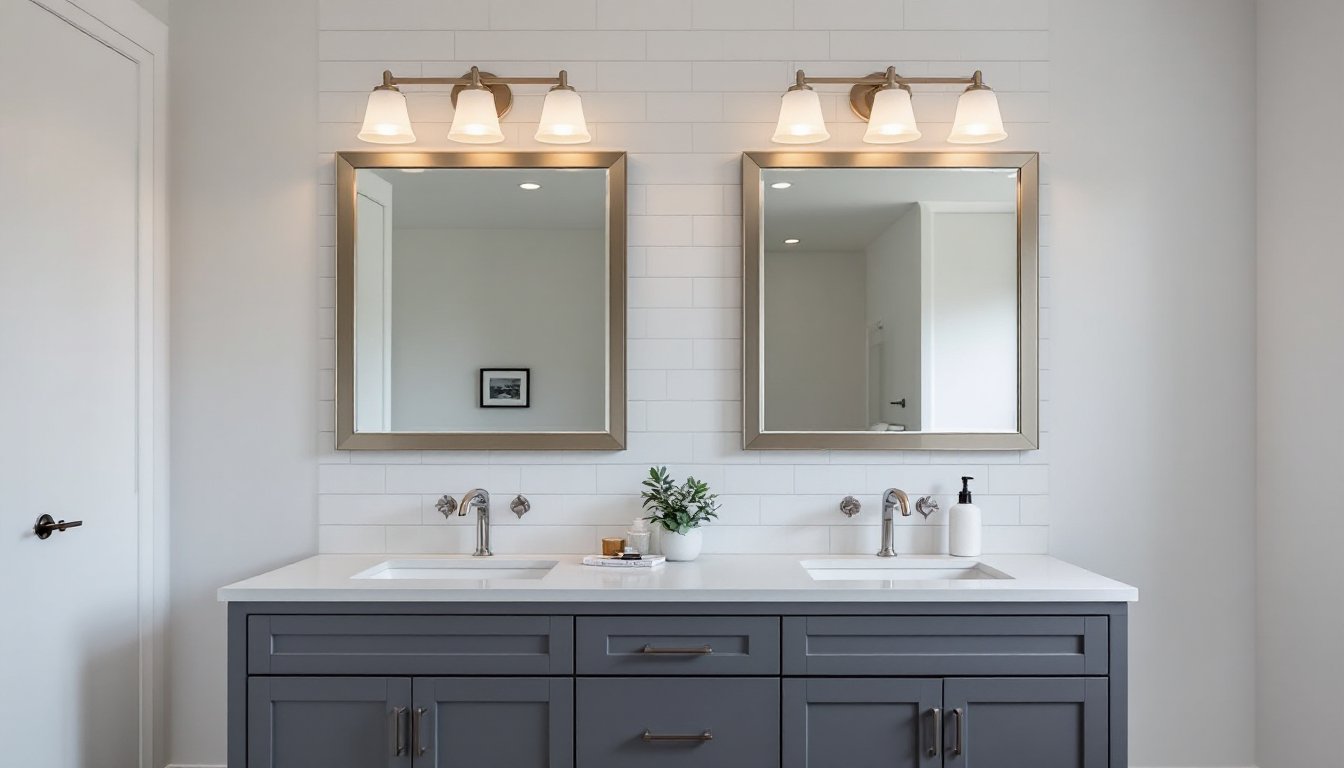
Sconces are the workhorse of vanity lighting. Install them at eye level, typically 60–66 inches from the floor to the center of the fixture, so light hits your face directly, not from above or below. For a double vanity, the standard rule is one sconce on each side of the mirror, positioned about 36–40 inches apart if the mirror spans the full width. If your vanity has a large centered mirror, position sconces 24–30 inches out from the mirror’s center line on each side. This spacing ensures light reaches both sinks without creating a dark zone in the middle. Each sconce should provide 250–500 lumens (roughly 40–60 watts equivalent in LED). The width of each fixture should be roughly one-quarter the mirror width, so for a 48-inch mirror, aim for two 12-inch sconces. Check your local electrical code before installation: most jurisdictions require bathroom lighting circuits on a dedicated 20-amp circuit, and bathroom outlets within 6 feet of the sink must have ground-fault circuit interrupter (GFCI) protection.
Choosing Fixture Types for Double Vanities
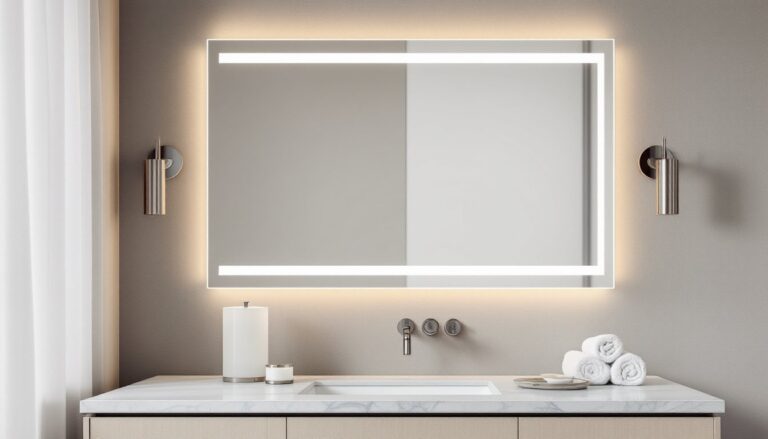
Your fixture choice shapes both the aesthetics and performance. Sconces remain the gold standard for vanity lighting because they distribute light evenly and come in endless styles. Look for sconces with opal or frosted glass diffusers to soften light and reduce glare, clear glass fixtures can feel harsh and create hot spots on the mirror. Vanity strips (also called bathroom bars or light rails) are a single horizontal fixture that spans above the mirror. They’re efficient for long mirrors and simplify wiring, but they can still create shadows if mounted too high or too low. Overhead recessed lights work best as supplementary ambient light, not the primary task light. If you go this route, combine them with sconces to avoid the shadowing problem mentioned earlier. LED technology has revolutionized bathroom lighting: LED fixtures now match or exceed the light quality of incandescent bulbs while using 75–85% less energy and lasting 15,000–50,000 hours. When shopping, pay attention to the fixture’s color rendering index (CRI), which measures how accurately colors appear under that light. Aim for CRI 90 or higher for vanity lighting. Home Depot Bathroom Lighting for specific fixture examples and current availability in your area. Finish choices (brushed nickel, chrome, matte black, bronze) should complement your faucet and hardware. Consistency matters, mismatched fixtures create visual chaos, especially in smaller bathrooms.
Installation Tips for DIY Success
Proper installation starts with planning. Turn off power at the breaker before touching any existing fixtures. Measure twice: find studs or blocking behind drywall using a stud finder, because mounting to drywall alone won’t hold heavy fixtures safely. Most sconces should mount into studs or use toggle bolts rated for at least 25 pounds. Mark the height (60–66 inches from floor) and the distance from the mirror’s centerline. Use a level to ensure fixtures are perfectly horizontal, even a slight tilt looks sloppy. For new installations, run 14-gauge wire on a dedicated 20-amp circuit with GFCI protection. If you’re uncomfortable with electrical work, hire a licensed electrician: mistakes here are costly and dangerous. When removing old fixtures, photograph the wire connections before disconnecting anything. Match black to black, white to white, and ground (bare copper or green) to ground. Secure all connections with wire nuts rated for the wire gauge, then wrap with electrical tape. Use wire strippers to expose about 3/4 inch of copper on each wire. Avoid overtightening mounting hardware, it can crack glass or ceramic elements. Test the circuit before closing walls or finishing cosmetics. Once everything’s wired and secure, install the sconces’ trim rings or shades according to manufacturer instructions. Check that light spread reaches both sinks equally. A quick way to verify: stand at each sink position and confirm your face is evenly lit without shadows under the chin or cheekbones.
Design Inspiration and Style Considerations
Your vanity lighting sets the tone for the entire bathroom aesthetic. Minimalist bathrooms pair well with clean-lined sconces in chrome or brushed nickel, while traditional spaces benefit from vintage-inspired fixtures with milk glass or fabric shades. Contemporary designs often embrace asymmetry or statement fixtures, think geometric shapes or bold finishes like matte black or aged brass. The rule of thumb: your vanity fixtures should echo your faucet and cabinet hardware to create visual harmony. If your faucet is polished chrome, your sconces should also be chrome: mixing finishes deliberately is a design choice, not an accident. Don’t overlook the mirror itself, a large, well-lit mirror becomes a design element. Pairing a statement mirror frame with understated sconces (or vice versa) creates balance. Designers on HGTV and MyDomaine consistently emphasize that vanity lighting should feel integrated, not tacked on. Consider dimmer switches for bathrooms where the vanity doubles as a grooming and relaxation space. Dimmers let users dial in task lighting for morning routines and softer ambient light for evening baths. Ensure any LED fixtures you buy are dimmable-compatible if you go this route, as not all LEDs work smoothly with standard dimmers. Finally, verify that your chosen fixtures fit your mirror size and vanity layout before purchasing. A 48-inch vanity with a 72-inch mirror has very different lighting requirements than a 72-inch vanity with a 48-inch mirror. Take photos of your space and bring them to a lighting showroom: staff can suggest options that balance style and function.
Conclusion
Double vanity lighting doesn’t have to be complicated. Stick to proven principles: position sconces at eye level 24–40 inches apart, use fixtures with frosted diffusers and high CRI, and ensure adequate wattage (60–100 watts total). The detailed guidance on installing flattering lighting in bathrooms offers additional technical insights. Take time with installation, use proper fixtures rated for bathroom use, and don’t skip the GFCI protection. Your shared bathroom will thank you every single morning.