Dining room lighting sets the tone for everything that happens around your table, from family dinners to assignments sessions to holiday gatherings. The wrong fixture leaves your table in shadow or washes everyone out under harsh glare. The right choice creates an inviting focal point that flatters faces, highlights your food, and turns a functional space into somewhere people actually want to linger. If you’re replacing an outdated chandelier or starting from scratch, understanding your options in dining room lighting over table areas will help you make a choice that’s both functional and visually right for your home.
Table of Contents
ToggleKey Takeaways
- Dining room lighting over table should balance task and ambient light with warm color temperatures (2700K–3000K) to flatter faces and create an inviting atmosphere.
- Hang fixtures 30 to 36 inches above the table surface, with size matched to your table dimensions: 14–16 inch pendants for 36-inch round tables and 24–30 inch chandeliers for larger 48-inch or rectangular tables.
- Pendant lights, chandeliers, and linear fixtures each offer distinct benefits; choose based on your ceiling height, table shape, and whether you need flexibility over a centered focal point.
- Install a dimmer switch and use dimmable LED bulbs in warm white to transform your dining space for both everyday meals and special occasions without rewiring costs.
- Always hire a licensed electrician for any rewiring, new ceiling boxes, or electrical work to ensure NEC code compliance and support the fixture’s weight safely.
Why Dining Room Table Lighting Matters
Good dining room lighting does more than illuminate, it defines the entire eating experience. Insufficient light forces diners to squint at their plates, kills conversation, and makes the space feel cramped or uninviting. Overlighting with bare bulbs or unshielded fixtures creates glare that bounces off dishes and glasses, straining the eyes and flattening the room’s ambiance.
The best dining room table lighting balances task and ambient light. Task light lets people see what they’re eating: ambient light sets the mood. Color temperature matters too, warmer light (2700K to 3000K) feels inviting and flatters skin tones, while cooler light (4000K and above) feels sterile in a dining context.
Height, scale, and placement also affect both function and aesthetics. A fixture hung too high doesn’t provide enough focused light: too low and it becomes a visual obstruction. Home Lighting Secrets: Transform your dining area properly, and you’re not just eating, you’re creating a gathering space worth investing in.
Types of Fixtures for Dining Room Tables
Pendant Lights and Chandeliers
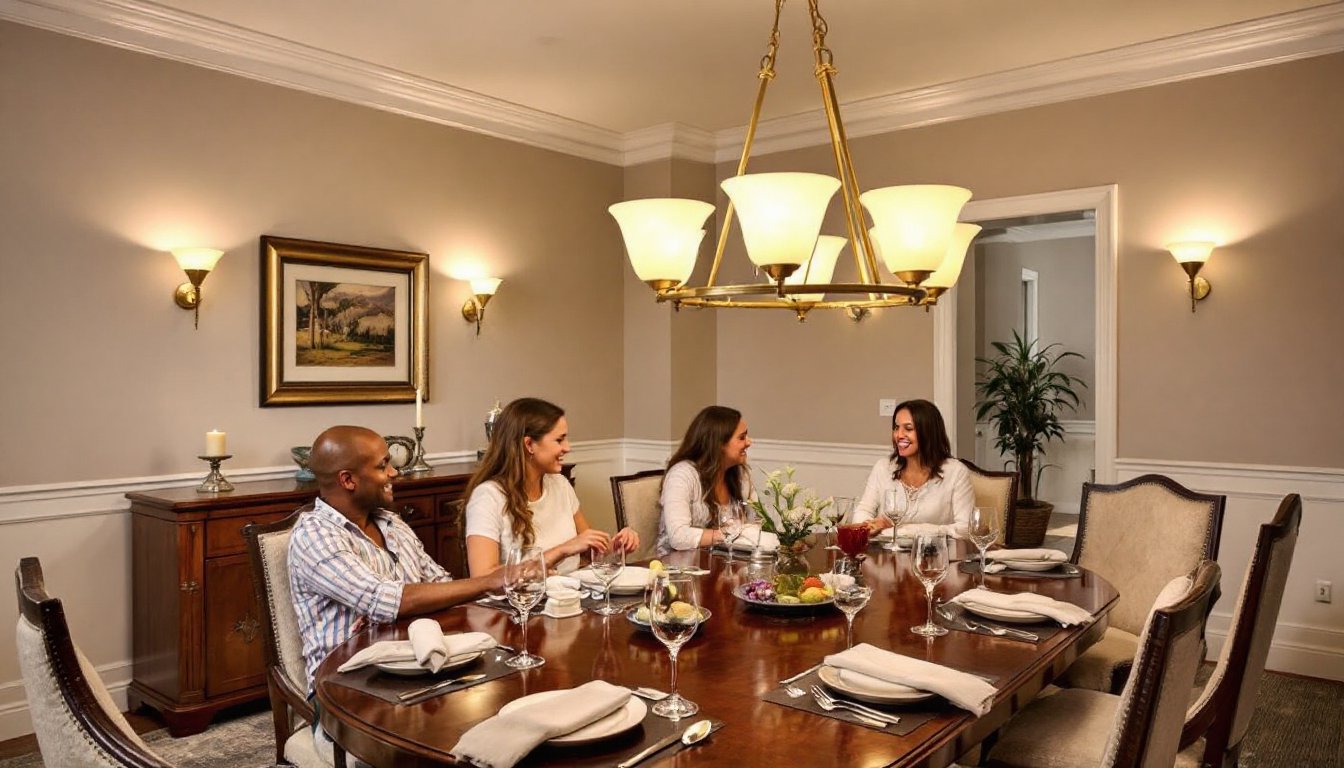
Pendant lights hang from a single cord or stem and work best in pairs or clusters over rectangular tables. A single large pendant can anchor a round or smaller table. Chandeliers, multi-armed fixtures, suit larger tables and higher ceilings, though a well-proportioned chandelier works in almost any dining space.
When choosing between the two, consider your ceiling height. Standard dining room ceilings are 8 feet: aim for 30 to 36 inches of clearance between the fixture’s bottom and table surface. If you have a 9-foot ceiling, you have more room to go lower and make a bolder statement. For an 8-foot ceiling, pendants or a smaller chandelier prevent a cramped feel.
Material and style matter for both durability and aesthetics. Brass and iron fixtures resist corrosion and age gracefully. Glass shades diffuse light evenly: metal shades focus light downward. Rustic Light Fixtures: Transform your dining area if you prefer warmth and character, or opt for clean-lined modern designs depending on your home’s overall character.
HouseBeautiful offers 20 excellent examples of pendant and chandelier arrangements that showcase real-world scale and color pairings.
Track Lighting and Linear Fixtures
Track lighting gives you flexibility, adjust bulbs and angles to highlight artwork, adjust brightness for different occasions, and add or remove fixtures without rewiring. It’s practical for open-concept spaces where a table isn’t directly under the ceiling.
Linear fixtures (straight bars with multiple bulbs) suit long, rectangular tables and modern aesthetics. They distribute light evenly along the table’s length and look cleaner than multiple pendants in some contemporary spaces. Both track and linear systems work well if your table isn’t centered under a single electrical box, no need for costly rewiring.
The downside: track lighting is less forgiving of awkward ceiling layouts and doesn’t create the dramatic focal point a statement chandelier or cluster of pendants does. For maximum flexibility and clean design, modern lighting solutions often employ linear fixtures paired with dimmer controls. Make sure any track or linear fixture you choose has warm-toned bulbs (2700K) and covers or diffusers to reduce glare.
Key Design and Installation Considerations
Size and Scale
Your fixture should feel proportional to your table and room. For a 36-inch-round table, a single 14- to 16-inch-diameter pendant or small chandelier works: a 48-inch round or 36-by-60-inch rectangular table calls for two 12- to 14-inch pendants or a larger 24- to 30-inch chandelier. A fixture that’s too small looks inadequate: too large overwhelms the table and blocks sightlines across the room.
Installation and Electrical Prep
If you’re hanging a new fixture over an existing outlet, rewiring is minimal, swap the old fixture for the new one. But if your table isn’t centered under the current ceiling box (common in older homes or open-concept layouts), you’ll need an electrician to run cable and install a new box. This is structural electrical work and typically requires a permit and licensed electrician in most jurisdictions. Never improvise with extension cords or inadequate boxes.
Hang pendants and chandeliers so the bottom sits 30 to 36 inches above the tabletop. If you’re installing recessed lighting as supplemental ambient light, recessed lighting placement around the fixture helps balance light and prevents harsh shadows. Elle Decor showcases 15 elegant designs that demonstrate how supplemental ambient light layers with focused table lighting.
Dimmer Control and Bulb Choice
Install a dimmer switch on your dining room circuit if possible, this single upgrade transforms the fixture’s usability. Bright light for cooking cleanup, dimmed light for evening entertaining. Pair your fixture with dimmable LED bulbs (check compatibility: not all LEDs dim smoothly). Warm white (2700K) bulbs are non-negotiable for flattering ambiance: cool white drains the room and unflatters food and skin tones.
Safety and Code Compliance
National Electrical Code (NEC) requires all electrical work to meet load capacity and grounding standards. Ceiling boxes must support at least 50 pounds for most fixtures: heavier chandeliers need reinforced fan boxes. Confirm your existing ceiling box is rated for your fixture’s weight before installation, don’t assume. If in doubt, hire an electrician. Building codes vary by jurisdiction, and dining room lighting often falls into general residential electrical code. Always pull a permit for new circuits or ceiling work.
Maintenance and Durability
Choose fixtures with covers or diffusers to reduce dust accumulation and glare. Brass and wrought iron age beautifully: painted steel can chip. Glass shades collect fingerprints and cooking grease, select materials you’re comfortable cleaning. MyDomaine offers practical styling tips that extend fixture longevity through smart placement and maintenance habits.
Conclusion
Choosing the right dining room table lighting combines aesthetics, function, and honest assessment of your space and comfort level. Size your fixture to your table and ceiling height, prioritize warm-toned dimmable bulbs, and don’t skip electrical safety, hire a professional for any rewiring. Whether you choose pendants, a chandelier, or track lighting, the goal is the same: create a fixture that makes people want to sit down, stay awhile, and enjoy good company under flattering light.