Kitchen lighting isn’t just about seeing what you’re doing, it’s about creating a space where you actually want to spend time. Whether you’re prepping dinner at 6 p.m. or grabbing a midnight snack, the right lighting in kitchen design makes all the difference. Good lighting improves safety, enhances functionality, and transforms the mood of your entire home. Most kitchens fail because homeowners install a single ceiling fixture and call it done. That approach leaves dark corners, creates shadows over countertops, and makes the space feel either sterile or gloomy. This guide walks you through the fundamentals of kitchen lighting, from the three essential layers to choosing fixtures that actually work with your layout and lifestyle.
Table of Contents
ToggleKey Takeaways
- Kitchen lighting should use a three-layer approach—ambient, task, and accent—to eliminate shadows, improve safety, and create an inviting space rather than relying on a single ceiling fixture.
- Aim for warm white (2700K–3000K) or neutral white (3500K–4100K) bulbs and roughly 50 lumens per square foot for ambient lighting, with recessed lights spaced 4–6 feet apart to avoid dark patches.
- Task lighting like under-cabinet LED strips, pendant lights over islands (hung 30–36 inches above), and sink lighting are essential to eliminate shadows during food prep and reduce eye strain.
- Choose dimmable LED bulbs with CRI 90+ for kitchens to ensure natural food colors and smooth brightness adjustment throughout the day, saving 75% energy compared to incandescent options.
- Proper fixture placement depends on your kitchen layout—galley kitchens need linear recessed lights, open kitchens benefit from island pendants as visual dividers, and pendant height should never drop below 30–36 inches above counters.
- Kitchen lighting improvements increase home value, improve functionality, and require planning for adequate circuits and switch placement per the National Electrical Code.
Why Kitchen Lighting Matters: Beyond Just Brightness
The kitchen is arguably your home’s hardest-working room. You slice, chop, and measure, tasks that demand clear visibility without harsh glare or shadows across your cutting board. Poor lighting creates eye strain, makes food prep slower and more frustrating, and increases accident risk. Beyond function, lighting shapes how your kitchen feels. A warm, layered approach makes the space inviting and comfortable for casual meals, while the same setup can be ramped up to bright and energizing when you’re cooking for a crowd.
There’s also the practical matter of home value. Prospective buyers notice kitchens immediately, and thoughtful lighting signals that a home has been cared for. Building codes don’t mandate kitchen-specific brightness levels, but the National Electrical Code (NEC) requires lighting circuits and proper switch placement for safety. Whether you’re renovating or just upgrading fixtures, treating lighting as a system, not an afterthought, pays dividends in usability and appeal.
The Three Layers of Kitchen Lighting Explained
Ambient Lighting: Creating Your Kitchen’s Foundation
Ambient lighting is your base layer, the general illumination that fills the entire room. Most kitchens rely on a single flush-mount or semi-flush ceiling fixture, but that’s often insufficient for a space with cabinets, islands, or deep counters that cast shadows. For kitchens, aim for roughly 50 lumens per square foot as a starting point (a 200-square-foot kitchen would need around 10,000 lumens total, spread across multiple sources). Recessed lighting works well here: recessed lighting placement requires spacing fixtures about 4–6 feet apart in a grid pattern to avoid dark patches.
If you’re on a budget or renting, a combination of dimmable LED ceiling fixtures and well-positioned under-cabinet lights often achieves the same effect without rewiring. Dimmers are essential, they let you dial brightness up for cooking and down for casual dining. Avoid overly bright cool-white bulbs (6500K color temperature) for ambient: they feel clinical. Aim instead for warm white (2700K–3000K) or neutral white (3500K–4100K) depending on your cabinet finishes and preference.
Task Lighting: Illuminating Your Work Zones
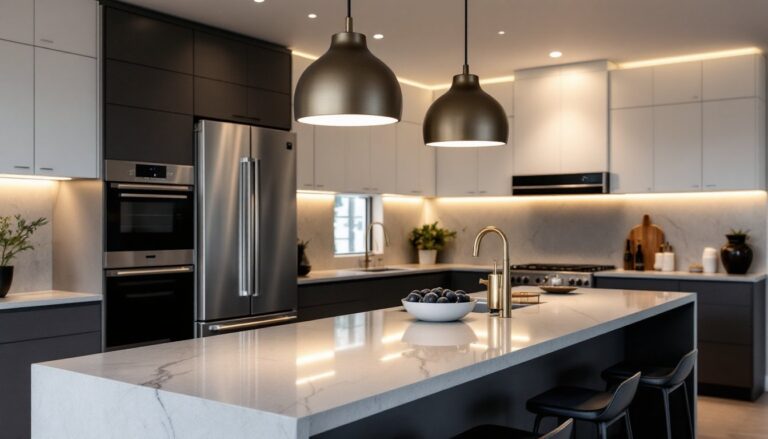
Task lighting targets specific workspaces: the sink, stovetop, countertops, and island. These areas need bright, focused light without glare bouncing off stainless steel or polished surfaces. Pendant lights hung 30–36 inches above islands or bars are classics for a reason, they deliver light where you need it and visually define zones. A trio of 60–75 watt-equivalent LED pendants (roughly 800–1000 lumens per fixture) works for most islands.
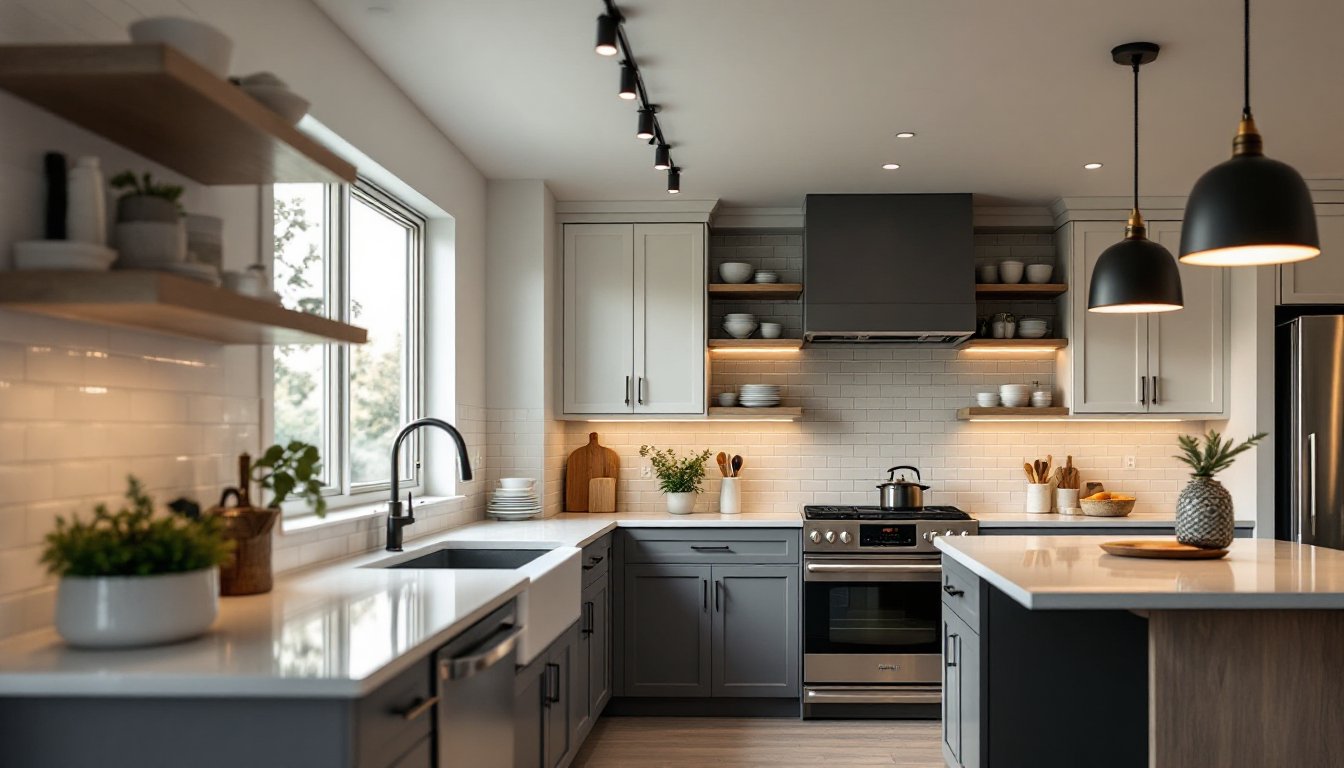
Over kitchen sink lighting typically calls for either a dedicated pendant or a pair of small recessed downlights positioned just beyond the sink rim. Undercabinet lighting (LED strips or puck lights mounted to the bottom of upper cabinets) eliminates shadows cast by your own body leaning over the counter, arguably the single most-used task light in a working kitchen. Linear LED strips offer even coverage and run cool, making them safer than older fluorescent options. For islands without overhead clearance, track lighting or directional spotlights pinned to ceiling joists work as alternatives.
Accent Lighting: Adding Style and Dimension
Accent lighting highlights architectural features, open shelving, or decorative elements. It’s typically the lowest-output layer, roughly 10–20% of your ambient lighting, and adds depth and visual interest without raising electricity costs. Display shelves, a tile backsplash, or a statement backsplash benefit from subtle spot lighting or LED tape. Many homeowners use accent lighting around crown molding or inside glass-front cabinets to frame collections or dishware.
Accent fixtures are where personality shines. Vintage pendant lights, decorative chandeliers over eating nooks, or integrated LED strips create a polished, intentional look. The key is restraint: accent lighting shouldn’t fight task and ambient layers for attention.
Choosing the Right Fixtures for Your Kitchen Layout
Your layout dictates fixture placement and type. Galley kitchens benefit from linear recessed lights or track lighting running the length of the room: a single central fixture leaves the ends dark. Open kitchens that flow into living areas need fixtures that don’t create harsh boundaries, pendants over islands work as visual dividers without walls.
Measure your ceiling height. Standard residential ceilings are 8 feet: pendants should hang no lower than 30–36 inches above countertops or islands to avoid hitting your head or blocking sight lines. If you have cathedral ceilings or low soffits, adjust accordingly. Modern lighting often incorporates adjustable or directional fixtures that work across ceiling heights and layouts.
Wiring and switch placement matter too. The NEC requires kitchens to have a dedicated circuit for lighting and separate circuits for countertop outlets. If your kitchen hasn’t been updated in 20+ years, the existing layout may not support modern multi-layer lighting without an electrician’s help, that’s a licensed-professional conversation, not a DIY task. Install switches at room entries and near the island if you have one: three-way switches (allowing control from two locations) are common in larger kitchens.
LED Bulbs and Energy-Efficient Options for Smart Savings
LED technology has matured dramatically. Modern LED lighting bulbs last 25,000+ hours (roughly 17 years at 4 hours per day), consume 75% less energy than incandescent equivalents, and come in nearly any color temperature and shape. For kitchens, prioritize dimmable LEDs, many cheaper bulbs flicker or don’t dim smoothly, which is maddening in a space where you adjust brightness throughout the day.
Color rendering index (CRI) matters too. Aim for CRI 90 or higher so food colors look natural and paint samples or finishes appear accurate. Standard LEDs often score 70–80 CRI, which is fine for ambient light but underwhelming for task work. Pricier 95+ CRI bulbs (often labeled “designer” or “restaurant quality”) are worth it above islands and sinks.
Smart home lighting systems let you adjust brightness and color temperature via app or voice command, adding flexibility without extra wiring. Budget smart bulbs run $10–20: whole-fixture smart systems cost more upfront but offer cleaner aesthetics. If smart lighting appeals to you, choose compatible bulbs and fixtures early, retrofitting an older kitchen is messier.
Cost-wise, LED fixtures and bulbs have dropped significantly. Expect to spend $50–200 per pendant, $15–40 per recessed light housing, and $2–8 per LED bulb depending on quality and features. Undercabinet LED strips run $20–60 per 3–4 feet. Installation labor varies by region and complexity: a simple bulb swap is free, while adding new circuits or relocating outlets costs $100–400 per circuit.