Outdoor wall lighting transforms how your home looks after dark, and it’s one of the easiest DIY projects that pays off in both curb appeal and security. Whether you’re adding sconces flanking your front door, spotlights to accent landscaping, or ambient lighting for entertaining, wall-mounted fixtures deliver practical illumination with real design impact. This guide walks you through choosing the right fixtures, picking smart locations, understanding your power options, and installing them yourself without hiring an electrician (in most cases).
Table of Contents
ToggleKey Takeaways
- Outdoor wall lighting enhances both curb appeal and home security while being one of the most accessible DIY projects for homeowners.
- Choose fixtures rated IP65 or higher to ensure outdoor wall lights withstand spray and heavy rain without failure.
- Mount entry sconces 18–24 inches to each side of the doorframe at 60–66 inches above ground for balanced, visitor-level illumination.
- LED bulbs deliver the same brightness as incandescent alternatives while using a fraction of the power, with warm white (2700K) being ideal for residential exteriors.
- Secure fixtures to wall studs with proper anchors and weatherproof all connections with silicone caulk and dielectric grease to prevent water intrusion and corrosion.
- Perform seasonal cleaning and monthly checks on motion sensors to maintain fixture performance and extend lifespan beyond 10 years.
Types Of Outdoor Wall Lights To Consider
Sconces And Lanterns
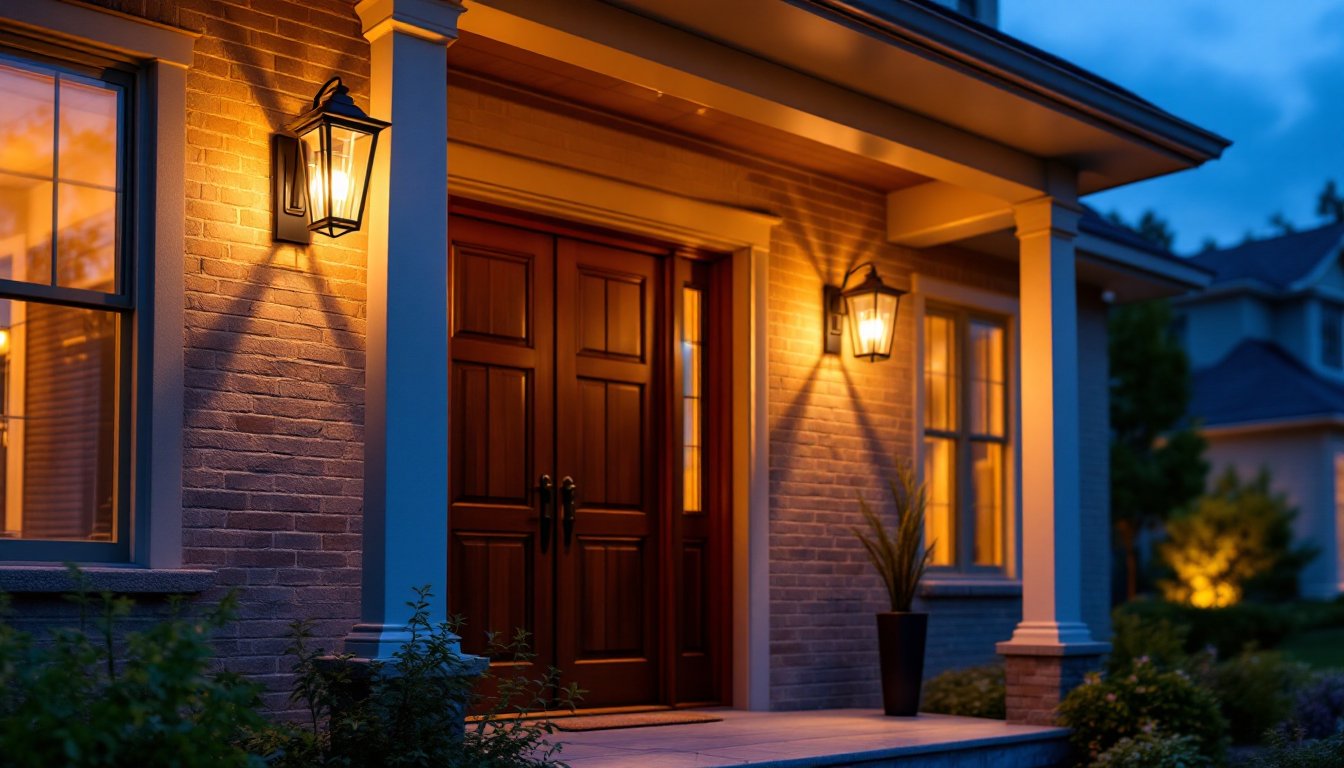
Sconces are the backbone of residential outdoor lighting. They mount directly to the wall and cast light both upward and downward, creating balanced illumination for entryways, patios, and side yards. Look for fixtures rated IP65 (ingress protection rating) or higher, this means they’ll handle spray from hoses and heavy rain without failing.
Classic lantern-style sconces offer a timeless look and work with nearly any home style. Craftsman, farmhouse, transitional, and cottage designs are widely available and reasonably priced. Modern geometric sconces appeal to contemporary homes. The trade-off: larger sconces with multiple panes of glass look better but collect dust and need periodic cleaning.
Wall-mounted lanterns with solid sides (sometimes called “wall lanterns” or “coach lights”) direct light more intentionally downward. They’re popular next to garage doors and around patios. Most come in 1-light, 2-light, or 3-light configurations, the number refers to bulbs, not brightness levels.
Spotlights And Accent Lights
Spotlights are narrow-beam fixtures that highlight a specific feature: a tree, stone accent wall, or architectural detail. They’re typically smaller than sconces and focus light in one direction, creating drama and depth on your exterior. Most spotlights accept MR16 (multi-reflector, 16/8-inch diameter) or standard PAR38 bulbs, giving you control over color temperature and brightness.
Wall-wash lights are broader-beam spotlights that graze light across a vertical surface, ideal for uplighting a chimney or textured wall. Accent lights used this way add visual interest without the glare of direct illumination. They also work well mounted under soffits to wash down onto a deck or patio.
Flood lights are high-intensity, broad-beam fixtures best suited for security and large-area coverage. Most residential floods are better suited to eaves or pole-mounted positions rather than wall placement, but some compact LED flood lights are designed for wall mounting and deliver significant brightness without excessive heat.
Choosing The Right Location For Wall Lighting
Location makes or breaks outdoor lighting impact. Start by walking around your property at dusk and noting where you actually need light and where you want visual interest.
Entry points are the primary target. Flank a front door with matching sconces 18–24 inches to the side of the doorframe and mounted at roughly 60–66 inches above the ground (measure to the center of the fixture). This height feels balanced and provides face-level illumination for visitors. For side doors and garage entries, a single fixture is often enough unless the area is particularly dark or security is a priority.
Accent and security placement depends on your home’s layout. Spotlights on distant trees or architectural features should be mounted lower on the wall than sconces, usually 24–36 inches high, so the beam angle reaches the target cleanly. If you’re lighting a stone chimney or textured wall, position fixtures at least 6–8 feet away horizontally to avoid washing out details.
Check sight lines from the street and from inside looking out. Avoid aiming fixtures directly at windows (your own or neighbors’) and keep beams below eye level when possible to reduce glare. Dusk to Dawn Outdoor explores automatic solutions if you want hands-off operation.
Also scout for existing outlets or planned hardwired connections. Wall fixtures usually require a dedicated 20-amp circuit if you’re running multiple lights. If you’re tapping into an existing porch circuit that already powers a ceiling fixture, check the load, most standard circuits can handle 1–2 wall sconces without issue. When in doubt, run a new circuit.
Energy-Efficient Lighting Options For Your Exterior
LED bulbs have become the standard for outdoor lighting, and for good reason. A 12W LED sconce produces the same brightness as an old 60W incandescent while drawing a fraction of the power. Over a season, that savings adds up, especially if lights run dusk-to-dawn or during evening entertaining.
When shopping for bulbs, pay attention to color temperature, measured in Kelvin (K). Warm white (2700K) feels inviting and complements most home colors. Neutral white (4000K) is crisper and often preferred for security and task lighting. Cool white (5000K+) mimics daylight but can feel harsh on residential exteriors. For entry and accent lighting, 2700K or 3000K is the industry standard.
Bulb shape matters too. A19 (standard household bulb) works in sconces with open or diffused sockets. BR30 (wide floodlight shape) fits recessed cans and some directional fixtures. MR16 or PAR38 are common in spotlights. Check your fixture’s manual, not all shapes fit all sockets.
Smart bulbs and fixtures let you schedule operation, dim gradually at sunset, or control brightness from a phone. Many integrate with home automation systems. They cost more upfront but offer convenience and further energy savings if you’re adjusting usage patterns.
For solar options, check Outdoor Home Lighting: Transform for battery-powered and solar alternatives. Solar wall lights are worth considering for accent areas, though they’re less reliable than hardwired fixtures in shady locations or cloudy climates.
Installation Tips For DIY Wall Light Setup
Before you buy anything, determine whether you’re tapping into an existing circuit or running a new one. If you’re adding lights to an existing outlet-powered setup (like a GFCI-protected outdoor outlet), ensure the total draw doesn’t exceed the circuit’s 80% continuous load limit, roughly 16 amps on a standard 20-amp breaker. Hardwired sconces bypassing an outlet are cleaner but require running NM-B cable (also called “Romex”) inside walls or along the rim joist. Check local electrical code and permit requirements: many jurisdictions require a licensed electrician for new circuits or any interior wall work.
Material and fastening are crucial. Mark fixture locations with a pencil, then locate studs using a stud finder. Always anchor to studs if possible, they’re usually 16 inches on center. If a fixture falls between studs, use toggle bolts (for hollow walls) rated for at least 25 pounds. For brick or stone, use concrete screws or lag bolts with appropriate anchors. Never trust drywall anchors alone on a 20-pound fixture.
Wiring and weatherproofing prevent failures. Run cable through PVC conduit if exposed on exteriors, and always use outdoor-rated wire rated for direct burial or UV exposure. Caulk around the fixture base with silicone caulk (not acrylic) to block water intrusion. Use a weatherproof outlet box if hardwiring, and apply a dab of dielectric grease to connections to resist corrosion.
Safety first: Turn off power at the breaker, test the circuit with a non-contact voltage tester, and wear safety glasses. If climbing a ladder, have someone stabilize it or use a rope to secure tools. Resources like The Spruce have step-by-step wiring diagrams if you’re running new circuits. When in doubt, call a licensed electrician, a few hours of labor beats a fire hazard or shock risk.
Maintenance And Seasonal Care For Outdoor Fixtures
Outdoor lighting fixtures face sun, rain, salt spray (if coastal), and temperature swings. Routine upkeep keeps them looking sharp and lasting 10+ years.
Seasonal cleaning prevents oxidation and buildup. Twice yearly, wipe down sconce glass and metal with a soft cloth and mild soapy water. For stubborn grime or mineral deposits from hard water, a paste of baking soda and white vinegar works well. Dry thoroughly to prevent water spots. For metal finishes, brass, bronze, or stainless steel, use appropriate polish to maintain appearance, but avoid abrasive scrubbers that scratch protective coatings.
Bulb replacement is straightforward. When an LED dims noticeably or flickers, it’s time. Keep spare bulbs in the same color temperature and shape on hand so you’re not stuck without matching pairs. If you’re using motion-sensor or dusk-to-dawn features, test them monthly to confirm they’re working, dead 9V batteries in wireless sensors go unnoticed until you realize the light isn’t turning on.
Inspection after storms is wise. Check for loose mounting bolts, cracked lenses, or water inside the fixture. If water is present, flip the breaker off and let the fixture dry completely (or replace it). Tighten any loose fasteners and reapply caulk if gaps appear around the base. In winter or snow climates, remove accumulated ice carefully and check that drainage holes in fixture bases aren’t plugged. Resources like Country Living often feature seasonal home maintenance guides worth reviewing. Exterior Home Lighting: Transform Your Space into a Magical Haven offers additional details on fixture care and upgrades.
Final Thoughts
Outdoor wall lighting is a practical, relatively quick project that transforms your home’s nighttime presence. Whether you opt for classic sconces, modern spotlights, or energy-efficient LED systems, the key is choosing fixtures suited to your climate and installing them securely with proper weatherproofing. Start small, maybe a matched pair of entry sconces, and expand as you discover what works for your space and lifestyle.