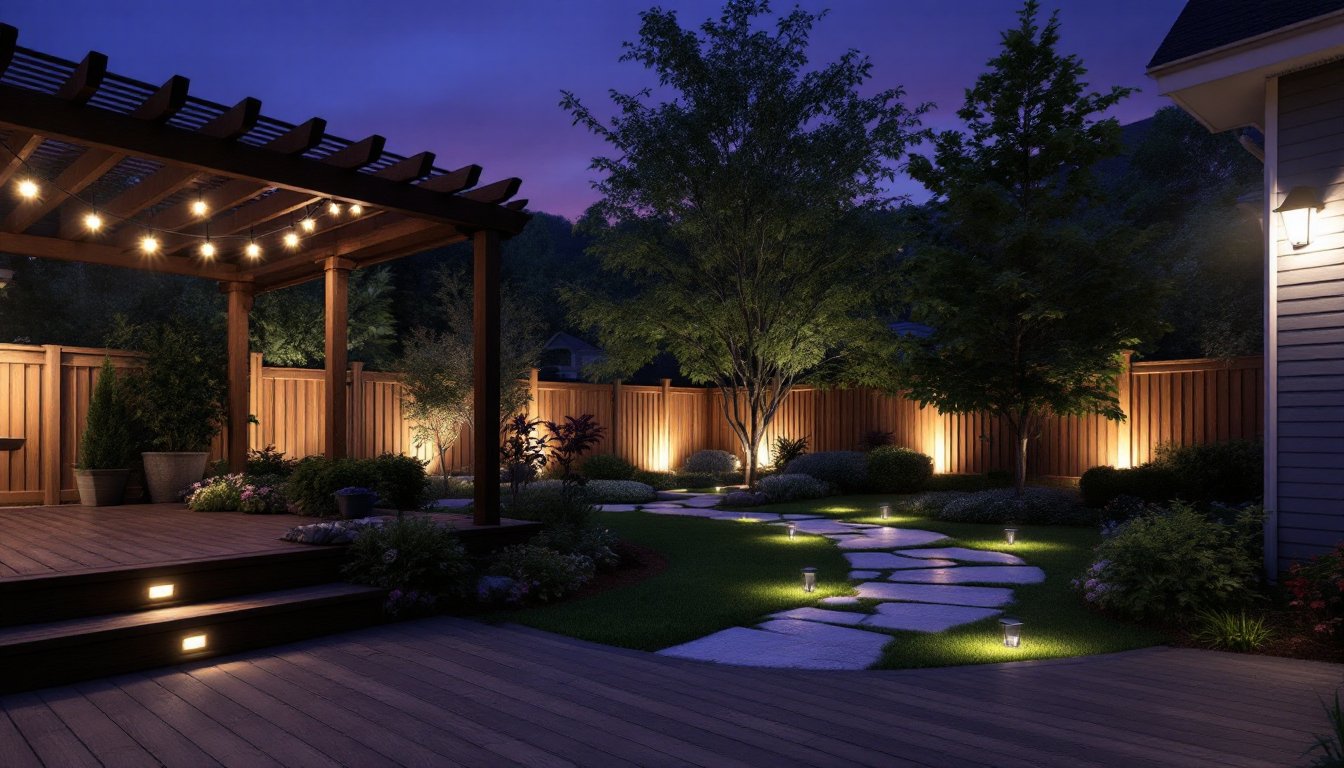
Your backyard deserves more than just darkness after sunset. Whether you’re hosting a summer dinner, extending evening relaxation time, or simply want to feel safer navigating your outdoor space, backyard garden lighting ideas can completely transform how you use your property year-round. The right outdoor lighting doesn’t require expensive hardwiring or a contractor, most projects are well within reach for the DIYer armed with basic tools and a weekend or two. This guide walks you through seven practical lighting approaches, from budget-friendly solar options to smart systems that adapt to your needs.
Table of Contents
ToggleKey Takeaways
- Solar-powered pathway lights offer a budget-friendly entry point for backyard garden lighting, costing $20–$50 for 8–12 units with zero wiring and simple stake-in installation.
- String lights and bistro designs create ambient appeal by transforming outdoor spaces into inviting rooms, requiring only an outdoor-rated GFCI outlet within 25–50 feet of your patio or deck.
- Uplighting and accent lighting strategically position low-voltage LED spotlights 2–4 feet from trees or architectural features to create depth and drama without harsh shadows.
- Task lighting on decks and patios requires layered illumination—overhead fixtures, accent lights, and low-level step lights spaced 2–3 feet apart—to ensure safe navigation and comfortable gatherings.
- Motion-sensor lights ($25–$60) and smart lighting systems provide security and convenience by automating activation based on movement or schedules without requiring extensive wiring.
- The most successful backyard garden lighting designs balance ambient, task, and accent layers to match your climate, budget, and how you actually use the space after dark.
Solar-Powered Pathway Lights for Budget-Friendly Illumination
Solar pathway lights are the entry point for most backyard lighting projects, they’re cheap, require zero wiring, and work anywhere the sun hits during the day. These fixtures typically stand 12 to 18 inches tall and use a rechargeable NiMH or lithium battery charged by a small photovoltaic panel. Expect 6 to 12 hours of runtime on a full charge, depending on the battery capacity and seasonal daylight length.
The appeal is real: a set of 8 to 12 lights runs $20 to $50, and installation is literally staking them into soil along a walkway or garden bed. No digging trenches, no permits, no electrical knowledge required. The downside? Performance suffers in shade or cloudy climates, and battery life typically degrades after 2 to 3 years of seasonal use.
When shopping, compare lumen output (brightness), aim for at least 20 to 30 lumens per light for meaningful illumination rather than just a dim glow. Look for models with a dusk-to-dawn sensor so they shut off during daylight and activate automatically at night. Stainless steel or powder-coated fixtures last longer than bare plastic in wet conditions. Space them 4 to 6 feet apart along pathways for even, safe lighting without harsh shadows.
String Lights and Bistro Designs for Ambient Appeal
String lights create instant atmosphere, that warm, inviting glow that makes a backyard feel like an outdoor room rather than just yard. The two main types are Edison bulb strings (vintage-looking, warm color) and bistro or café lights (smaller, more refined bulbs strung in a grid or draped overhead).
Most plug-in string lights run on standard 120V household current and need an outdoor-rated GFCI outlet within cord reach, typically 25 to 50 feet depending on the string length. If an outlet isn’t nearby, a weatherproof extension cord rated for outdoor use works, but keep the connection elevated and protected from standing water. LED string lights draw minimal power and generate little heat, making them safer and cheaper to run than incandescent versions.
Installation usually means hanging or draping strings between fence posts, trees, pergolas, or specially installed posts. Use corrosion-resistant galvanized steel hooks or eye bolts rated for the weight of the string and any wind load, don’t skimp on hardware. Plan your layout before stringing anything up: most people underestimate how many lights they need, so measure twice and imagine the effect in daylight before securing everything. Expect 4 to 6 hours of hanging time for a typical patio area if you’re careful and deliberate.
Uplighting and Accent Lighting to Highlight Landscaping Features
Uplighting is strategic, it targets trees, shrubs, water features, or architectural details with light from below or the side, creating drama and depth. A single uplighter (typically a low-voltage or LED spotlight positioned near the base of a tree) transforms a dark corner into a focal point. The technique mimics how professional landscape designers layer light to draw the eye and define zones.
Low-voltage uplight systems (12V or 24V) are the go-to for most residential projects. They’re safer than line-voltage options, require thinner underground wire, and are easier to install yourself. A typical system includes a transformer (plugged into an outdoor GFCI outlet), underground cable running to individual light heads, and the lights themselves. Individual uplight fixtures cost $15 to $40 each: a complete 4-light system kit runs $60 to $150 depending on features.
Trench the cable 6 to 12 inches deep along garden edges or under mulch, not only does this protect the wire from foot traffic and lawn mowers, it hides the infrastructure. Position uplighters 2 to 4 feet away from the base of trees or shrubs so light angles upward and outward, not straight into the canopy. Test positioning at dusk before burying anything permanent. For accent lighting on architectural details, say, a stone chimney or deck railing, aim lights to graze across the texture rather than flood it head-on: this reveals detail instead of flattening it.
LED Spotlights for Hardscaping and Architectural Details
Spotlights are brighter, more directional cousins of uplighters, making them ideal for illuminating hardscaping (decks, patios, retaining walls, stone features) and architectural details. They concentrate light into a defined beam, usually 20 to 40 degrees, so you can target a specific area without washing the entire yard in light.
LED spotlights are the practical choice for 2026 installs. They’re efficient, generate minimal heat, and last 25,000+ hours compared to halogen spotlights at 2,000 to 5,000 hours. A quality LED spotlight runs $30 to $80: halogen alternatives are cheaper upfront but cost more to operate and replace frequently. Choose between low-voltage (12V or 24V) systems for safety and flexibility, or line-voltage (120V) spotlights if you’re comfortable with electrical work or hire an electrician.
When positioning spotlights on hardscaping, mount them slightly off the surface, a deck railing, fence post, or standalone stake, aimed to graze the feature. For a stone retaining wall, position a spotlight 3 to 4 feet away and angle it to emphasize texture and shadow. Test the effect at night before permanently securing anything: light angles that look right during installation often feel wrong once you’re actually using the space. Always use stainless steel or powder-coated aluminum fixtures in outdoor settings: bare steel rusts quickly. Check your local electrical code before running any new outdoor circuits: some jurisdictions require a licensed electrician for hardwired installations.
Deck and Patio Lighting for Entertainment Spaces
Decks and patios are where people actually gather, so task lighting, the kind that lets you see what you’re doing, matters as much as ambiance. The goal is to light the surface safely without creating glare or harsh shadows on faces. Most DIYers combine three lighting layers: overhead light from a fixture mounted to the house or a pergola, lower accent light from uplighters or string lights, and path light from low-level step lights or bollards along edges.
For overhead patio lighting, a flush-mount or semi-flush LED fixture rated for wet locations (check the IP rating: IP65 or better suits exposed outdoor areas) wired to the house electrical panel is standard. This typically requires running conduit from the panel to the fixture location, definitely a job for a licensed electrician if you’re unfamiliar with electrical code. Alternatively, string lights or pendant lights hung from a pergola are often easier and more forgiving for DIY installation, though they still need a nearby GFCI outlet.
Deck stairs and edges benefit from low-voltage step lights (2-3 inches tall, recessed into or mounted on stair treads) or bollard lights (12-18 inches tall, posts defining the perimeter). These prevent tripping and feel safer underfoot. Space them 2 to 3 feet apart for adequate visibility. Invest in fixtures with a frosted lens or trim ring to reduce glare, direct LED light in the eye is uncomfortable. Test lighting before hosting a gathering: dim overhead fixtures with step lights on often feel cozier and safer than a fully lit deck. Pro tip: warm-color LED bulbs (2700K or 3000K) feel less institutional than cool white (5000K+) and pair better with landscape lighting for a cohesive effect.
Motion-Sensor and Smart Lighting for Safety and Convenience
Motion sensors eliminate the guesswork, lights activate only when movement is detected, saving energy and providing security reassurance. Modern motion-activated floodlights are affordable ($25 to $60) and install in minutes: most retrofit into standard light fixtures or mount independently on the house, fence, or post. Look for models with adjustable sensitivity (to avoid false triggers from passing animals or wind-blown branches), dusk-to-dawn sensors (so they don’t activate in daylight), and 10 to 30 second timer settings that you can customize.
Wired motion-sensor lights require an outdoor GFCI outlet or hardwired connection to the electrical panel, manageable if an outlet is nearby, otherwise call an electrician. Battery-powered motion lights are simpler but need regular battery changes: quality ones last 6 months to a year depending on trigger frequency. Most are much dimmer than wired options, so they’re better suited for supplemental security rather than primary illumination.
Smart outdoor lighting takes convenience further. WiFi-connected lights controllable via smartphone apps, voice commands (Alexa, Google Home), or timers let you adjust brightness and color from inside or across the city. Color-tunable lights (adjustable from warm white to cool white) adapt the ambiance based on the time of day or mood. Integration with home automation systems means lights can sync with door sensors, security cameras, or entertainment schedules. Entry-level smart bulbs run $20 to $40 each: complete smart system kits with hubs start around $100. For most backyards, a mix of simple motion sensors on dark corners plus one or two smart lights in high-visibility areas (like the patio) strikes a practical balance between safety, cost, and convenience.
Conclusion
Effective backyard lighting combines multiple layers, ambient light for mood, task light for safety, and accent light to highlight features, all chosen with your climate, budget, and lifestyle in mind. Start with solar pathway lights if you’re new to outdoor projects: they’re forgiving, require no tools, and teach you what brightness and placement feel right. Layer in string lights or uplighting as confidence grows, and consider smart or motion-sensor fixtures for long-term convenience. The most successful backyards aren’t the brightest, they’re the ones where light is thoughtful, functional, and designed to match how you actually use the space after dark.