When dusk falls, most homeowners face the same problem: a backyard that disappears into darkness. Linear outdoor lighting changes that equation entirely. Unlike traditional spotlights that throw harsh circles of light, linear fixtures create continuous, even illumination along pathways, under eaves, and around deck edges, transforming how your outdoor space functions and looks after sunset. Whether you’re a first-time DIYer or a seasoned renovator, linear outdoor lighting offers flexibility, energy savings, and design possibilities that standard lighting simply can’t match. This guide walks you through everything you need to know to choose, install, and design with linear lighting.
Table of Contents
ToggleKey Takeaways
- Linear outdoor lighting creates continuous, shadow-free illumination along pathways, deck edges, and eaves, transforming backyard functionality and aesthetics after sunset.
- LED linear fixtures consume 70–80% less power than halogen alternatives and last 25,000–50,000 hours, delivering significant long-term energy savings and reduced replacement costs.
- Three main linear outdoor lighting types—stick lights, flexible strips, and integrated channels—each serve different needs, from straight architectural runs to curved decorative applications.
- Installation is DIY-friendly with simple mounting brackets or adhesive backing, GFCI outlet compatibility, and minimal electrical work, making it accessible for first-time homeowners.
- Smart home integration allows automated scheduling at dusk, brightness adjustment, and voice control, maximizing efficiency and convenience throughout the season.
- Strategic placement on deck edges, soffits, pathways, and pergolas eliminates dark corners and tripping hazards while adding visual definition and ambient appeal to your outdoor space.
What Is Linear Outdoor Lighting and Why It’s Trending in 2026
Linear outdoor lighting refers to long, narrow light fixtures that emit illumination along their entire length, think of a glowing line rather than a point source. These fixtures come in stick form, strip form, or integrated channels and can range from 12 inches to 10 feet or longer. Unlike recessed downlights or bulb-based sconces, linear designs provide shadow-free, directional light that feels natural and welcoming.
Why the surge in popularity? Homeowners are ditching the cookie-cutter approach to yard lighting. Linear systems fit modern architecture, minimalist landscaping, and smart home ecosystems seamlessly. They’re efficient, sleek, and solve real problems: uneven shadows, dark corners, and the need for flexible placement. Contemporary deck builds, pergola installations, and pathway upgrades almost always benefit from linear components. A LED Lighting: Transform Your Space with Energy Efficiency and Savings Today approach makes sense because linear fixtures are almost always LED-based, cutting power consumption by 70–80% compared to traditional halogen strip lights.
Key Advantages for Homeowners and DIY Projects
Linear outdoor lighting delivers three major wins for the DIY crowd: ease of installation, design flexibility, and cost-effectiveness over time.
Installation Simplicity Linear fixtures don’t require drilling into joists or extensive wiring routing. Many plug into standard GFCI-protected outdoor outlets or hardwire into existing circuits with basic electrical work. Mounting typically uses simple brackets or adhesive backing, letting you reposition lights without permanent damage to siding or wood. Renters and homeowners alike appreciate that adjustment later is painless.
Design Flexibility A single linear run can outline a deck perimeter, highlight soffit lines, or illuminate a garden bed. You’re not locked into pre-determined fixture locations. Run them straight, angle them under railings, or stack them vertically, the form follows your vision. This adaptability is why designers favor linear systems in contemporary renovations.
Long-Term Savings LED linear fixtures consume 10–15 watts per foot, versus 50+ watts for comparable halogen strips. Over a season of evening use, that difference translates to noticeable reductions in utility bills. Bulbs last 25,000–50,000 hours (or longer), so replacement costs vanish for years. When combined with smart home integration, you can schedule operation automatically at dusk, reducing waste further. A Dusk to Dawn Outdoor Lighting: Enhance Safety and Security system removes the guesswork entirely.
Choosing the Right Type for Your Home
Three main categories dominate the linear outdoor market: stick lights, flexible strips, and integrated channels. Each serves different needs.
Stick Lights (Rigid) These are solid extrusions, usually aluminum, holding LED arrays inside a frosted or clear lens. They come in preset lengths (2, 4, 6 feet) and are ideal for straight runs under eaves, along deck edges, or flanking entryways. Mounting is simple: brackets at each end, plug into power. They’re durable, weatherproof, and look intentional. Best for clean architectural lines and permanent installations.
Flexible Strips Silicone-encased LED tape that bends around curves, perfect for wrapping pergola posts, outlining planter boxes, or creating wavy patterns. They’re thinner, lighter, and feel more “custom” but require more careful installation and occasional reinforcement. Moisture and temperature flexing can stress solder points, so quality matters here. Reserve these for decorative or semi-protected applications.
Integrated Channels Aluminum extrusions with built-in LED modules, diffusers, and end caps. These professional-grade systems dominate high-end residential and commercial projects. They’re modular, allow easy lens swaps, and look designer-finished. Cost runs higher, but the investment pays off in lifespan and aesthetic polish.
LED vs. Traditional Options
LED is now the standard, and for good reason. Traditional halogen or incandescent strip lights generate heat, waste energy, and degrade faster in outdoor weather. Halogen strips run at 50+ watts per foot and bulbs burn out every 1–2 seasons. LED strips consume one-fifth the power, last 3–5 years minimum, and produce no heat, making them safer around plants and combustibles. The color rendering on modern LEDs is indistinguishable from warm incandescent light, but without the inefficiency. A Home Depot Lighting: Transform inventory includes hundreds of linear LED options, all priced competitively. You’ll struggle to find new halogen strips in most retail outlets, they’re being phased out for residential use.
Installation Tips for First-Time Projects
Before you plug anything in, do this prep work:
Plan the Layout Measure twice, mark once. Sketch your fixture locations on paper or with chalk on the actual surface. Walk around at dusk and visualize how light will fall. Most first-timers underestimate how far light travels, a 4-foot linear at 12 feet high illuminates nearly the entire deck below. Step back and avoid overlapping shadows.
Check Your Electrical Ensure your outdoor outlet is GFCI-protected (any modern code-compliant outlet is). If hardwiring into a junction box, verify the circuit breaker label and confirm power is off before touching anything. Call a licensed electrician if you’re uncomfortable with any wiring, it’s not the place to cut corners. Most linear fixtures draw less than 20 amps, so a standard 15-amp circuit works, but confirm your fixture specs first.
Prepare Surfaces Wipe down mounting areas with a dry cloth. Dust, cobwebs, and moisture prevent adhesive strips from bonding. If using screw-mounted brackets, pre-drill holes to avoid cracking siding. Use stainless steel fasteners outdoors, galvanized will rust in salt air or humid climates within a season.
Route Cables Safely If you have exposed runs between fixtures, use cable clips every 12 inches and keep wires away from walking paths. Outdoor-rated extension cords (13-amp rated minimum) are okay for temporary setups, but hardwiring is cleaner for permanent installations. Avoid laying cables across wet grass, moisture wicks into connections. Coil excess cord neatly and store away from foot traffic.
Test Before Final Mount Plug in the fixture, confirm it powers on, and check light output in dim conditions. Adjust positioning if needed, you can’t easily move it once adhesive cures. Most adhesive-backed strips need 24 hours to fully cure, so plan accordingly.
Safety Gear Wear eye protection if using power tools for pre-drilling or bracket installation. Gloves are smart when handling metal extrusions (sharp edges are common). If you’re on a ladder at height, have a spotter and wear a fall arrest harness for anything above 6 feet.
Design Ideas and Outdoor Applications
Linear fixtures are blank canvases, your imagination sets the limits.
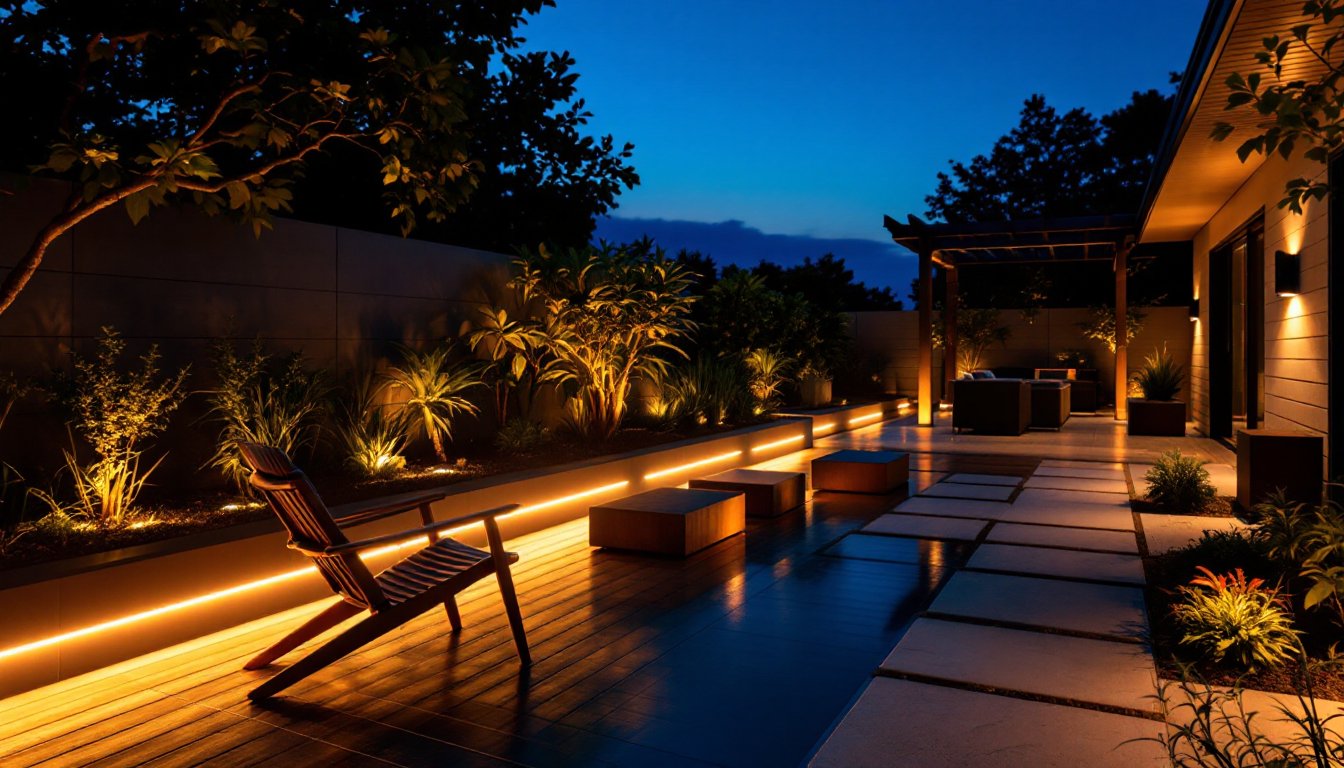
Deck and Patio Edges Run linear lights beneath deck railings or skirt them along the perimeter. This creates an invisible guardrail effect and visually extends the deck downward. The light pools on the ground, preventing stumbles and adding drama. A 4-foot fixture every 6 feet covers most residential decks without overkill.
Soffit and Fascia Highlighting Mounting linear strips along roof edges uplights the house facade and creates architectural definition at night. This works especially well on modern homes with clean lines. Warm white (2700K) balances residential charm: cooler tones (4000K–5000K) emphasize contemporary geometry. A Home Depot Outdoor Lighting: guide offers examples and product pairings.
Pathway Illumination Install ground-level linear fixtures along walkways and garden edges. These eliminate tripping hazards and guide visitors through your landscape. Step lights do this too, but linear runs feel seamless and prevent dark patches. Use amber or dim white (2000–2200K) to minimize light pollution and insect attraction.
Pergola and Arbor Integration Linear strips wrapped around pergola posts or run along horizontal beams create intimate ambiance. Flex strips work beautifully here because they conform to curves. Combine with dimmers for flexible mood lighting, bright for entertaining, dim for relaxation.
Water Feature Accents Underwater linear fixtures highlight ponds, fountains, or pool edges. Waterproof models (rated IP67 or better) resist submersion. The glow reflecting off water multiplies the visual impact. Sites like Gardenista showcase avant-garde landscape lighting using this principle.
Smart Home Integration Connect linear fixtures to voice assistants or automation hubs. Schedule them to turn on at dusk, adjust brightness by time of day, or sync with indoor smart lighting for cohesive ambiance. Digital Trends regularly reviews smart outdoor systems that support linear fixtures. This future-proofs your investment.
Conclusion
Linear outdoor lighting isn’t a luxury, it’s a practical upgrade that transforms how your outdoor space functions and feels. The technology is mature, installation is DIY-friendly, and long-term costs are competitive. Start with a single run on your deck or under your eaves, see how it changes the space, then expand from there. Most homeowners find the impact so rewarding that they wish they’d done it sooner. With planning, proper prep, and attention to electrical safety, your next linear lighting project will deliver years of reliable, beautiful illumination.