Star pendant lighting has emerged as one of 2026’s most versatile home décor solutions, blending form and function in ways that make homeowners rethink their entire approach to overhead lighting. Whether you’re updating a kitchen island, illuminating an entryway, or adding character to a dining space, star pendant fixtures deliver eye-catching geometric appeal while solving real lighting challenges. Unlike trendy décor that fades fast, these fixtures combine sculptural interest with practical brightness levels, making them equally at home in contemporary minimalist interiors or eclectic bohemian rooms. This guide walks you through what star pendant lighting is, how to choose the right fixture for your space, and how to install and maintain it for years of reliable performance.
Table of Contents
ToggleKey Takeaways
- Star pendant lighting combines sculptural appeal with practical brightness, making it a versatile solution for kitchens, entryways, and dining spaces that works across contemporary and bohemian design styles.
- Proper installation requires hanging star pendants 30–36 inches above work surfaces, securing the mounting bracket to solid wood framing, and using dimmable LED bulbs rated for the fixture to ensure safety and performance.
- Selecting the right star pendant depends on matching fixture width to one-third of the surface below it, choosing materials and finishes that complement existing hardware, and confirming brightness levels meet your space’s needs.
- Regular maintenance—including soft-cloth cleaning every 3–6 months and checking electrical connections for corrosion—keeps star pendant lighting fixtures functional and visually appealing for 10–15 years.
- Star pendant fixtures deliver distinctive visual interest even when powered off and distribute light more evenly than traditional streamlined designs, solving the common problem of bland, cookie-cutter rooms.
What Is Star Pendant Lighting and Why It’s Trending Now
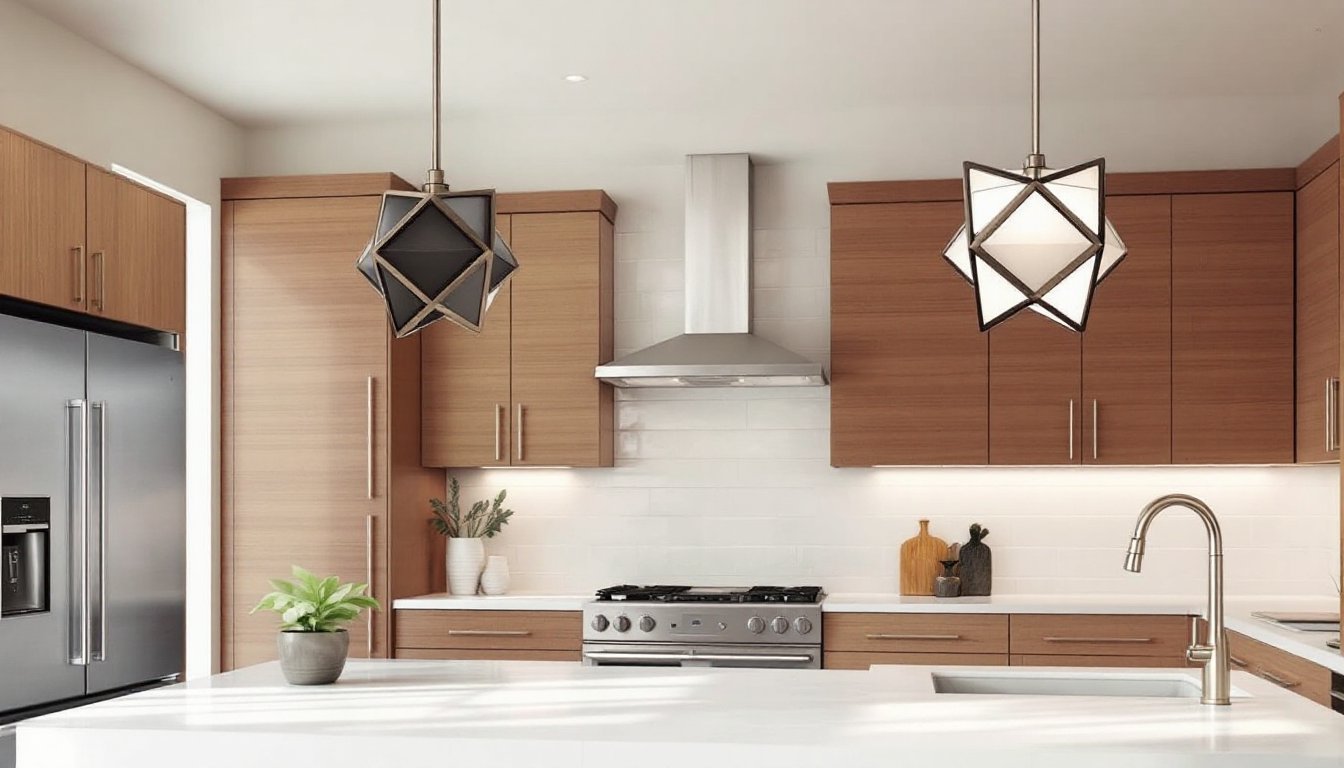
Star pendant lighting refers to overhead fixtures shaped like a three-dimensional star, typically with 4, 5, 6, or 8 points, though variations exist. The fixture hangs from a single cord, chain, or rod and works as both a statement piece and a functional light source. Unlike traditional cylindrical or dome pendants, the geometric shape casts distinctive shadows and creates visual interest even when powered off.
These fixtures have gained traction because they solve a common design problem: rooms that feel bland and cookie-cutter. A single star pendant above an entryway or kitchen counter immediately signals intentional design choices. Manufacturers have caught on, offering star pendants in glass, metal, ceramic, and mixed materials at price points ranging from budget-friendly to high-end.
From a practical standpoint, star pendants work well because the faceted geometry helps distribute light more evenly than streamlined designs. When equipped with dimmable LED bulbs and proper wattage ratings, they deliver adequate task lighting for kitchens and dining areas without requiring a massive fixture. The compact footprint also makes them ideal for spaces with low ceilings or where ceiling-mounted fans would create clearance issues. Architectural Digest regularly features star-shaped pendant designs as part of modern and transitional home overhauls, reinforcing their role in contemporary home design.
Design Styles and Aesthetic Options for Star Pendants
Star pendants come in enough design variations to fit nearly any interior style. The key is understanding how materials, finishes, and sizes affect the overall feel of a room.
Contemporary and Minimalist Designs
Contemporary star pendants typically feature clean lines, neutral finishes like brushed nickel or matte black, and geometric precision. These fixtures work best in modern kitchens, open-concept dining areas, or minimalist entryways where you want visual interest without clutter. Look for pendants with thin metal frames and clear or frosted glass inserts, these allow light to pass through cleanly while the star silhouette remains the focal point.
Size matters in minimalist spaces. A single small star pendant (6–8 inches wide) suits tight spots or accent lighting, while larger fixtures (12–16 inches) work as primary light sources over islands or tables. Pairing multiple small star pendants in a row creates rhythm without overwhelming the space. Matte finishes resist fingerprints better than polished metal and look more modern in 2026 interiors.
Vintage and Bohemian Inspirations
Vintage-influenced star pendants often incorporate brass, copper, or antique gold finishes alongside warmer glass tones (amber, smoky, or rose-tinted). These fixtures evoke mid-century modern design or eclectic bohemian style. Bohemian interpretations might feature hand-blown glass, macramé hangings alongside the star shape, or mixed metals that look collected rather than coordinated.
Boho star pendants pair beautifully with exposed wood beams, brick walls, or rattan accents. If you’re using warmer finishes, pair the pendant with compatible hardware, brass door handles, wooden shelving, and woven textiles all reinforce the intentional aesthetic. One practical note: bohemian-style fixtures sometimes have more surface area (due to glass globes or extra materials), so measure your space carefully to ensure the fixture doesn’t feel cramped in smaller rooms.
Installation and Placement Strategies for Maximum Impact
Installation difficulty depends on whether you’re working with existing electrical or running new circuits. Most homeowners can handle wiring a pendant into an existing ceiling fixture box, but if you’re unsure about electrical work, call a licensed electrician. Code violations aren’t worth the savings.
Height and Spacing
For islands and dining tables, hang the pendant 30–36 inches above the surface. This clears head height while directing light downward onto counters and place settings. If you’re installing multiple pendants, space them 24–30 inches apart along a 4-foot island. In entryways or living areas without a specific task surface, hang fixtures 60–72 inches from the floor.
Electrical Basics
Most star pendants come with a mounting bracket that screws into a standard ceiling electrical box. The fixture’s wiring (usually three wires: live, neutral, and ground) connects to existing wiring in the box. The threaded rod or chain threads through the bracket and supports the fixture’s weight. Always turn off power at the breaker before working with wiring, and use a non-contact voltage tester to confirm the circuit is dead. Tug the fixture gently after installation to ensure it’s secure, looseness can cause flickering or safety hazards.
Avoiding Common Mistakes
Don’t skip securing the mounting bracket to solid wood framing or a fan brace. Hanging a pendant from drywall alone risks the fixture dropping. If there’s no joist overhead, install an adjustable brace between joists before mounting the electrical box. Also, choose a bulb that matches the fixture’s rated wattage. A 60-watt fixture with a 100-watt equivalent LED may overheat the socket. Most modern star pendants accept standard E26 sockets and work best with dimmable LED bulbs that won’t create buzzing or flicker.
Think about placement strategically, a star pendant in a kitchen should align with the island, not hang off-center. In entryways, position it where it’s the first thing guests see and where its light actually lands on a table, mirror, or console. Poor placement makes even beautiful fixtures feel like decorative afterthoughts rather than intentional design choices.
Choosing the Right Star Pendant for Your Space
Size, material, and brightness all matter when selecting a star pendant. Start by measuring your ceiling height, the fixture’s intended location, and the room’s overall dimensions.
Size and Proportion
A common rule: the fixture should be about one-third the width of the surface below it. Over a 3-foot-wide island, choose a pendant 12–14 inches across. For a 5-foot-wide dining table, go larger, 16–20 inches. In small entryways or bathrooms, a 8–10-inch fixture usually works best. Too small, and it looks timid: too large, and it dominates the room. Always check the fixture’s clearance specs, especially if you have a low ceiling or ceiling fan nearby.
Material and Finish Considerations
Glass fixtures provide transparency and allow light through, making rooms feel brighter. Metal-only pendants offer sleeker lines but contain light more, which is fine if you pair them with sufficient ambient lighting elsewhere. Mixed materials (metal frame plus glass) offer flexibility. Choose finishes that complement existing hardware, if your kitchen has stainless steel appliances, brushed nickel or chrome works: if you have warm wood cabinetry, brass or copper pairs better.
Material durability varies. Metal finishes can dull or show fingerprints: glass collects dust on interior surfaces. Plan for occasional cleaning. Some fixtures have removable glass elements for easier maintenance.
Brightness and Bulb Compatibility
Check the fixture’s rated wattage and lumens output. A 60-watt-equivalent LED (roughly 800 lumens) suits accent lighting or paired fixtures. Over a kitchen island where you’re prepping food, you’ll want 1,000–1,500 lumens total (multiple fixtures or higher-output bulbs). Dimmable fixtures give flexibility: bright when you’re cooking, softer when you’re entertaining. Make sure any pendant you choose accepts standard bulb bases (E26 in North America) so you’re not locked into proprietary bulbs.
Entryway lighting should create visual interest, and ELLE Decor’s entryway lighting ideas includes star-shaped fixtures that balance style with functionality. Read reviews on actual installation experiences, some fixtures have poor-quality wiring or finishes that degrade faster than expected.
Maintenance Tips and Longevity
Star pendant fixtures need basic upkeep to stay attractive and functional. Dust accumulates on the faceted surfaces, especially if the fixture is in a kitchen near cooking zones.
Cleaning
Turn off the fixture and let it cool for 30 minutes before handling. Use a soft, lint-free cloth slightly dampened with water or a mild glass cleaner (for glass elements) or a damp microfiber cloth for metal. Avoid harsh chemicals or abrasive materials that scratch finishes. For glass-to-metal joints, gently wipe seams where dust settles. If the fixture has a removable glass globe, take it off every 3–6 months and rinse under lukewarm water: dry thoroughly before reinstalling.
Electrical Maintenance
Dimmable LED bulbs sometimes flicker if the fixture’s wiring has loose connections at the socket. If flickering develops, first try a different bulb to rule out a defective bulb. If it persists, gently reseat the bulb and check that the socket isn’t corroded. Corrosion around brass sockets might indicate moisture issues, address ventilation before problems worsen.
Longevity
A quality star pendant fixture lasts 10–15 years with normal use. Metal finishes may dull or show wear spots, especially in humid areas like bathrooms: brass and copper actually develop a patina that some homeowners love. LED bulbs last 25,000–50,000 hours, so you’re replacing the fixture long before the bulb. If a fixture shows rust, persistent electrical quirks, or loose hardware, replacement is safer than repair. Dwell covers modern home updates including fixture upgrades, and their pieces often highlight how refreshing lighting transforms a space at any budget level.
Document your fixture’s model and purchase date for warranty purposes. Most reputable manufacturers offer 1–2 year warranties on electrical components and can help troubleshoot issues quickly.