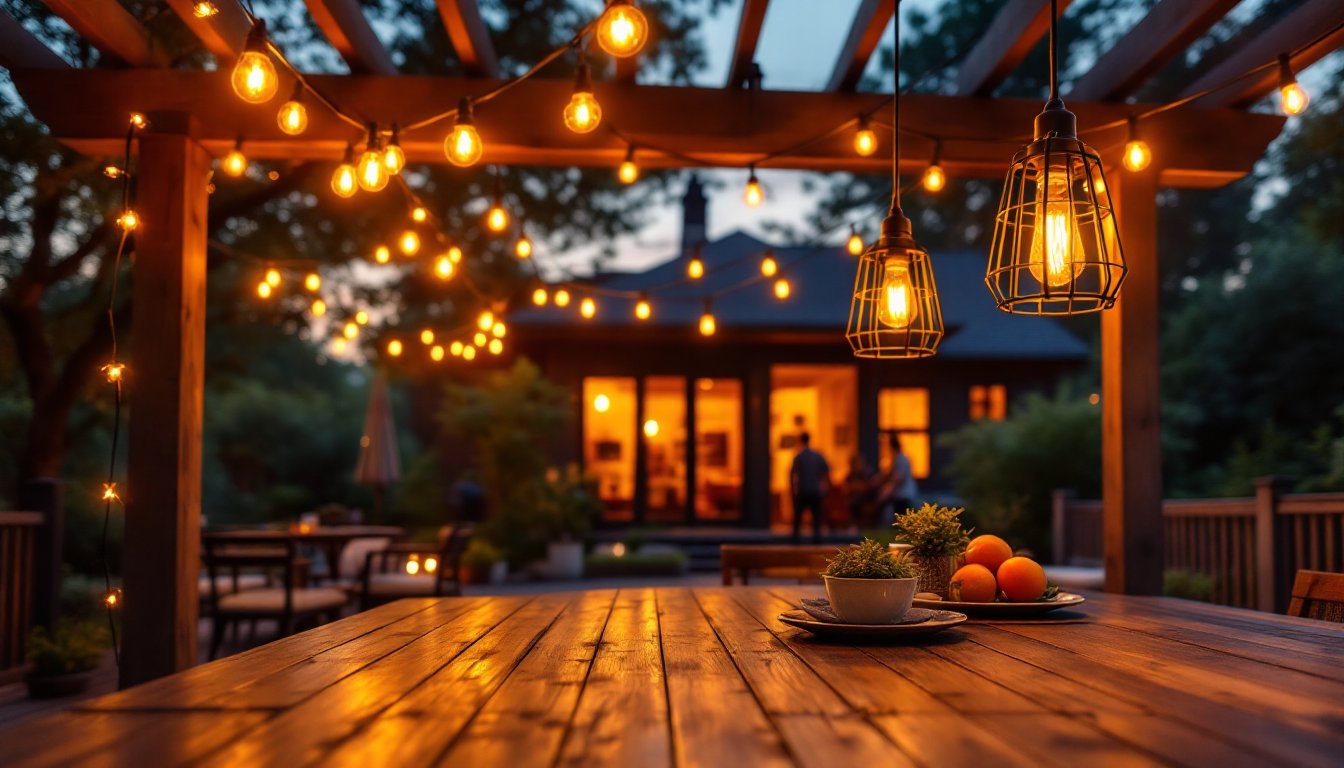
Hanging outdoor lighting does more than brighten a patio or deck, it transforms how you experience your yard after dark. Whether you’re hosting friends on a summer evening or simply enjoying a quiet moment with your family, the right fixtures set the mood and extend your outdoor living season well into the night. From classic string lights to modern pendant fixtures, hanging outdoor lighting options range from budget-friendly to high-end installations. This guide walks you through popular styles, selection criteria, and practical installation steps so you can create an inviting outdoor retreat without costly mistakes or missteps.
Table of Contents
ToggleKey Takeaways
- Hanging outdoor lighting extends your outdoor living season while improving home safety, curb appeal, and security by eliminating dark corners and creating a welcoming focal point.
- String lights and Edison bulbs offer an affordable, accessible entry point for hanging outdoor lighting, while pendant fixtures provide more controlled, task-focused illumination for dining and seating areas.
- Choose fixtures based on weather exposure—wet-rated for rain-exposed areas and damp-rated for covered spaces—and prioritize IP65 ratings and appropriate bulb types (LED bulbs cost more upfront but last 25,000+ hours and use 75% less energy.
- Plan your layout on paper before installation, secure anchor points with rated hardware, run electrical connections through conduit, and always use outdoor-rated GFCI outlets and UL-rated waterproof connectors for safety.
- Maintenance is critical: inspect fixtures monthly for corrosion and loose connections, adjust cable tension before winter, and replace corroded bulbs immediately to prevent fire hazards and electrical stress.
- Starting small with simple string lights allows you to test your setup and plan future projects while still transforming your yard into a year-round retreat.
Why Hanging Outdoor Lighting Matters For Your Home
Hanging outdoor lighting serves multiple purposes beyond aesthetics. It extends the usable hours of your outdoor spaces, allows you to entertain guests safely, and increases your home’s perceived value and curb appeal. Good lighting also improves security by eliminating dark corners where intruders could hide, while creating a welcoming focal point visible from the street.
The psychological impact shouldn’t be underestimated either. Warm lighting in an outdoor space signals comfort and invitation, studies show properly lit outdoor areas feel safer and more intimate than dimly lit ones. When you invest in hanging fixtures, you’re not just buying light: you’re buying the ability to use and enjoy your yard on your own terms, rain or shine, dusk or dawn. Performance lighting combined with ambient fixtures creates layers that let you adjust mood and visibility based on the occasion.
Popular Hanging Lighting Styles For Patios And Decks
String Lights And Edison Bulbs
String lights remain the most accessible entry point for hanging outdoor lighting. They’re affordable, installation is straightforward, and they deliver instant ambiance. Café-style string lights (also called bistro or market lights) consist of multiple bulbs spaced along a cable, typically strung between posts, trees, or overhead structures. Edison bulbs, warm, vintage-looking filament bulbs, pair perfectly with this style and provide soft, dimmable light ideal for evening entertaining.
When choosing string lights, pay attention to bulb spacing (typically 4–12 inches apart), wire gauge (thicker 12 AWG holds up better to weather), and IP rating (IP65 or higher means water-resistant). Budget options use cheaper plastic sockets that degrade in UV light within a season: mid-range sets with aluminum fixtures last 3–5 years. Note that string lights usually hang horizontally or in gentle swoops between anchor points, they’re not designed for tight angles or vertical runs.
Pendant Fixtures And Lanterns
Pendant fixtures hang from a single cable or rod and typically feature a enclosed shade, anything from industrial metal cages to fabric or glass. Exterior pendant lighting fixtures offer more defined pools of light than string lights and work well over dining or seating areas. Lantern-style pendants combine the look of traditional outdoor lanterns with modern efficiency, often using LED bulbs rated for wet or damp locations.
Pendants work best installed in clusters (groups of three or five spaced 4–6 feet apart) or as single statement fixtures over a table or entryway. Unlike string lights, pendants require individual electrical connections, which adds complexity but delivers cleaner, more controllable lighting. A wet-location rated fixture (marked “wet” or “damp” by the UL or ETL) must be used in rain-exposed areas: “dry” fixtures belong under eaves or pergolas only.
How To Choose The Right Fixtures For Your Space
Start by measuring your space and identifying anchor points, posts, beams, trees, or walls where fixtures will attach. A deck 12 feet wide and 16 feet deep, for example, benefits from string lights strung corner-to-corner plus one or two pendant fixtures over a dining zone. A patio under a pergola suits pendant fixtures well since the structure provides solid mounting.
Next, consider weather exposure. Areas that take direct rain need wet-rated fixtures: areas under a roof overhang or pergola can use damp-rated fixtures (cheaper and more design options). Check the fixture’s IP65 rating or higher for moisture resistance and verify the bulb type, some fixtures only work with LEDs, others accept incandescent or halogen. LED bulbs cost more upfront but use 75% less energy, last 25,000+ hours, and run cool enough to touch.
Brightness matters too. Lumens measure light output: string lights deliver 200–500 lumens per bulb (ideal for ambiance), while pendants range from 400–1,200 lumens (suitable for task lighting). If you’re reading or cooking, aim higher: if you’re purely creating mood, aim lower. Finally, factor in your home’s architecture. Industrial farmhouse homes suit cage pendants and Edison bulbs: modern minimalist homes pair better with sleek metallic or frosted-glass fixtures.
Installation Tips For Hanging Outdoor Lights
Before you buy anything, plan your layout on paper. Sketch your deck or patio, mark anchor points (posts, ledger boards, or trees), and measure distances. This prevents over-buying cable or undersizing support hardware.
Mounting Preparation:
• Inspect anchor points for rot, cracks, or loose fasteners. Wood must be solid.
• For deck posts, install brackets or eye bolts at a consistent height (usually 8–10 feet).
• For tree mounting, use lag bolts (not nails) rated for outdoor use and avoid girdling the tree trunk.
• On masonry or stucco, use concrete anchors rated for the fixture weight plus wind load.
Cable and Fixture Installation:
- Attach the first cable end using an eye lag or turnbuckle for tensioning.
- Run cable to the next anchor point, keeping sag minimal (no more than a few inches over long runs).
- Secure the far end with a turnbuckle so you can adjust tension later.
- Install fixtures or lights evenly along the cable, testing fit before tightening anything.
- For pendant fixtures, run individual wiring inside conduit (metal or plastic) along the cable to prevent damage.
Electrical Safety:
Use outdoor-rated GFCI outlets (20-amp circuits are standard for decorative lighting). If you’re running more than 500 watts of lights, consider a dedicated circuit, a licensed electrician can confirm your home’s capacity. Never splice outdoor wiring with regular electrical tape: use UL-rated waterproof connectors designed for wet locations. If running cable more than 50 feet from the outlet, go up one wire gauge (10 AWG instead of 12 AWG) to avoid voltage drop and dimming.
Keep lights away from trees and structures where branches or debris could damage them, and ensure clearance from roof edges where heavy snow or ice could fall. A second pair of hands makes the work faster and safer, one person can hold the cable level while another fastens it.
Maintenance And Safety Considerations
Check your fixtures monthly during the first season, then seasonally thereafter. Look for corrosion on metal parts, cracks in shades, and loose connections. Tighten any bolts or fasteners before they rust or weaken. Water pooling in fixture sockets means the gasket or seal is failing, replace the fixture before water reaches the electrical components.
Seasonal Care:
• Before winter, lower tension on cables slightly to account for contraction in cold weather.
• Clean string light bulbs and shades in spring to remove pollen and grime that dims output.
• Replace corroded bulbs immediately: they pose fire hazards and draw more current, stressing your circuit.
For LED bulbs, check that the bulb’s listed color temperature matches your fixture’s design, warm white (2700K) suits traditional styles, while cool white (5000K) works for modern spaces. Never use a higher-wattage equivalent than the fixture allows: the photo on the package tells you the max wattage or lumen range.
Safety Reminders:
Wear safety glasses and gloves when handling cable or drilling into masonry. If working at height, use a stable ladder and have someone spot you. Never work on electrical connections while the circuit is live, flip the breaker off first. If you’re uncomfortable with wiring, hire a licensed electrician: a single mistake could cause a fire or shock hazard.
Windy climates demand extra attention. Secure cables with turnbuckles and check tension after storms. Weak connections can arc and short out, creating fire risk. If your area sees ice storms, install cables in sheltered locations or consider removable pendant fixtures you can store indoors for winter.
Proper installation and maintenance transform hanging outdoor lighting from a fleeting decoration into a safe, lasting improvement to your home. Whether you opt for simple string lights or exterior pendant lighting fixtures with full dimming controls, the effort you invest upfront pays dividends in functionality and enjoyment for years to come. Take time to plan your layout, use weather-rated hardware, and don’t skip electrical safety steps, your future self relaxing under perfectly lit skies will thank you.
Transform Your Outdoor Space
Hanging outdoor lighting is an achievable project for most homeowners, whether you’re installing simple string lights or multi-fixture pendant setups. Focus on choosing fixtures suited to your climate and space, planning your layout carefully, and taking electrical safety seriously. With proper installation and seasonal upkeep, your backyard can become a stunning retreat that extends your quality time outdoors year-round. Start small if needed, even a single dusk to dawn outdoor lighting upgrade can make a difference while you plan a larger project.