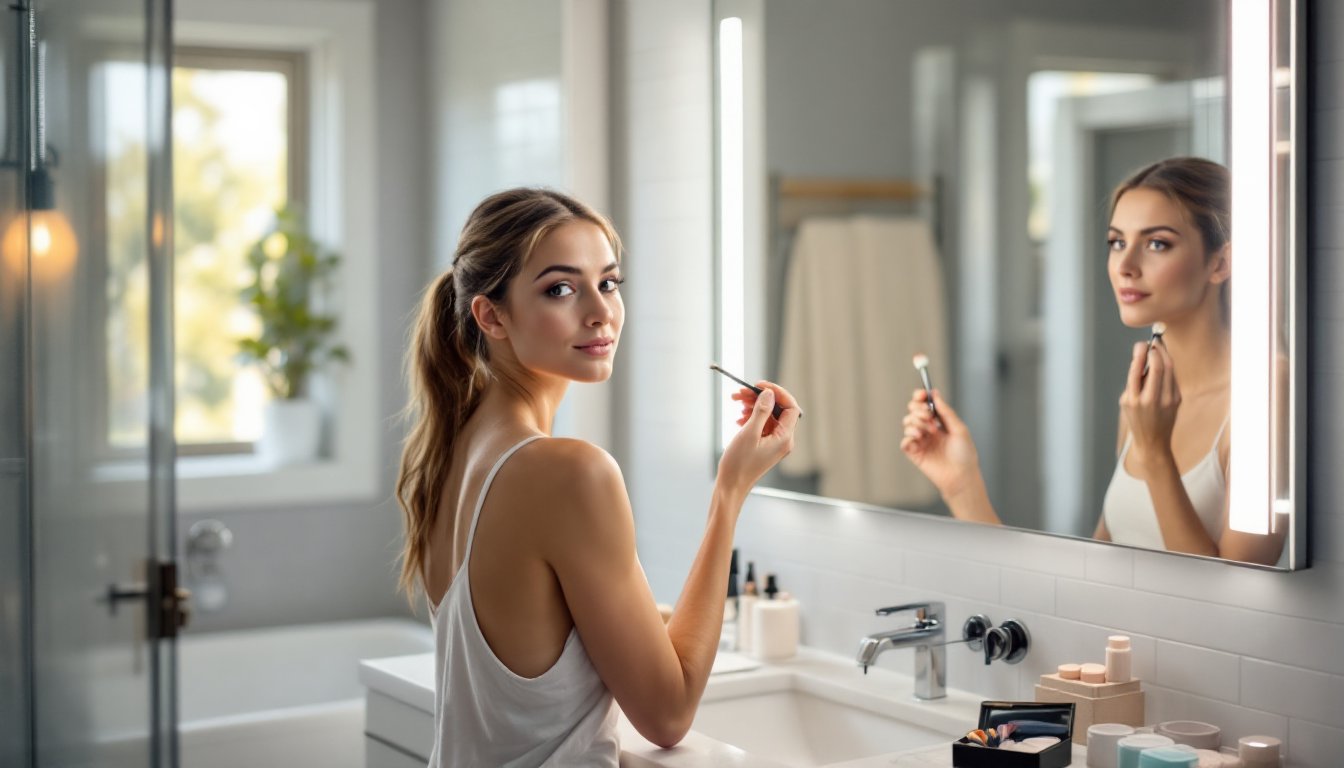
Bad bathroom lighting is the silent enemy of every makeup routine. You could spend a fortune on foundation, blush, and concealer, but if you’re applying them under harsh fluorescent bulbs or dim ambient light, the finished look rarely translates to natural sunlight. The right bathroom lighting for makeup isn’t just about brightness, it’s about color accuracy, shadow elimination, and creating an environment where you can see exactly what you’re doing. This guide walks you through the science of bathroom lighting and the practical steps to install a setup that makes makeup application easier, faster, and dramatically more flattering.
Table of Contents
ToggleKey Takeaways
- Best bathroom lighting for makeup should be 5000K to 5500K daylight-balanced LEDs with a Color Rendering Index (CRI) of 90 or higher to ensure accurate color representation and eliminate shadows.
- Proper lighting placement matters as much as brightness—install vanity light bars on both sides of the mirror at eye level to eliminate harsh shadows and provide even illumination across the face.
- Fluorescent bulbs and warm white (2700K) lighting mislead makeup application by masking true skin tones; reserve warm bulbs for ambient bathroom lighting and use daylight bulbs specifically for the mirror area.
- You can improve bathroom lighting affordably by swapping old bulbs for 5000K LEDs ($20–$40), adding a lighted vanity mirror ($60–$120), or using adhesive LED strip lights ($30–$60) without requiring hardwiring.
- Aim for 1000 to 1500 lumens in the immediate mirror area and maintain a distance of 12 to 24 inches between light fixtures and the mirror to avoid glare while eliminating shadows.
Why Bathroom Lighting Matters For Makeup Application
Makeup artists and professional makeup designers know something most DIYers don’t: lighting is half the application. When light sources cast shadows on the face, you miss blending mistakes, uneven coverage, and color mismatches that’ll be glaringly obvious in daylight. Fluorescent bulbs, which emit light across a narrow spectrum, can make skin tones look sallow or cast a greenish tint that forces you to compensate with warmer makeup shades, only to look overdone when you step outside.
Color temperature matters enormously. A bulb rated at 2700K (warm white) mimics incandescent light and is flattering indoors but misleading for makeup because it masks how your face actually looks in office or outdoor lighting. Conversely, 5000K to 6500K (daylight or cool white) mimics natural sun and reveals what your makeup will look like across different environments. The sweet spot for makeup application is typically 5000K to 5500K, bright enough to eliminate shadows, cool enough to show true color, but not so harsh it feels clinical.
Uneven lighting is another culprit. Relying on a single overhead fixture creates shadows under the cheekbones, around the nose, and in the eye sockets, perfect for hiding mistakes but terrible for catching them. Directional light from the sides (flanking the mirror) fills these shadows and gives you honest feedback on blending, symmetry, and pigment placement.
Types Of Lighting To Consider For Your Makeup Space
Natural Light And Why It’s The Gold Standard
Natural daylight remains the most accurate reference point for makeup because it covers the full visible light spectrum. A bathroom with a north-facing window (or a window facing away from direct afternoon sun) provides consistent, non-glare diffuse light, ideal for makeup application. South-facing windows deliver intense, warm light that can skew perception, but east or west exposures work if you’re careful about timing.
The catch: you can’t rely on daylight alone if you’re getting ready before sunrise or after sunset, and windows aren’t always positioned near the mirror. This is why supplementing with the right artificial lighting is essential. Many homeowners install a combination: a well-lit mirror station with daylight bulbs for evening and nighttime use, plus positioning that takes advantage of window light during morning routines.
LED And Daylight-Balanced Bulbs For Accuracy
LED bulbs labeled 5000K to 5500K are the gold standard for makeup lighting because they’re energy-efficient, run cool, and hold their color temperature. Unlike older CFL (compact fluorescent) bulbs, which can flicker and take time to warm up, quality LEDs deliver instant, flicker-free light that doesn’t degrade color perception over extended use.
When shopping, check the bulb’s CRI (Color Rendering Index), a measure of how accurately it displays colors compared to natural daylight. Aim for CRI 90 or higher: anything lower and skin tones will look unnaturally muted or off. A 9-watt or 12-watt dimmable LED bulb at 5000K with CRI 95+ is a solid, affordable choice that works in most standard fixtures.
Warm white bulbs (2700K) are popular in bathrooms for their cozy feel but will mislead your makeup application. Save those for ambient bathroom lighting: use daylight bulbs specifically for the mirror area. Home Lighting Secrets: Transform your space by layering these fixture types, task lighting at the mirror, accent lighting elsewhere.
Optimal Placement And Setup For Mirror Lighting
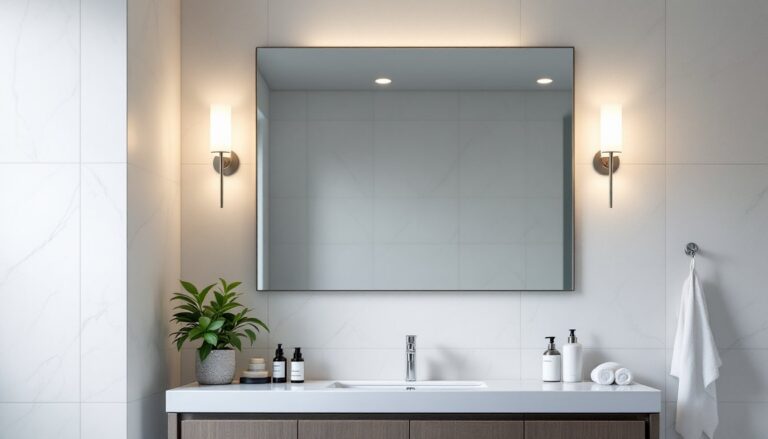
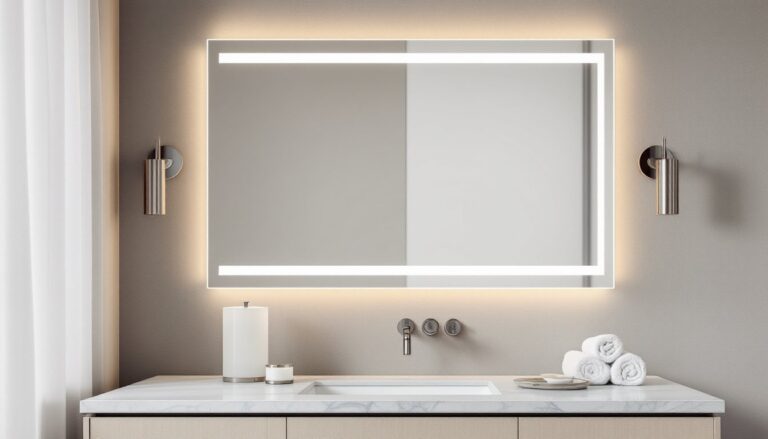
The placement of light sources is as important as their type. Professional makeup stations use vertical strips of light flanking both sides of the mirror or a lighted mirror with built-in LED strips around the frame. This setup eliminates harsh shadows on the face and creates even illumination across all planes.
If you’re retrofitting an existing bathroom, here’s the practical approach: Install a pair of 6- to 12-inch vanity light bars on either side of the mirror at roughly 60 inches from the floor (eye level when standing). Alternatively, mount a single wide vanity bar above the mirror, but this creates overhead shadows, less ideal than side lighting.
For renters or those avoiding permanent installation, a lighted mirror (LED-backlit or with integrated bulbs) and a clip-on task lamp on the counter deliver surprisingly good results. The backlit mirror handles general illumination: the clip lamp fills shadows on one side. This approach costs $60–$200 and requires no hardwiring.
Brightness matters too. Aim for 1000 to 1500 lumens in the immediate mirror area. A standard 15-watt LED at 5000K produces roughly 1200 lumens, pair two of them on a vanity bar, and you’ve got ample light without glare. Over Kitchen Sink Lighting principles apply to bathroom vanities as well: direct the light where you need it, avoid glare on the mirror surface itself, and use dimmable bulbs if you want flexibility.
Measure the distance from the light fixture to your face. Bulbs placed too close (under 12 inches) can create glare and hot spots: too far (over 3 feet) and shadows creep back. Most vanity bars are installed 12 to 24 inches from the mirror, which is ideal.
Budget-Friendly DIY Solutions For Better Bathroom Lighting
Swapping bulbs is the fastest, cheapest fix. If your bathroom already has vanity lights, remove the old bulbs and replace them with 5000K dimmable LEDs rated CRI 90+. Cost: $20–$40 total. Instant improvement, zero installation. Home Depot Bathroom stocks these in abundance.
For a small step up ($60–$120), add a lighted vanity mirror to your counter. Look for models with side-mounted or backlit LED strips and a 5000K color temperature. These are plug-and-play, no wiring required. Many include dimming controls and USB charging ports, making them genuinely useful additions beyond just makeup application.
If you’re ready for light carpentry, installing a new vanity light fixture is a weekend project. You’ll need basic tools: a screwdriver, wire stripper, voltage tester, and a level. Turn off power at the breaker, remove the old fixture, disconnect wires, and mount the new one following manufacturer instructions. Most vanity bars are rated for standard outlet-box spacing (16 inches center-to-center studs), verify yours matches before buying. A quality two-light vanity bar with 5000K bulbs runs $80–$200, and the labor saves you a contractor call.
A practical shortcut: Install battery-powered LED strip lights around your existing mirror frame using adhesive backing. No wiring, no tools, peel, stick, and turn on. Quality strips (3000–5000 lumens, dimmable) cost $30–$60 and are surprisingly bright. Research house interior design ideas on platforms dedicated to home inspiration to see how other DIYers have tackled similar upgrades.
Consider the ambient lighting too. If your bathroom is naturally dark, a dimmer switch on the main overhead fixture lets you reduce harsh light when you’re not doing makeup, preserving the cozy feel while keeping the option to brighten for application. This requires a dimmer-compatible bulb and a new dimmer switch ($15–$40 plus 30 minutes of work).
Conclusion
Flawless makeup application starts with accurate, shadow-free lighting. Prioritize 5000K–5500K daylight-balanced LEDs with CRI 90+ in fixtures flanking your mirror. Whether you’re swapping bulbs, adding a lighted mirror, or installing new vanity lights, the investment pays dividends every time you get ready. Your makeup will look intentional and polished because you can finally see what you’re doing.