When you’re standing at your bathroom sink in the morning, can you actually see yourself clearly? Poor vanity lighting is one of the most overlooked culprits in bathroom frustration. Whether you’re applying makeup, shaving, or just trying to look presentable before your coffee kicks in, the right vanity lamps make all the difference. This guide walks you through everything you need to know about choosing and installing vanity lamps for your bathroom, from understanding what makes lighting work to actually mounting the fixtures yourself. We’ll cover styles, key features, and installation basics so you can upgrade your bathroom lighting without calling an electrician (though we’ll tell you when you should).
Table of Contents
ToggleKey Takeaways
- Vanity lamps eliminate harsh shadows and provide even lighting for grooming tasks, making them a practical upgrade that improves both functionality and appearance in your bathroom.
- The ideal vanity lamp should be mounted 36 to 40 inches above the counter with 800 to 1,200 lumens brightness and a color temperature of 3,500K for the best balance of visibility and flattering illumination.
- LED bulbs are the best choice for bathroom vanity lamps because they’re energy-efficient, long-lasting, and available in various color temperatures while staying cooler in humid environments.
- A standard 30-inch bathroom vanity pairs well with a 24- to 36-inch vanity lamp in your choice of modern, traditional, or contemporary styles to match your overall bathroom design.
- Most DIYers can install vanity lamps themselves with basic tools, but always turn off power at the breaker and use a voltage tester for safety—hire a professional electrician if electrical work makes you uncomfortable.
What Are Vanity Lamps and Why Your Bathroom Needs One
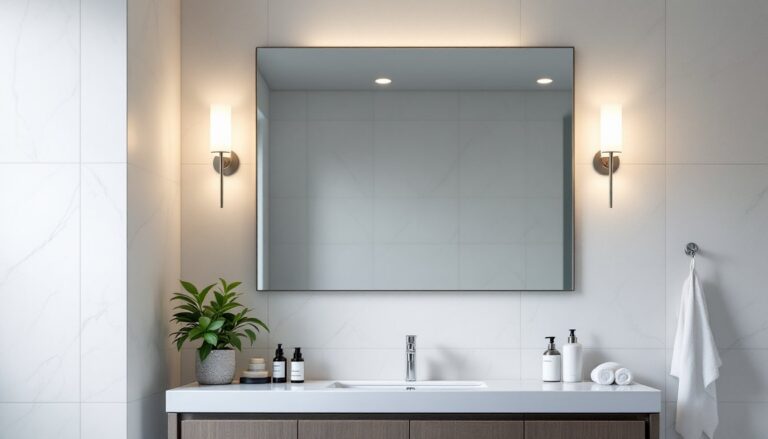
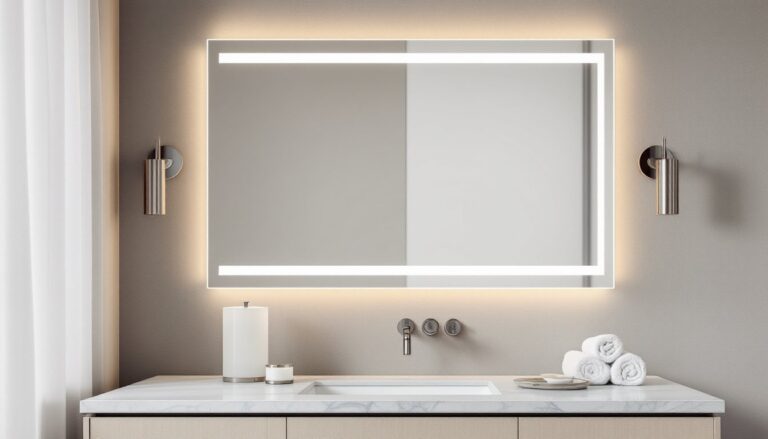
Vanity lamps are task lighting fixtures mounted directly above or on either side of your bathroom mirror. Unlike ceiling fixtures that cast shadows across your face, vanity lamps are positioned to illuminate your features evenly, critical for grooming, makeup application, and basic personal care. The best vanity lighting combines ambient light (overall bathroom illumination) with task lighting (focused light at the sink).
Most bathrooms suffer from poor mirror lighting because homeowners treat it as an afterthought. You might have a center ceiling fixture that looks nice but creates harsh shadows under your eyes and cheekbones. That’s where vanity lamps solve the problem. They’re available as single units, horizontal bars, or sconce pairs flanking your mirror. A standard 30 bath vanity usually pairs well with a 24- to 36-inch vanity lamp mounted about 36 to 40 inches above the counter. Proper bathroom lighting reduces eye strain, prevents makeup mistakes, and honestly makes your morning routine faster.
Styles and Designs to Match Your Bathroom Aesthetic
Your vanity lamp should complement your overall bathroom design, not clash with it. The good news is that vanity lighting comes in virtually every style, from sleek minimalist bars to ornate vintage sconces.
Modern and Contemporary Options
Modern vanity lamps emphasize clean lines, minimal ornamentation, and often brushed nickel or matte black finishes. Horizontal vanity lighting bars with frosted or clear glass shades work well in contemporary spaces. These fixtures typically feature LED bulbs, are dimmable, and integrate seamlessly with minimalist décor. Linear fixtures 24 to 36 inches wide suit most standard vanities. Contemporary designs also lean toward chrome, polished brass, or matte black metals paired with geometric shade designs. If your bathroom has subway tile, concrete countertops, or industrial elements, modern vanity fixtures in these finishes will feel intentional rather than afterthought-y.
Traditional and Classic Fixtures
Traditional bathroom lighting fixtures include ornate brass or bronze sconces, often with milk glass or fabric shades. These work beautifully in farmhouse, cottage, or classic bathroom designs. A farmhouse bathroom lighting approach often pairs vintage-inspired sconces with warm-toned Edison bulbs or soft white LEDs. Picture frames and intricate metalwork are common in traditional vanity lamps. Brass finishes develop a natural patina over time, which some homeowners love and others polish regularly. If your bathroom has vintage tile, clawfoot tubs, or antique mirrors, traditional vanity fixtures will anchor the design cohesively. Vintage-style fixtures typically cost $40 to $150 per sconce, compared to $30 to $100 for modern options.
Key Lighting Features to Consider Before Buying
Before you click “add to cart,” understand what makes a vanity lamp actually work for your bathroom.
Color Temperature: Measured in Kelvin (K), this affects how you look in the mirror. Warm white (2700K to 3000K) is flattering and relaxing but less ideal for makeup application. Daylight (4000K to 5000K) mimics natural light and is better for accuracy. Many homeowners prefer a compromise: 3500K (neutral white) gives good visibility without the harsh “operating room” feel. Lumens and Brightness: Aim for 800 to 1200 lumens (about 60 to 75 watts of incandescent equivalent) for vanity lighting. Too dim and you’ll lean in, straining your neck and eyes. Too bright and it feels clinical. This is where best bathroom lighting for makeup becomes relevant, proper brightness prevents makeup mistakes and saves time.
Bulb Type: LED dominates today because it’s efficient, durable, and gets warmer-colored options. Incandescent gives a warm glow but runs hot (not ideal in humid bathrooms) and burns out faster. Halogen is bright and true-color but expensive and generates heat. For bathrooms, LED is the practical choice, look for dimmable LED bulbs if you want flexibility. Dimmability: A dimmer switch lets you adjust brightness for different times of day and moods. Many modern vanity lamps come with dimmer-compatible fixtures: older ones may require a dimmer-compatible bulb. Waterproofing and Ventilation: Bathrooms are humid. Your vanity lamp needs a moisture-resistant housing. Look for fixtures rated for “damp” or “wet” locations (typically marked on the package). Proper ventilation from your exhaust fan also extends fixture life.
Installation Basics for DIY Bathroom Projects
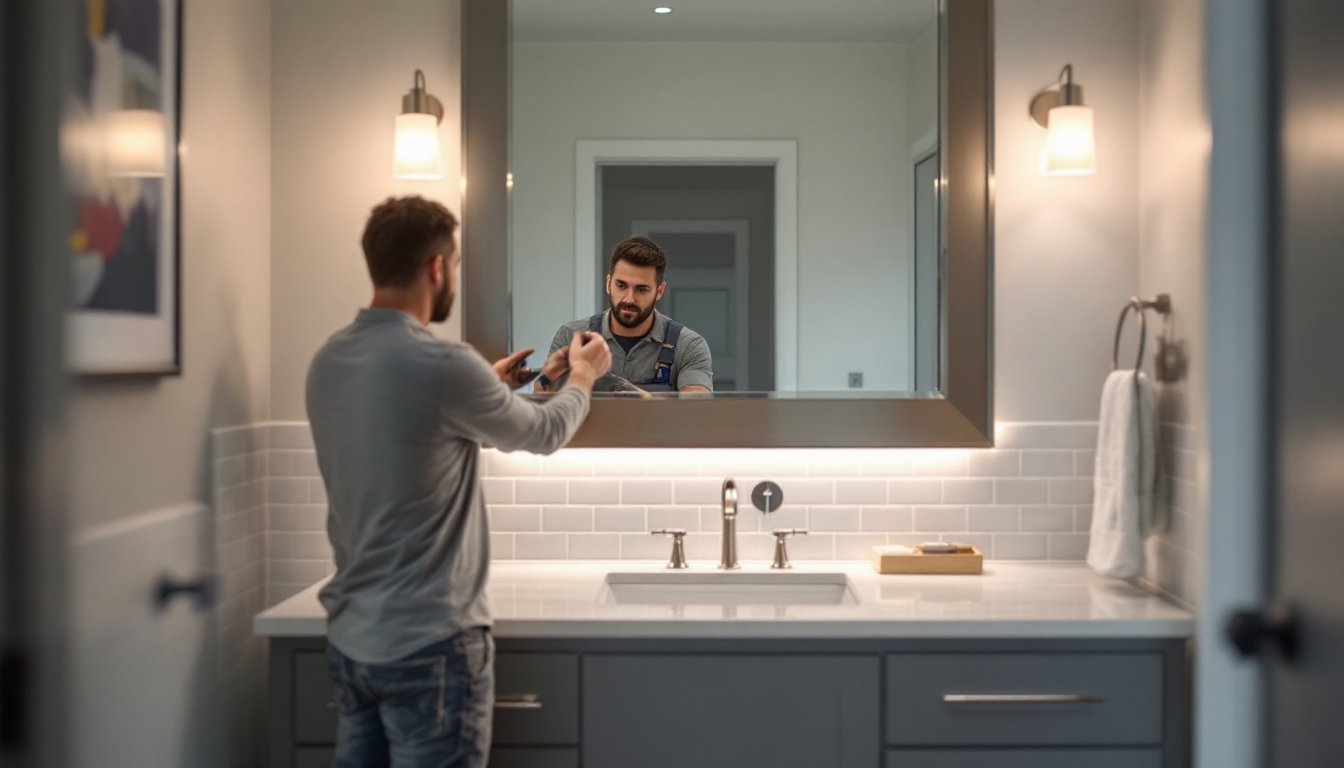
Installing a vanity lamp is a mid-level DIY project. If you’re comfortable using a drill and stud finder, you can do it. If electrical work intimidates you, call a licensed electrician, it’s not worth a safety risk.
What You’ll Need:
- Vanity lamp fixture (check it fits your mirror width)
- Mounting bracket or hardware (included with most fixtures)
- Drywall anchors or wood screws (if mounting into studs)
- Drill and drill bits
- Stud finder
- Level
- Voltage tester (critical for safety)
- Adjustable wrench or screwdriver set
- Appropriate PPE (safety glasses, gloves)
Installation Steps:
-
Turn off power at the breaker and use a voltage tester to confirm the light is off. Never skip this step, it’s a shock hazard otherwise.
-
Measure and mark. Most vanity lamps mount 36 to 40 inches above the counter. Use a level to mark your mounting points so the fixture hangs straight. A bathroom lighting guide confirms that proper mounting height prevents shadows and provides even illumination.
-
Remove the old fixture (if replacing one). Disconnect the wires, usually a black (hot), white (neutral), and copper or green (ground) wire. Cap the old wires with wire nuts if you’re not connecting immediately.
-
Drill pilot holes at your marks. If you hit a stud, use wood screws. If you’re in drywall, use heavy-duty anchors rated for the fixture weight. A 30 bath vanity typically requires fixtures weighing 3 to 8 pounds, standard anchors handle this.
-
Mount the bracket and secure the fixture. Many fixtures come as one piece with a hanging bar: others require assembly. Follow the manufacturer’s instructions exactly.
-
Make electrical connections. Connect black to black, white to white, ground to ground. Twist wires together, then secure with wire nuts. Some fixtures have pre-attached wires, just splice them to your existing wires.
-
Secure and test. Once wired, turn the breaker back on and test the light. If it doesn’t work, turn the breaker off again and double-check your connections.
When to Call a Pro: If you’re replacing an existing fixture and the wiring is damaged, if your bathroom lacks a proper outlet or circuit, or if you’re uncomfortable working with electricity, hire a licensed electrician. Most bathroom vanity installations cost $150 to $300 in labor, worth it for peace of mind and code compliance. Some jurisdictions require permits for electrical work: check with your local building department. Over vanity lighting and double vanity lighting both follow similar principles, though larger vanities may need wider fixtures or two separate lamps. Bathroom design inspiration and fixture selection can also come from home decorating resources and professional design guides that showcase real-world installations.
Conclusion
Vanity lamps are one of the highest-return upgrades you can make in a bathroom. They’re relatively affordable ($50 to $300), improve functionality dramatically, and can completely change how the space looks and feels. Whether you choose modern or traditional styling, prioritize proper brightness, color temperature, and mounting height. Most DIYers can handle installation with basic tools and caution around electrical work. Your morning routine, and your reflection, will thank you for upgrading from shadow-casting ceiling fixtures to dedicated vanity lighting.