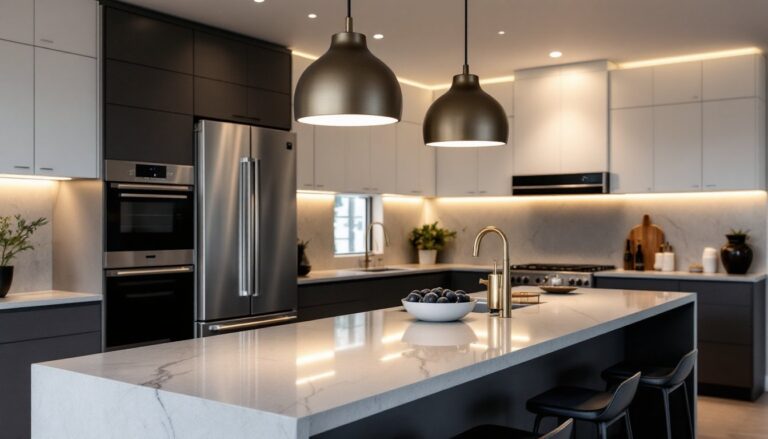
Kitchen islands have become the heart of modern kitchens, a place to cook, eat, chat, and showcase your design taste. But the right lighting makes all the difference. Pendant lighting for kitchen islands combines function with style, offering the task lighting you need while creating a focal point that ties the room together. Whether you’re drawn to sleek industrial fixtures, mid-century modern globes, or farmhouse charm, the right pendant light fixtures for kitchen islands can transform your space. This guide walks you through everything: why pendant lighting matters, the styles that dominate 2026, sizing and configuration secrets, and installation best practices that’ll make the project smooth.
Table of Contents
ToggleKey Takeaways
- Pendant lighting for kitchen islands eliminates shadows over work surfaces and anchors the island as a focal point in your kitchen design.
- Choose a single pendant (12–15 inches diameter) for islands under 4 feet, two pendants for 4–6 feet, and three or more for islands longer than 6 feet, spacing fixtures 2–3 feet apart.
- Industrial, mid-century modern, and globe-style pendants dominate 2026 kitchen designs, with brass and matte black finishes connecting seamlessly to other kitchen elements.
- Hang pendant fixtures 30–36 inches above the countertop with at least 15+ inches of clearance above bar seating to ensure safe sightlines and adequate task lighting.
- Always turn off power at the breaker, verify with a voltage tester, and anchor fixtures into solid framing or joists—call a licensed electrician if wiring is beyond your comfort level to meet NEC code requirements.
Why Kitchen Island Pendant Lighting Matters
Pendant lighting isn’t just decoration, it’s a practical solution to a real problem. Kitchen islands sit in the middle of the room, and overhead ceiling lights often cast shadows across your work surface. Hanging pendant lights directly above your island eliminate those shadows and bring targeted illumination right where you need it.
Beyond task lighting, kitchen island hanging lights define your space. They draw the eye downward, making the island feel anchored and intentional rather than orphaned in the middle of the room. The right pendant also sets the tone for your entire kitchen design: industrial fixtures suggest contemporary flair, while globe-shaped pendants lean traditional or mid-century. You’re not just lighting up a surface, you’re making a design statement.
One more thing: pendants work in tight layouts. If your kitchen is compact, a single statement pendant or a small cluster does the job without the bulk of a semi-flush mount or chandelier. Modern kitchen island lighting solutions have evolved to fit nearly any layout.
Popular Pendant Lighting Styles for Kitchen Islands
Your pendant choice sets the visual tone. The market’s flooded with options, but a few categories dominate 2026 kitchens.
Industrial and Modern Farmhouse Designs
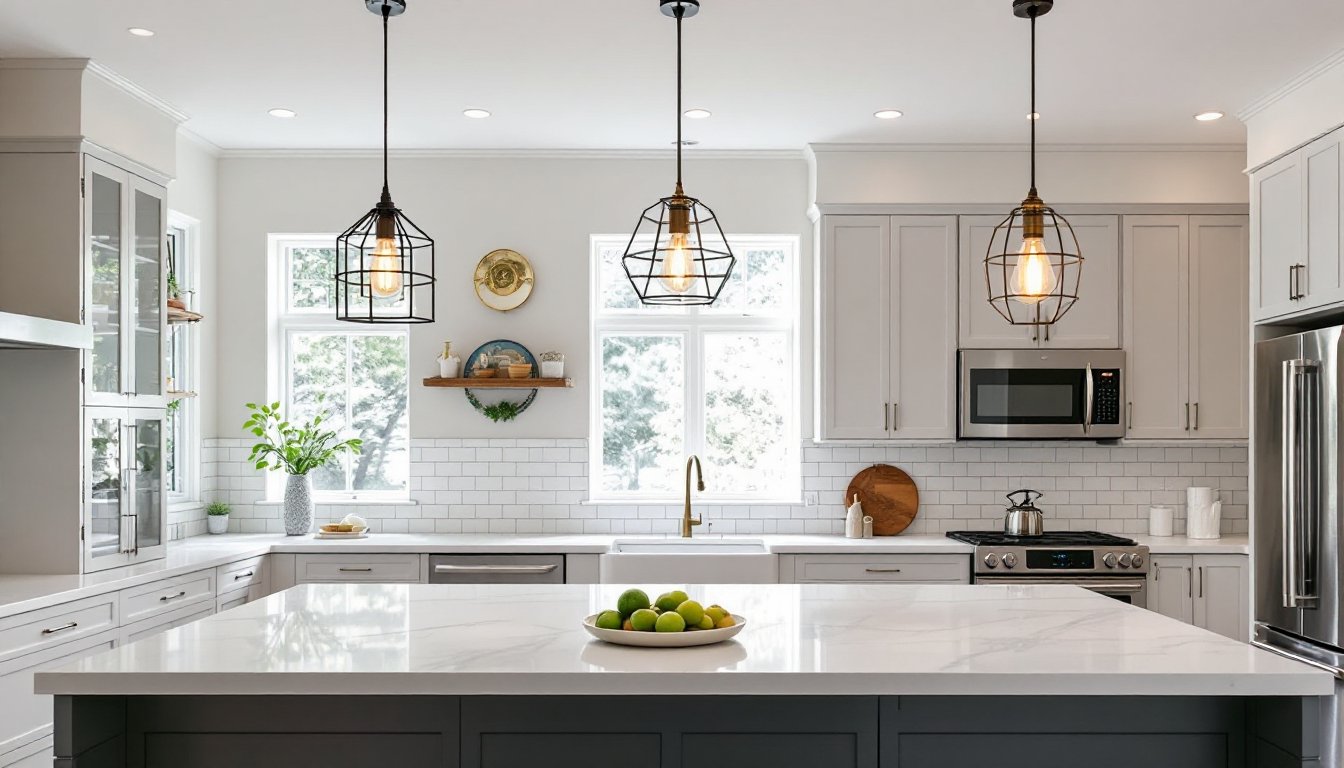
Industrial pendants feature metal cages, exposed bulbs, and raw finishes, think Edison-style bulbs in black wrought iron or brushed steel frames. They work beautifully in kitchens with concrete counters, open shelving, or shiplap. Modern farmhouse leans slightly softer: matte black metal with a hint of vintage charm, often paired with cream or natural wood bases.
Industrial pendant lighting remains a top choice because it pairs with nearly everything. Stainless steel islands, white subway tile, or natural wood cabinetry all complement industrial fixtures. The key is proportionality, an oversized industrial cage can overwhelm a modest island, while a delicate wire frame might disappear above a large one.
Mid-Century, Globe, and Sputnik Options
Mid-century modern pendants feature clean lines, sometimes geometric shades, and often come in brass, teak, or walnut finishes. Globe pendants are versatile workhorses: a frosted or clear glass sphere with simple hardware that doesn’t scream any particular style. Sputnik designs, branching, starburst shapes, add visual drama and work best over larger islands or as a statement above kitchen islands where you want conversation.
Globe shapes are endlessly customizable. Colored glass, textured surfaces, or milk-white interiors all change the vibe. A design principle to remember: kitchen island hanging lights should visually connect to other elements, your cabinet hardware, faucet finish, or barstool frames. Brass globes feel cohesive in a warm, traditional kitchen: matte black connects to industrial or contemporary aesthetics.
Choosing the Right Size and Configuration
This is where most mistakes happen. A pendant that looks perfect in the showroom can feel tiny or oppressive hanging above your island. Here’s the math:
Single Pendant: Works for islands under 4 feet long. Choose a fixture 12–15 inches in diameter, allowing 10–12 inches of clearance above the island surface if you’re standing. If you have a 36-inch-wide island, a single 14-inch dome or globe pendant centers nicely.
Two Pendants: Islands 4–6 feet long typically call for two fixtures. Space them evenly, centering each about one-third of the way in from each end. A 4-foot island works well with two 10-inch globes spaced roughly 2.5 feet apart.
Three or More: Islands longer than 6 feet or particularly wide ones (36+ inches) suit three pendants or more. Space them roughly 2–3 feet apart for visual rhythm. Pendant lighting kits often come with coordinated fixtures in matching sets, which simplifies the look.
Hang your pendants 30–36 inches above the countertop. This height allows sight lines across the kitchen while providing adequate task lighting. If your island has bar seating on one side, confirm there’s 15+ inches of clearance above the counter so heads don’t bump pendants. Lower isn’t always better, too-low fixtures feel claustrophobic and create glare if you’re sitting.
Installation Tips and Best Practices
Before you drill, do assignments. Locate studs or joists in your ceiling using a stud finder. Most pendant mounting hardware requires anchoring into solid framing, especially if your fixture is heavier than 15 pounds. Standard drywall anchors work for lighter pendants (under 8 pounds), but they can fail if bumped or if weight shifts.
Tools and Materials You’ll Need:
• Wire strippers
• Voltage tester (check the existing circuit before touching wires)
• Adjustable wrench or screwdriver set
• Drywall anchors or toggle bolts (if no joist available)
• Electrical tape
• Mounting plate hardware (usually included)
Safety First: Turn off power at the breaker before touching any electrical wires. Use a non-contact voltage tester on the existing box to confirm power is off. This isn’t optional, electrical work carries serious risk.
Step-by-Step:
- Turn off power to the circuit at the breaker panel. Verify with a voltage tester.
- Remove any existing fixture. Disconnect wires by unscrewing wire connectors.
- Inspect the mounting box. If it’s loose or damaged, reinforce with a brace between joists, don’t skip this. A drooping fixture is both unsafe and unprofessional.
- Connect the pendant’s supply wires to the house wires: black to black (hot), white to white (neutral), and green or bare copper to ground. Twist together, then screw on wire connectors clockwise until snug.
- Secure the mounting plate to the electrical box, then hang the pendant according to manufacturer instructions.
- Install the bulb and shade. Restore power and test.
If you’re unsure about wiring or your junction box is in bad shape, call a licensed electrician. Building codes require electrical work to meet NEC (National Electrical Code) standards, and inspectors may ask to verify it. Some jurisdictions require permits for any fixture swap: confirm locally before starting. Best lighting for kitchen ceiling often includes pendants as a key component, and proper installation ensures years of trouble-free operation.
Bulb Selection: Use LED bulbs rated for your fixture’s voltage and wattage. Most modern pendants run 60–100 watts equivalent. Choose warm white (2700K) for a cozy feel or cool white (4000K) for task-focused kitchens. Dimmable bulbs add flexibility.
Conclusion
Pendant lighting for kitchen islands bridges function and beauty in one fixture. By choosing proportionate styles that match your space, sizing appropriately for your island length, and installing safely with proper framing, you’ll create a kitchen that’s both lit and lovely. Whether you lean industrial, mid-century, or farmhouse, the perfect pendant light fixtures for kitchen island are within reach. Take your time selecting, measure twice, and don’t hesitate to hire an electrician if wiring feels beyond your comfort level.