A well-lit mirror is the difference between a smooth morning routine and squinting at a smudgy reflection while applying mascara or shaving. Vanity LED lights for mirrors have quietly become the go-to upgrade for bathrooms, dressing tables, and even home studios, thanks to their slim profile, low energy draw, and flattering color rendering. This 2026 guide walks through what to buy, which features actually matter, and how a confident DIYer can mount them without calling in an electrician for every step.
Table of Contents
ToggleKey Takeaways
- Vanity LED lights for mirrors are superior to incandescent and halogen bulbs because they produce minimal heat, consume just 10–20 watts (equivalent to 60–100W incandescent), and last 25,000–50,000 hours without bulb replacement.
- Choose LED fixtures with a color temperature of 3000K–4000K, CRI 90+, 300–500 lumens per linear foot, and dimmer compatibility to ensure accurate color rendering and flattering task lighting.
- Common vanity LED light options include adhesive-backed strip lights for frameless mirrors, traditional bulb bars mounted above the mirror, and Hollywood-style fixtures that provide shadow-free coverage from multiple angles.
- Proper installation requires cleaning the mounting surface with isopropyl alcohol, dry-fitting the fixture first, pressing strips firmly for 30 seconds, and anchoring bars into studs or using toggle bolts in drywall.
- Layer vanity lighting with ambient ceiling fixtures or recessed cans to eliminate harsh shadows, and mount bar fixtures 75–80 inches from the floor while matching metal finishes to faucets and cabinet hardware for cohesive design.
- Hardwired vanity LED installations must follow NEC electrical codes and require licensed electrician installation or inspection in most jurisdictions, while plug-in and low-voltage strip options suit renters and DIY-friendly upgrades.
Why LED Lights Are the Best Choice for Vanity Mirrors
LEDs win on the three things that matter most around a mirror: heat, accuracy, and longevity. Unlike incandescents or halogens, they emit very little heat, which keeps the space comfortable and protects mirror adhesives and acrylic frames from warping over time.
They’re also remarkably efficient. A typical vanity LED fixture pulling 10–20 watts outputs the same light as a 60–100W incandescent, and rated lifespans of 25,000–50,000 hours mean most users won’t change a bulb for a decade. For anyone planning a wider bathroom lighting refresh, LEDs also pair cleanly with dimmers and smart controls, something older bulb tech struggles with.
The bonus: better color accuracy means makeup looks the same in daylight as it did at the mirror.
Types of Vanity LED Lights to Consider
Not every vanity mirror needs the same fixture. The right choice depends on mirror size, wall space, and whether the install is hardwired or plug-in. Hardwired versions look cleaner but require access to a junction box, while plug-in models suit renters or anyone avoiding electrical work.
LED options also vary in how they distribute light. Some wrap the mirror entirely for shadow-free coverage, while others sit above as a more traditional bar. Homeowners working with two sinks should look at double vanity setups where balanced light across both stations is critical.
LED Strip Lights, Bulb Bars, and Hollywood-Style Fixtures
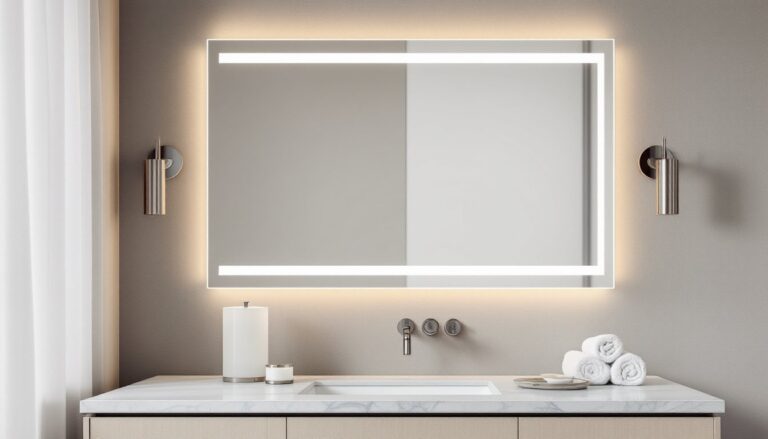
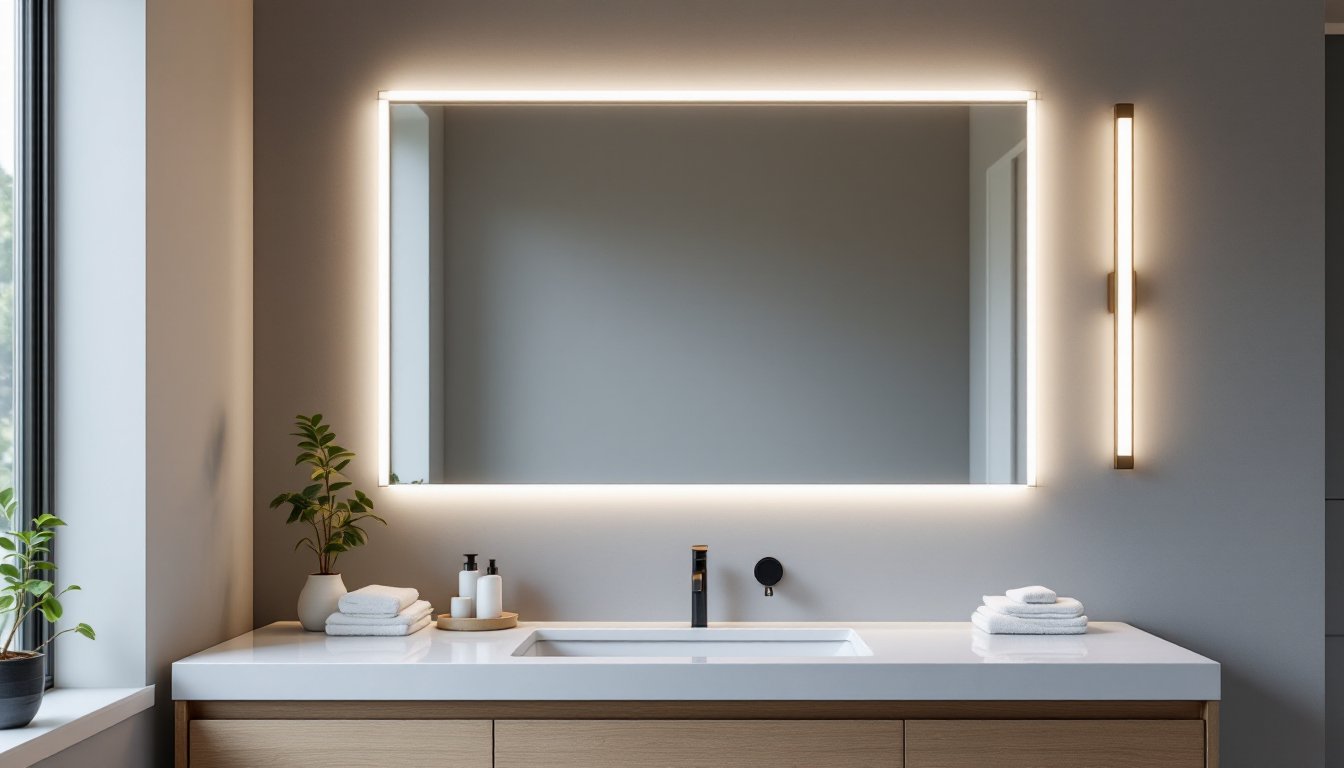
- LED strip lights: Adhesive-backed ribbons that mount around the mirror’s perimeter or behind it for a backlit halo. Best for modern, frameless mirrors. Look for IP65-rated strips near sinks.
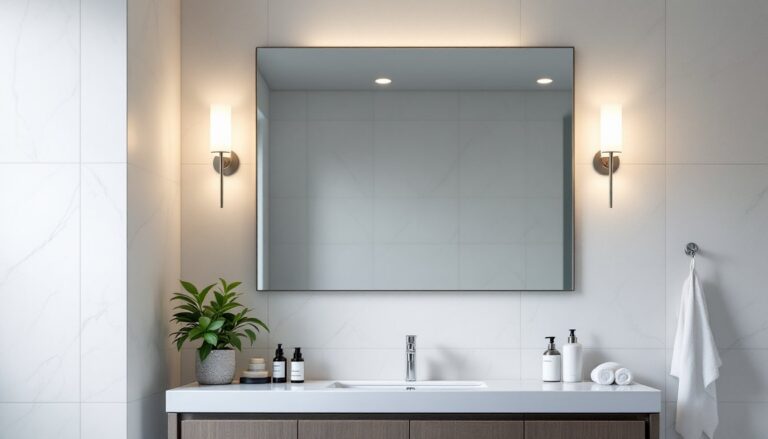
- Bulb bars: A horizontal or vertical fixture mounted above or beside the mirror. The most common choice for traditional bathrooms and an easy swap-in for existing sconces.
- Hollywood-style fixtures: Exposed globe bulbs framing the mirror on three or four sides. Excellent for makeup work because they wash the face evenly from multiple angles.
For a curated look at how these styles play out in real spaces, design editors at Remodelista regularly feature minimalist strip and bar installs that pair well with stone counters and matte black hardware.
Key Features to Look for Before You Buy
Spec sheets can feel dense, but four numbers tell most of the story. Skim past the marketing and check these before adding to cart.
Color Temperature, CRI, Brightness, and Dimmability
- Color temperature (Kelvin): Aim for 3000K–4000K at the vanity. Anything warmer turns yellow: anything cooler reads clinical. Adjustable CCT fixtures let users toggle between warm morning light and cooler task light.
- CRI (Color Rendering Index): Look for CRI 90+. Lower-CRI LEDs distort skin tones and makeup colors, which defeats the purpose.
- Brightness: Plan for 300–500 lumens per linear foot of mirror. A 36-inch mirror needs roughly 900–1500 lumens of facing light.
- Dimmability: Confirm the LED driver is dimmer-compatible and matched to a TRIAC or ELV dimmer. Mismatched dimmers cause flicker and buzzing.
These same principles apply to broader LED lighting upgrades throughout the house, from kitchen task lights to closet strips. Editorial roundups like the House Beautiful bathroom lighting feature are useful for seeing how these specs translate into real-world ambiance.
How to Install Vanity LED Lights on a Mirror Step by Step
This walkthrough covers a plug-in or low-voltage strip install. Hardwired fixtures tied into household 120V wiring should follow NEC guidelines and, in most jurisdictions, be installed or inspected by a licensed electrician. Codes vary by location.
PPE first: safety glasses when drilling, gloves when handling adhesive backings, and always cut power at the breaker before touching any junction box.
Materials and tools:
- LED strip kit or bar fixture with driver
- Isopropyl alcohol (90%+) and lint-free cloth
- Measuring tape, pencil, level
- Drill with masonry or drywall bits (if anchoring)
- Cable clips or raceway channel
Steps:
- Measure the mirror perimeter and add 4–6 inches of slack for corners and the driver run.
- Clean the mounting surface with isopropyl alcohol. Skipping this is the number-one reason strips peel off in a month.
- Dry-fit the strip or bar before peeling adhesive. Mark corner cut points: most LED strips only cut at printed copper pads.
- Mount the fixture. For strips, press firmly for 30 seconds along each section. For bars, anchor into studs where possible: use toggle bolts in drywall.
- Route the cable to the nearest outlet using a paintable raceway, or feed it through a small hole into the cabinet below.
- Connect the driver, plug in, and test before sealing any cable covers.
DIYers tackling a more involved overhead install can reference detailed over vanity lighting steps that cover junction box prep and fixture mounting in greater depth.
Styling Tips to Match Your Bathroom or Makeup Space
Vanity lighting should match the room’s overall design language, not fight it. A sleek frameless mirror with backlit strips suits modern and Scandinavian baths, while bulb-bar vanity lighting leans transitional or industrial. For rustic spaces, exposed Edison-style LED globes on a wood-mounted bar nod to farmhouse bathroom fixtures without feeling themed.
Layering matters too. Vanity LEDs handle task light, but a ceiling fixture or 4-inch recessed cans fill in ambient light and eliminate the harsh shadows a single source creates. Plenty of design walkthroughs on HGTV show this layered approach working in small powder rooms and primary baths alike.
A few quick rules:
- Mount bar fixtures 75–80 inches from the floor, centered on the mirror.
- For Hollywood-style frames, leave 2–3 inches of clearance between bulbs and the mirror edge.
- Match metal finishes to faucets and cabinet pulls, not to the showerhead, which often gets overlooked.
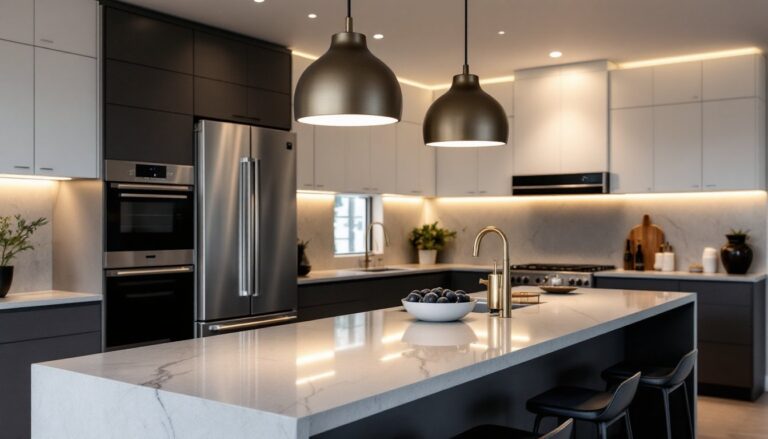
The same logic carries into kitchens, where vanity lighting principles influence hanging light fixtures for kitchen islands and even hanging lamps for kitchen prep zones. Good 4-inch recessed LED placement supports both rooms by handling ambient fill while decorative fixtures do the styling work.
The takeaway: choose a high-CRI, dimmable LED at the right Kelvin, prep the mounting surface properly, and respect electrical codes on anything hardwired. Done right, a vanity LED upgrade pays back in better mornings, lower bills, and a mirror that finally tells the truth.