Kitchen island lamps are more than decorative accessories, they’re essential functional elements that transform how your kitchen works and looks. Whether you’re prepping dinner, eating breakfast at the counter, or entertaining guests, the right lighting over your island directly impacts visibility, ambiance, and even the perceived size of your space. This guide walks you through everything a homeowner needs to know: why island lighting matters, what styles actually work, how to size and space fixtures correctly, and how to install them safely without calling an electrician.
Table of Contents
ToggleKey Takeaways
- Kitchen island lamps serve three critical roles—task, ambient, and accent lighting—working together to improve visibility, create ambiance, and enhance your kitchen’s overall design and perceived size.
- Hang pendant lights 30–36 inches above your island countertop; for standard 8-foot ceilings, aim for the bottom of the fixture at roughly 5.5–6 feet to provide comfortable sightlines and avoid glare for seated diners.
- Space multiple kitchen island lamps 18–30 inches apart (center-to-center) and keep them 6–12 inches from island edges, using the “Rule of Three” (two or three pendants) for better visual balance than four or five.
- Choose task-focused pendants with open bottoms or translucent shades for bright, focused light during cooking, and ambient pendants with frosted glass or fabric shades for softer, mood-setting illumination.
- Select fixture materials like brushed brass, matte black, or chrome that contrast with your cabinetry and resist kitchen grime better than porous materials, ensuring both durability and intentional design impact.
- Install a dimmer switch to easily transition between bright task lighting and softer ambient levels, and always turn off power at the circuit breaker and test with a voltage tester before touching any electrical components.
Why Kitchen Island Lighting Matters
Good kitchen island lighting serves three critical roles: task, ambient, and accent lighting. Task lighting is the heavy lifter, it lets you chop vegetables, read recipes, and spot spills without straining your eyes. Ambient lighting softens shadows and creates a welcoming atmosphere when you’re not actively cooking. Accent lighting highlights the island as a visual focal point, often drawing the eye and making the space feel intentionally designed rather than accidental.
Many kitchens suffer from overhead ceiling lights that cast shadows directly onto the island countertop, where you need light most. Pendant lights or other suspended fixtures eliminate that problem by sitting 30–36 inches above the counter, angling light exactly where hands and food are. This layering approach, combining island lamps with other fixtures like ceiling lamps for the kitchen and under-cabinet strips, creates flexibility to brighten for cooking or dim for dinner.
Types of Kitchen Island Lamps
Pendant Lights and Hanging Fixtures
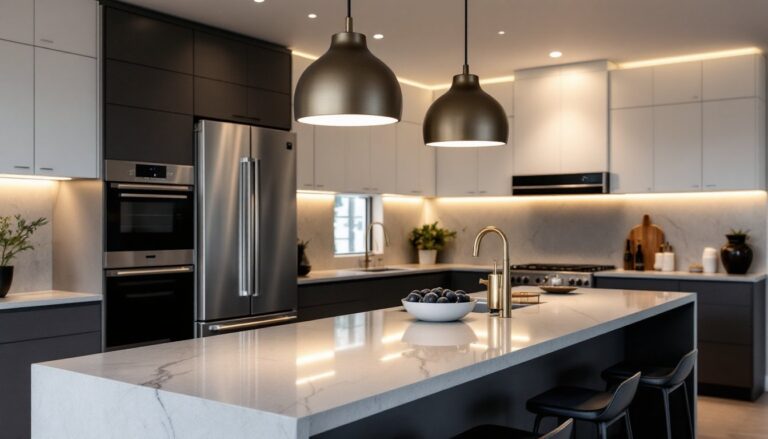
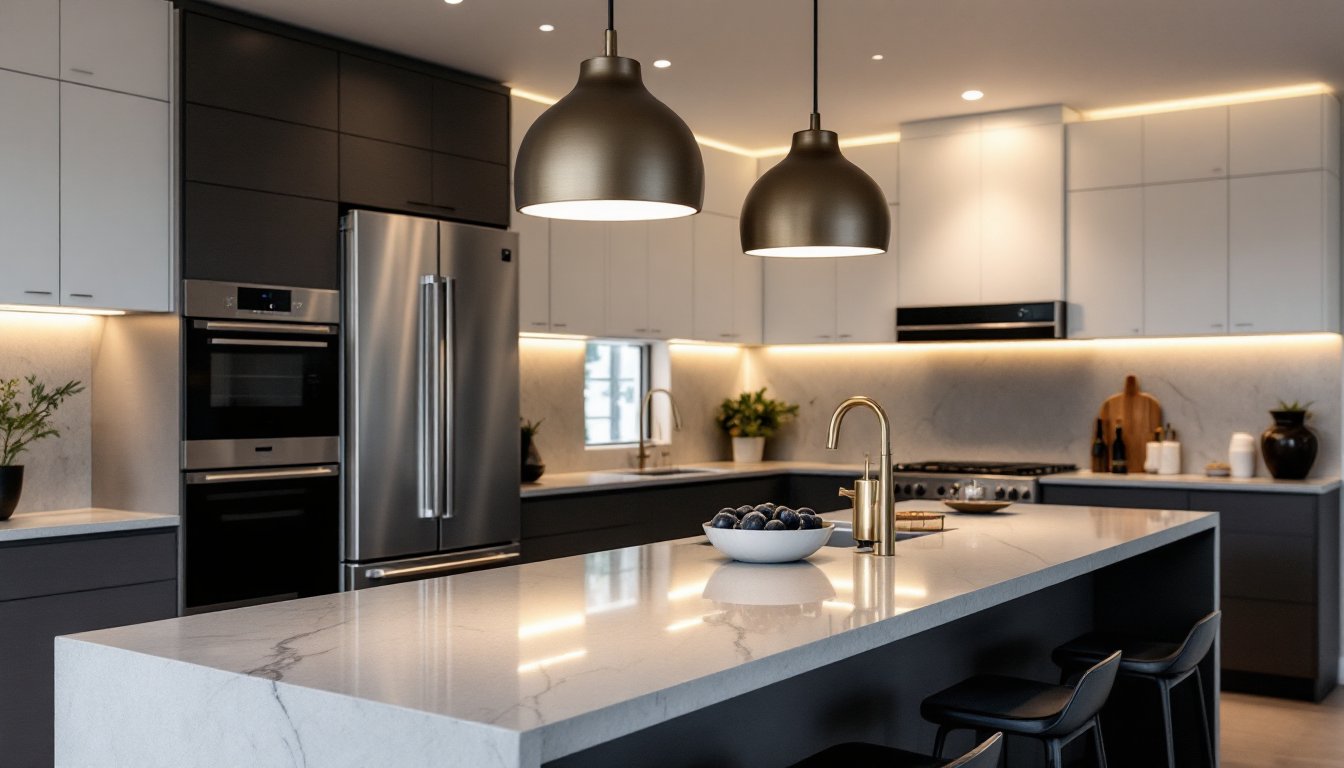
Pendant lights are the go-to for most islands because they deliver focused light and look intentional. A single large pendant works for small, narrow islands, while longer islands typically need two or three fixtures arranged in a line. This is where kitchen pendant light fixtures shine, they come in countless styles, from industrial Edison bulbs to sleek modern glass to farmhouse ceramic.
Linear suspension fixtures (sometimes called island chandeliers) mount as one long housing with multiple bulbs built in. This approach works well when you want a unified look rather than separate pendants. LED bulbs are the practical choice here: they run cooler, last 25,000+ hours, and cost far less to operate than older CFL or incandescent options.
Track Lighting and Rail Systems
Track lighting gives you adjustable flexibility, the fixture heads rotate and aim independently, so you can direct light exactly where needed. This is ideal for islands with irregular shapes or if you’re trying to avoid running new electrical circuits. A straight or curved monorail system works the same way, allowing you to position multiple lights along a single power feed. For most DIYers, but, pendant lights are simpler to install and look cleaner, which is why they dominate modern kitchens.
Sizing and Spacing Your Island Lights
Height is the first measurement that matters. Hang pendant lights 30–36 inches above the countertop. If your ceiling is standard 8 feet high, that puts the bottom of the fixture at roughly 5.5–6 feet, which is comfortable for sightlines and avoids glare in people’s eyes as they sit on island stools. Ceilings higher than 8 feet? Add roughly 3 inches of drop for every extra foot of height, so a 9-foot ceiling calls for 33–39 inches below the ceiling, keeping that 30–36 inch-above-counter distance.
For a single pendant, aim for a fixture width that’s roughly half the island’s width. On a 30-inch-wide island, a pendant with a 15-inch diameter looks proportional. When you’re hanging multiple pendants, space them 18–30 inches apart (measured center-to-center) and keep them 6–12 inches from the island edges. A common design rule is the “Rule of Three”, two or three pendants create better visual balance than four or five crammed in.
A practical sizing formula: divide your island length by 5 or 6 to estimate the diameter of each pendant. A 5-foot island, divided by 5, suggests a 12-inch fixture, a reasonable mid-range size. This isn’t gospel, but it’s a starting point that scales with the room.
Selecting the Right Style and Materials
Before you fall in love with a design, decide whether your fixtures are doing task work (bright, focused, no-nonsense) or ambient duty (softer, diffused, mood-setting). Task-focused pendants typically have open bottoms or translucent shades that let light pour straight down. Metal or ceramic shades work here because they’re easy to wipe clean from cooking splatter. Ambient pendants often use frosted glass or fabric shades that soften light in all directions.
Material choice isn’t just about looks, it’s about maintenance. Metal, glass, and sealed finishes handle kitchen grime far better than woven or porous materials, especially in homes with frequent cooking or poor ventilation. A brushed brass pendant looks stunning and hides fingerprints better than polished chrome. Matte black absorbs light, making fixtures almost disappear, while polished finishes catch and reflect light, adding brightness and visual pop.
Choose fixtures that contrast with your cabinets and surfaces rather than blending in. If your cabinetry is white, a matte black or warm brass pendant stands out as intentional. If your cabinets are dark, a bright chrome or white pendant creates visual balance. Kitchen island lighting is as much about design clarity as it is about lumen output.
Installation Tips for DIY Success
Before you touch anything, turn off power at the circuit breaker and test the switch with a non-contact voltage tester, this takes 10 seconds and prevents a serious shock. If your island doesn’t have an existing electrical box, this is a job for a licensed electrician: running new circuits and pulling permits is outside safe DIY territory.
If you do have a junction box overhead, installation follows the fixture manufacturer’s instructions closely. Most pendant kits include a mounting bracket, canopy (the decorative cap), and a down rod that hooks to the electrical housing. Wire connections inside the canopy use wire nuts, twist the black (hot) and white (neutral) wires together, secure with a nut, and wrap with electrical tape. The ground wire (bare copper) connects to green screws in the fixture and box.
Install a dimmer switch if the fixture supports it, this is the easiest upgrade and lets you switch between bright task lighting and softer ambient levels without rewiring. Most standard dimmers cost $15–30 and install in 15 minutes.
For care and longevity: turn off power before cleaning. Wipe metal finishes with a soft cloth and mild soap, then buff dry to avoid water spots. Hand-wash glass shades in a sink padded with a towel, never use a dishwasher, which can damage finishes. A ceiling lamps for kitchen might use the same maintenance approach, so establishing a cleaning routine early helps all your kitchen fixtures last longer.
Many homeowners integrate island lamps with a master kitchen lighting strategy to layer light sources. Adding under cabinet lighting below counters and using island pendants overhead creates a professional, functional kitchen. For more detailed styling advice, reference modern island lighting guides that cover how materials and finishes interact with other kitchen elements.
If you’re exploring commercial-grade aesthetics, commercial pendant lighting fixtures offer durability and clean lines that translate well to residential kitchens. Resources like The Kitchn showcase real kitchen renovations where island lighting plays a starring role, and Remodelista offers curated design inspiration for fixture styles that work across different kitchen aesthetics. For budget-conscious shoppers, Homedit highlights affordable pendant options without sacrificing style. Finally, don’t overlook over kitchen sink lighting ideas, as coordinating fixtures across work zones creates visual cohesion.